Standardizing clinical workflows in a growing wellness practice doesn't mean making every protocol identical — it means codifying the senior practitioner's clinical reasoning into reusable Master Protocol templates that compress new-practitioner onboarding, reduce per-protocol composition time, and produce predictable quality regardless of which practitioner runs the visit. AI is the operational layer that makes this practical at scale. The judgment that gets standardized is mostly catalog navigation and SKU selection; the judgment that stays with the practitioner is patient-specific tuning.
What AI Standardization Produces
- Codified Master Protocols encoding senior practitioner's reasoning
- 30-45 day new-practitioner onboarding (vs. 90-120 manual)
- Predictable per-protocol time across practitioners
- Tighter foundational-layer variance; appropriate targeted-layer variance
- Quarterly Master Protocol review keeps templates current
- Senior practitioner's clinical judgment becomes shared infrastructure
The tribal-knowledge problem in growing practices
Most functional medicine practices grow on the founder's clinical reputation. The founder is the senior practitioner whose accumulated judgment — which patient patterns route to which protocols, which dose adjustments work for which phenotypes, which brand combinations produce the best outcomes — drives the practice's clinical quality. The problem: this judgment lives in the founder's head. When the practice tries to grow by adding practitioners, the new hires don't have access to this accumulated wisdom. They start from clinical-education baseline and slowly build their own version of the founder's pattern recognition over 1-2 years.
The growing-pains symptoms are familiar. New-practitioner protocol quality varies widely; senior practitioner spends disproportionate time supervising and reviewing; patient outcomes show inter-practitioner variance that the practice can't explain or fix; founder feels like they can't take a vacation without quality dropping.
The solution isn't to clone the founder. It's to externalize the founder's clinical reasoning into Master Protocol templates that all practitioners can use as starting points.
What Master Protocols actually are
A Master Protocol is a clinically-validated starting template for a specific patient phenotype or condition pattern. It codifies: (1) which products belong in the protocol, in which layers (foundational, targeted, herbal); (2) the typical doses, with the dosing logic explained; (3) the practitioner-override checkpoints where patient-specific judgment is expected; (4) the timing and sequencing across the protocol's duration.
A typical functional medicine practice converges on 8-15 Master Protocols that account for 60-75% of total prescribing. Common templates: HPA/adrenal support, post-adjustment recovery (for chiropractic-adjacent practices), foundational wellness, methylation support, gut barrier restoration, cardiovascular foundation, perimenopausal hormone support, autoimmune anti-inflammatory baseline. Niche templates for the practice's specific clinical focus areas.
The library is the senior practitioner's clinical philosophy made explicit. Every new practitioner who joins the practice inherits this philosophy at week 1 — instead of slowly rediscovering it over 18 months of trial and error.
How AI executes the standardization
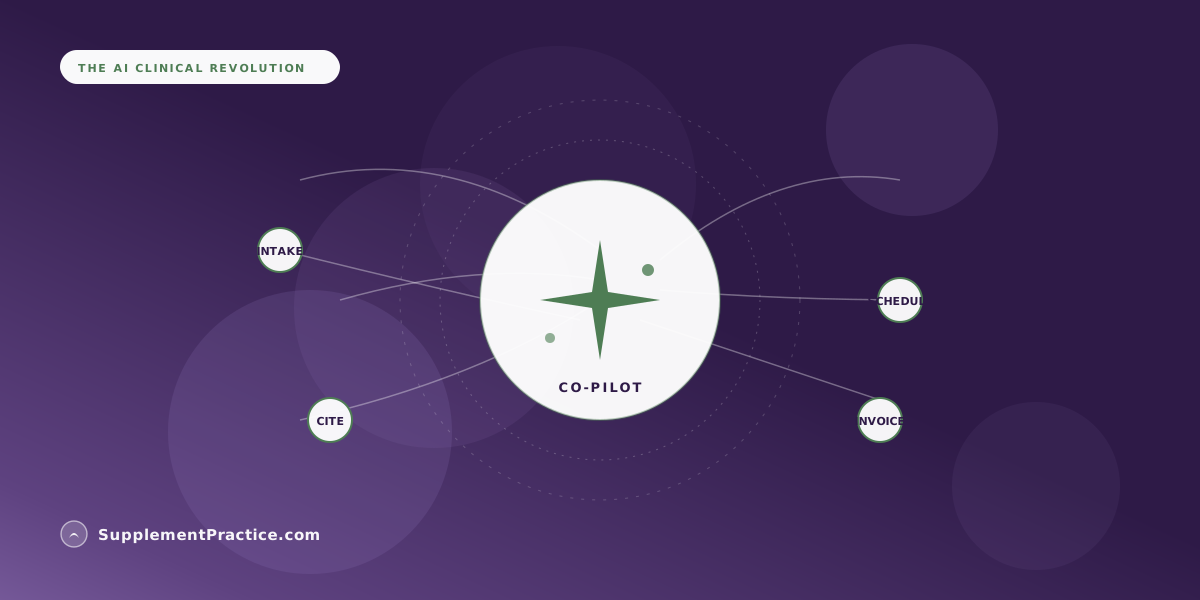
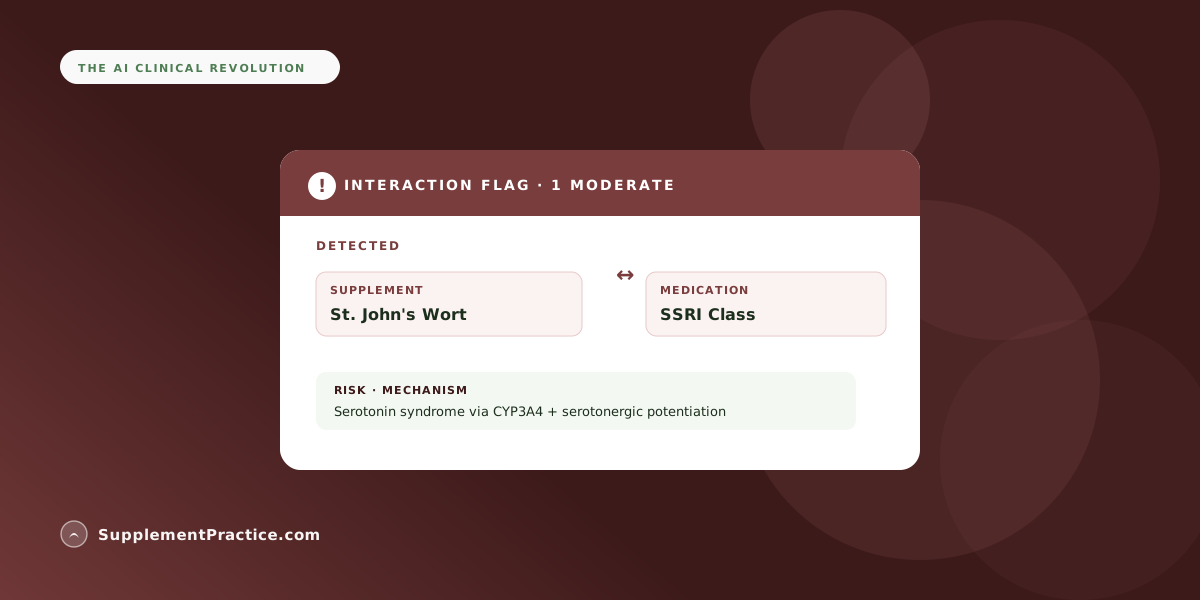
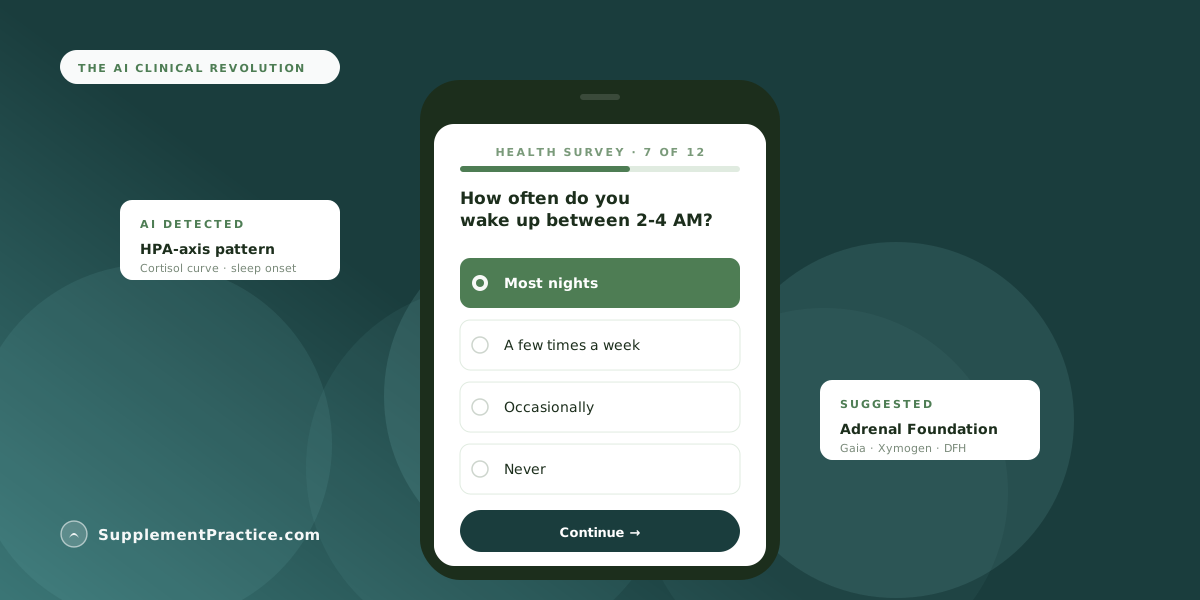
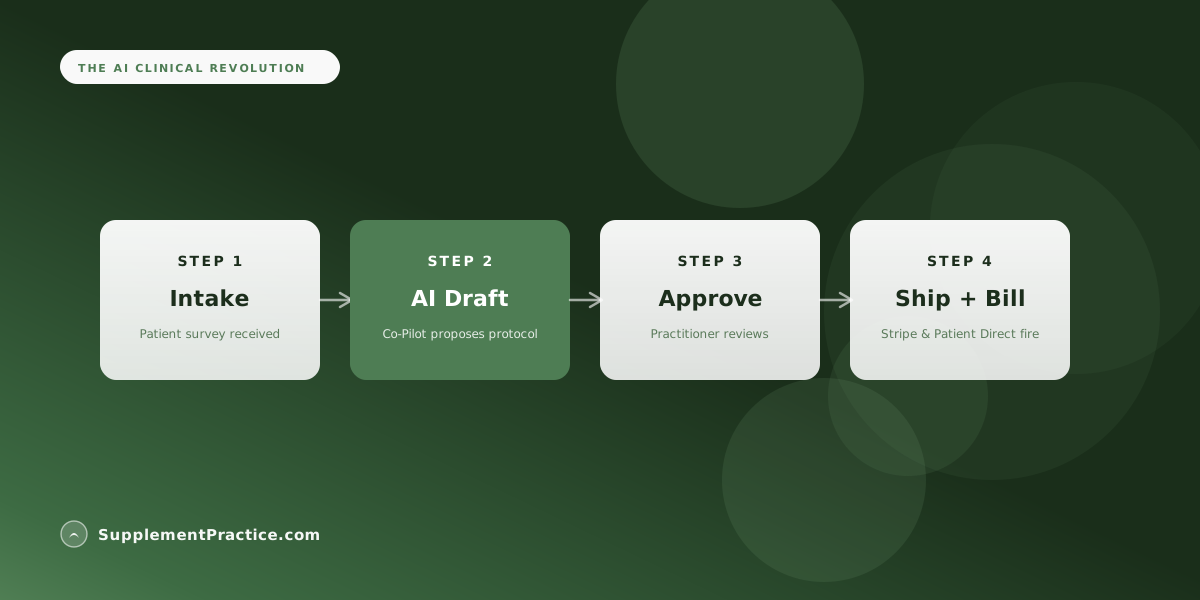
The AI Clinical Co-Pilot is the operational mechanism that turns Master Protocols into daily workflow. When a patient's structured intake matches a template's clinical pattern, the AI drafts the protocol from that template, populating with the practice's carried brands, computing bottle-supply math, running the drug-interaction screen. The new practitioner reviews the AI's draft, applies patient-specific overrides, and approves.
The result: the new practitioner is prescribing at near-senior-practitioner quality from week 2 of their employment. They're not yet operating at full clinical maturity — they're still learning the patient-specific nuances that take time to develop — but the foundational protocol composition is consistent with the practice's clinical standards from day one. The senior practitioner reviews the new practitioner's overrides weekly during the first 60 days; this is the supervision mechanism that lets clinical judgment develop while maintaining quality.
Where standardization is appropriate — and where it isn't
Standardization works for foundational layers and well-characterized clinical patterns. It doesn't work — and shouldn't be applied — for patient-specific tuning, complex multi-system presentations, or rare clinical situations.
Foundational layer (Catalyn, Cataplex F, Tuna Omega-3 for SP-anchored practices): standardize. Almost every patient gets approximately the same foundational stack at the same doses; variance is small.
Common condition patterns (HPA dysregulation, post-adjustment recovery): standardize the protocol skeleton. Practitioner override handles the patient-specific tuning.
Complex presentations (autoimmune with multiple system involvement, rare conditions, severe polypharmacy patients): use Master Protocols as reference but expect substantial practitioner customization. The standardization provides a starting framework, not the answer.
Growing FM clinic, 1 founder → 4 practitioners over 18 months
A founder-led FM clinic grew from solo practice to 4 practitioners over 18 months. Pre-standardization (hire #1 at month 4): the new practitioner took 4 months to reach clinical fluency. Patient outcomes for the new practitioner's panel showed measurable variance vs. the founder's panel — 30-day adherence 11 points lower, follow-up patient-satisfaction scores 8 points lower.
The founder spent Q3 of year 1 codifying 12 Master Protocols covering 70% of the practice's prescribing volume. AI Co-Pilot was wired to ground against the templates.
Hire #2 (month 11): clinical fluency at week 6. Hire #3 (month 14): clinical fluency at week 4. Hire #4 (month 17): clinical fluency at week 4. Across hires 2-4: 30-day adherence within 3 points of founder's panel; patient-satisfaction scores within 2 points. The standardization compressed onboarding from 16 weeks to 4-6 weeks and eliminated the inter-practitioner outcome gap.
The founder reinvested the reclaimed supervision time into business development and strategic clinical innovation (developing 3 new condition-specific Master Protocols based on outcome data from the practice).
Quarterly Master Protocol review
Templates need to stay current. The senior practitioner runs a quarterly review covering: (1) override-rate analytics — templates with >70% override rates are candidates for revision (the AI is consistently drafting something the practitioners are consistently changing); (2) brand catalog changes — new products added, old products discontinued; (3) clinical findings from outcome data; (4) emerging research the practice wants to incorporate.
The review takes 2-4 hours quarterly. Output: updated templates with version-tracked changes, communicated to the team via the practice's training channel. The library evolves continuously rather than going stale.
Common mistakes
Anti-patterns in clinical workflow standardization
- Treating Master Protocols as fixed answers. Templates are starting points; patient-specific tuning still happens.
- Skipping the quarterly review. Templates go stale within 6-12 months without active maintenance.
- Codifying too few templates. Below 8 templates, the standardization doesn't cover enough volume to compress onboarding.
- Codifying too many templates. Above 20, the templates become hard to maintain and the override-rate signal gets noisy.
- Standardizing what shouldn't be standardized. Complex polypharmacy patients and rare conditions need full clinical judgment, not template application.
Frequently asked questions
What does standardizing clinical workflows mean?
Codifying senior practitioner's clinical reasoning into reusable Master Protocol templates + consistent AI-assisted workflow producing predictable per-protocol time and quality across practitioners.
Doesn't this eliminate clinical judgment?
No — concentrates judgment on patient-specific tuning while removing from-scratch composition. Master Protocol = starting draft; practitioner adjusts dose, brand, timing per patient.
How does this affect new-practitioner onboarding?
30-45 days to clinical fluency, vs. 90-120 manual. New practitioners prescribe at near-senior quality from week 2 while learning patient-specific nuances under weekly supervision review.
What happens when a Master Protocol becomes outdated?
Quarterly review by senior practitioner. Templates with >70% override rates flagged for revision; brand catalog changes incorporated; new clinical findings added.
Does standardization make every protocol identical?
No. Master Protocols are starting points. Patient medication lists, history, cost sensitivity, and lifestyle introduce appropriate variance in targeted layers.
How is consistency measured?
Inter-practitioner protocol variance for similar patient phenotypes (foundational layer tighter, targeted layer appropriate variance), time-to-clinical-fluency for new hires, and adherence/outcome consistency across practitioners.
Where to go next
Three companion pieces: building the Master Protocol library, team consistency mechanisms, and the new-practitioner onboarding workflow. Supplement Practice's Master Protocol library + AI Co-Pilot + override analytics together produce the standardization infrastructure described above.