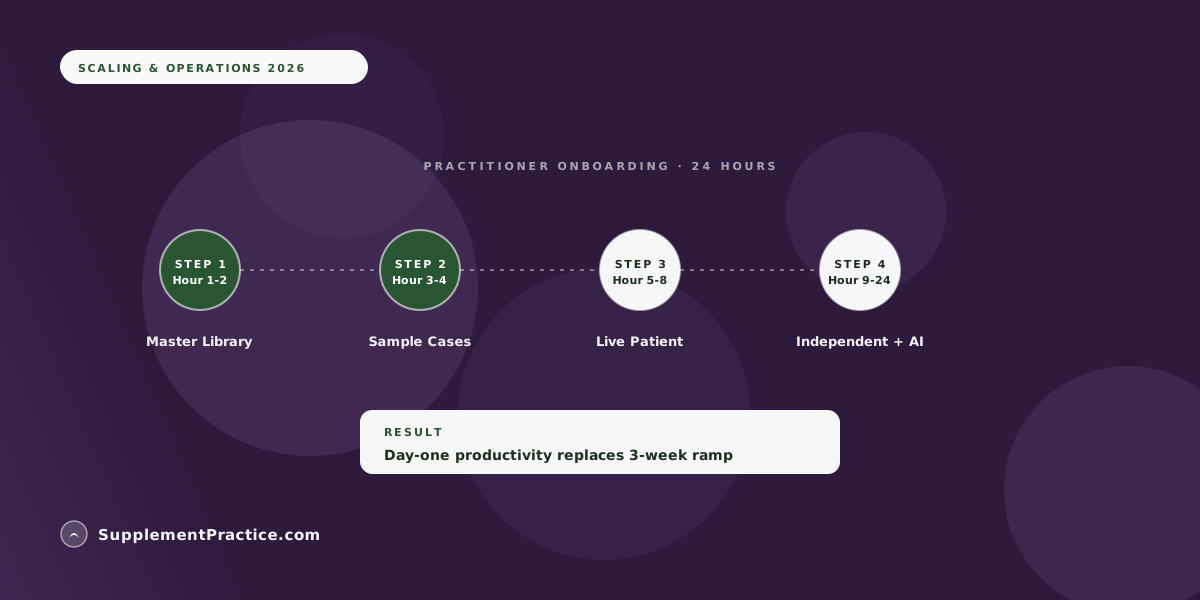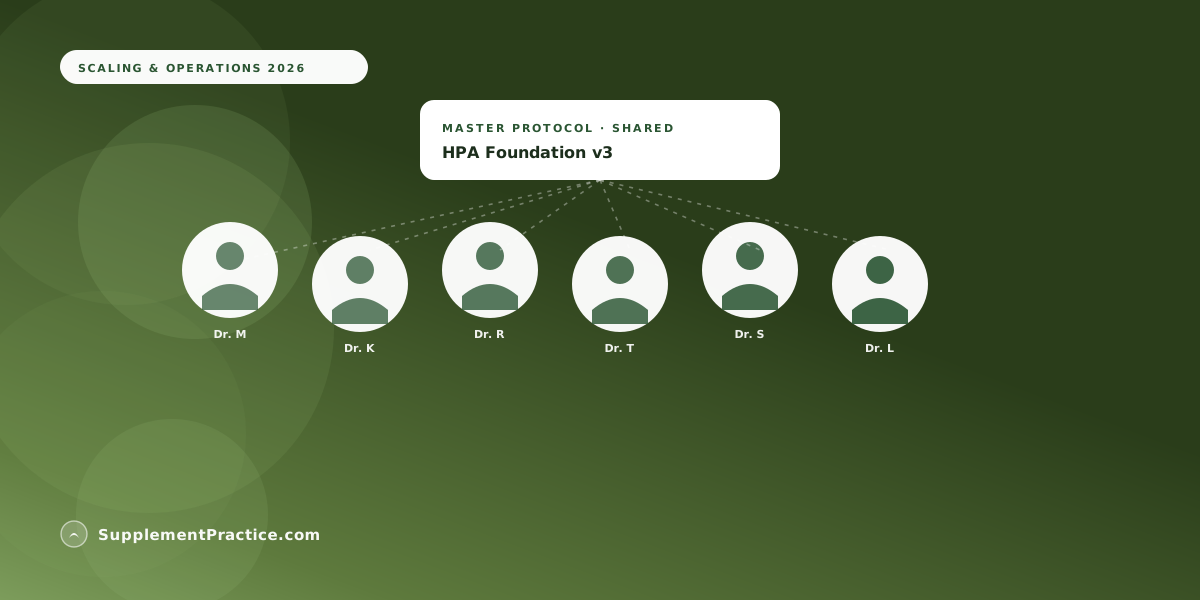
Multi-practitioner nutrition practices live or die on clinical consistency. Two patients with the same presentation should get substantially the same foundational protocol regardless of which practitioner they see — patient-specific tuning variance is appropriate, but foundational-layer variance is not. The five mechanisms that produce this consistency aren't software features (though software helps); they're operational rhythms the practice runs deliberately. Master Protocol library, shared catalog/inventory, weekly case review, override-rate monitoring, quarterly outcome benchmarking. Done together they produce a team where new patients get consistent quality regardless of practitioner; done in isolation they leave gaps that compound over time.
Five Mechanisms for Clinical Consistency
- Codified Master Protocol library (8-12 templates covering 60-75% of prescribing)
- Shared catalog + inventory binding (everyone prescribes from the same available products)
- Weekly 30-45 min case-review rhythm (1-2 cases per practitioner)
- Override-rate monitoring (practitioner outliers + template drift + new-hire trajectory)
- Quarterly outcome benchmarking across practitioners for similar phenotypes
- Senior practitioner owns template library, case review, outcome interpretation
What clinical consistency means — and what it doesn't
Clinical consistency means that two patients with substantively the same presentation get substantively the same foundational protocol regardless of which practitioner they see. A 45-year-old female patient with classic HPA-dysregulation symptoms in October should get the same core HPA stack from any practitioner in the practice. The patient-specific tuning — the exact magnesium product, the timing of the Drenamin dose, the addition of an adaptogenic herb — can vary appropriately based on patient-specific factors. The skeleton should not.
What consistency doesn't mean: every protocol identical, every practitioner identical, mechanical adherence to templates without clinical judgment. That's not consistency; that's rigidity, and it produces worse clinical outcomes than appropriate practitioner variance.
Mechanism 1: Codified Master Protocol library
The foundational mechanism. Without templates, each practitioner composes from scratch and variance is inevitable. With templates covering 60-75% of prescribing, the foundational layer is consistent across the team. Patient-specific tuning happens through documented overrides — the variance is intentional and traceable, not random.
Practical implementation: see the companion piece on building Master Protocols. 8-12 templates is the starting library; 15-20 is the mature library; above 25 becomes hard to maintain. Quarterly review by the senior practitioner keeps templates current.
Mechanism 2: Shared catalog and inventory binding
Each practitioner prescribing from a different set of products is a hidden source of variance. The team should be looking at the same catalog with the same "we carry" filter applied; recommendations should be bounded by the same in-stock products. This sounds obvious but is operationally easy to break — front-desk staff who don't update one practitioner's catalog view, inventory drift between physical and reported stock, brand additions that one practitioner adopts before the team agrees.
Shared catalog and inventory binding eliminates this variance source. Every practitioner sees the same products available. Recommendations across practitioners stay within the same dispensary universe.
Mechanism 3: Weekly case-review rhythm
30-45 minutes, same time each week, every practitioner attending. Each brings 1-2 cases from the prior week that involved meaningful clinical judgment — patient-specific overrides, complex multi-system presentations, cases where the AI draft needed substantial revision. Team discusses; senior practitioner provides input where clinical maturity is still developing.
The case review serves three functions. (1) Continuing clinical education embedded in the practice's actual case load. (2) Calibration of clinical judgment across practitioners — junior practitioners hear how seniors think about cases. (3) Pattern surfacing — recurring cases or recurring overrides indicate template revision opportunities.
Practices that skip the weekly review usually have higher inter-practitioner variance even with strong template libraries. The templates handle the routine; the case review handles the judgment.
Mechanism 4: Override-rate monitoring
Override rates are leading indicators of three different problems. Track weekly per-practitioner; review monthly.
Practitioner outliers. One practitioner consistently overriding at meaningfully different rate than the team. Above team average: may indicate the practitioner has clinical reasoning the templates don't capture (which is itself useful information — investigate). Below team average: may indicate rubber-stamping without applying judgment.
Template drift. A specific Master Protocol with high team-wide override rate (>70%). Every practitioner is changing the same thing — the template is wrong. Quarterly review revises.
New-practitioner trajectory. An onboarding practitioner whose override rate isn't approaching the steady-state range expected for their tenure (40-60% by week 6 of full Co-Pilot use). Triggers additional supervision.
Mechanism 5: Quarterly outcome benchmarking
Compare patient outcomes across practitioners for similar phenotypes. Three to five metrics that matter clinically: patient-reported symptom improvement at 90 days, lab marker shifts where applicable, protocol adherence at 30 and 90 days, patient-satisfaction scores, and 90-day refill compliance.
Differentials of 5-10 points across practitioners are normal style variance. Differentials of 15+ points warrant investigation. What's driving the difference? Patient-mix difference (one practitioner sees harder cases)? Communication style? Protocol composition pattern?
Most outcome differentials, once investigated, reveal either patient-mix differences (legitimate and uncorrectable) or specific communication/protocol patterns the underperforming practitioner can improve. The benchmarking creates the visibility needed for targeted development.
4-practitioner clinic, finding and fixing a consistency gap
A 4-practitioner FM clinic ran the five consistency mechanisms for a year. Q3 outcome benchmarking surfaced a pattern: Practitioner C's 90-day adherence ran 13 points below team average for HPA-dysregulation patients. All other metrics for Practitioner C were within team range.
Investigation: senior practitioner sat with Practitioner C through a typical HPA-protocol visit. Identified that Practitioner C was not consistently explaining the "60-90 day timeline before substantive change" framing — patients were leaving with appropriate protocols but with unrealistic expectations of week-2 effects. When they didn't feel dramatic shifts by day 14, they reduced compliance.
Fix: Practitioner C added a standard 2-minute "expectations setting" segment to HPA visits. Q4 benchmarking: Practitioner C's HPA adherence pulled back within 2 points of team average. The benchmarking system caught a specific communication gap that wouldn't have been visible without the comparative data.
The role of the senior practitioner
Three roles concentrated on the senior practitioner. Template author and quarterly reviewer: the senior practitioner's clinical reasoning is what gets codified. They're responsible for the template library staying current. Case review facilitator: running the weekly meetings, surfacing patterns, calibrating team judgment. Outcome data interpreter: looking at the benchmarking quarterly and identifying systemic patterns (template revisions) vs. individual patterns (practitioner development needs).
This is real work and should be staffed as such. A senior practitioner who can't carve out 4-6 hours weekly for template maintenance, case review, and outcome analysis isn't going to produce sustained team consistency.
Common mistakes
Anti-patterns in team consistency management
- Skipping the weekly case review. Templates handle routine; case review handles judgment.
- No override-rate monitoring. Patterns go uncaught until they show up in outcome benchmarking — too late.
- Treating outcome differentials as practitioner deficiency. Patient-mix and communication style often explain differentials better than skill gaps.
- Letting the template library go stale. Static templates produce stale prescribing.
- Not staffing senior practitioner time for consistency work. The work is real; it needs allocated hours.
Frequently asked questions
What does clinical consistency actually mean?
Two patients with same presentation get substantially same foundational protocol regardless of practitioner. Patient-specific tuning variance is appropriate; foundational-layer variance is not.
What are the five mechanisms?
Codified Master Protocol library, shared catalog/inventory, weekly case review, override-rate monitoring, quarterly outcome benchmarking.
How does weekly case review work?
30-45 min, each practitioner brings 1-2 cases involving meaningful judgment. Team discusses; senior provides input. Builds shared vocabulary and surfaces patterns.
What does override-rate monitoring catch?
Practitioner outliers (above or below team average), template drift (high team-wide override), new-practitioner trajectory.
How do you benchmark outcomes across practitioners?
3-5 metrics quarterly: 90-day symptom improvement, lab markers, adherence, satisfaction, refill compliance. Differentials >15 points warrant investigation.
What's the senior practitioner's role?
Template author, case review facilitator, outcome data interpreter. Needs 4-6 hours weekly allocated to consistency work.
Where to go next
Three companion pieces: building the template library, accelerated new-practitioner onboarding, and the broader standardization framework. Supplement Practice's team dashboard exposes override rates, outcome benchmarks, and template-drift signals across practitioners.