The best AI tools for analyzing complex patient health surveys aren't the ones with the most impressive marketing — they're the ones that produce structured, actionable output the practitioner can verify and use. Six specific outputs matter: root-cause clustering, risk flags, supplement category suggestions grounded in the practice's dispensary, drug-supplement interaction pre-screen, lifestyle prerequisites, and practitioner override checkpoints. This piece walks through what good survey analysis actually produces, the intake structure that enables it, and the four common failure modes to plan around.
What AI Survey Analysis Should Produce
- Root-cause clustering: 3-5 functional patterns the symptoms map to
- Risk flags requiring labs before protocol composition
- Suggested supplement categories with SKU options from carried brands
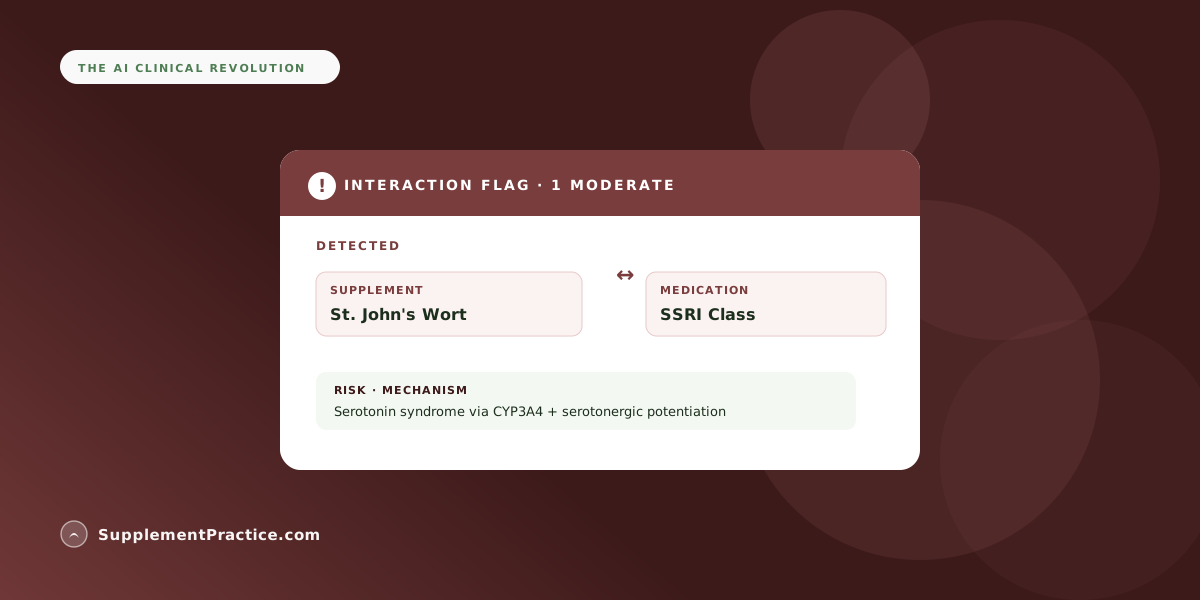
- Drug-supplement interaction pre-screen against active medications
- Lifestyle prerequisites the protocol assumes
- Practitioner override checkpoints — where clinical judgment is most needed
Root-cause clustering over symptom-to-supplement mapping
The single most important distinction between useful and useless AI survey analysis is whether the output identifies root-cause patterns or just maps symptoms directly to supplement recommendations. Symptom-to-supplement mapping produces shopping lists: "patient reports fatigue → recommend B-complex, iron, CoQ10." This isn't analysis; it's keyword matching.
Root-cause clustering produces clinical reasoning: "patient reports fatigue, afternoon crashes, low morning energy, 3 AM awakenings, salt cravings. This pattern is consistent with HPA-axis dysregulation; secondary patterns of methylation impairment (afternoon brain fog, B-vitamin sensitivity) and gut dysbiosis (post-meal bloating) are present. Lead protocol on the HPA layer; add foundational nutrition; consider stool analysis before targeting gut dysbiosis directly." This is what the AI should produce.
The difference matters because the protocol that emerges from root-cause analysis is meaningfully different from the protocol that emerges from symptom matching. Same patient, different output, different clinical trajectory.
Catalog grounding — the difference between useful and dangerous
An AI tool that suggests "magnesium glycinate 200mg twice daily" without confirming the practice carries that exact product produces a protocol the dispensary can't fulfill. Worse, generic LLMs will sometimes confidently recommend specific brand SKUs that don't exist — confident hallucination is one of the failure modes specific to AI tools that lack catalog grounding.
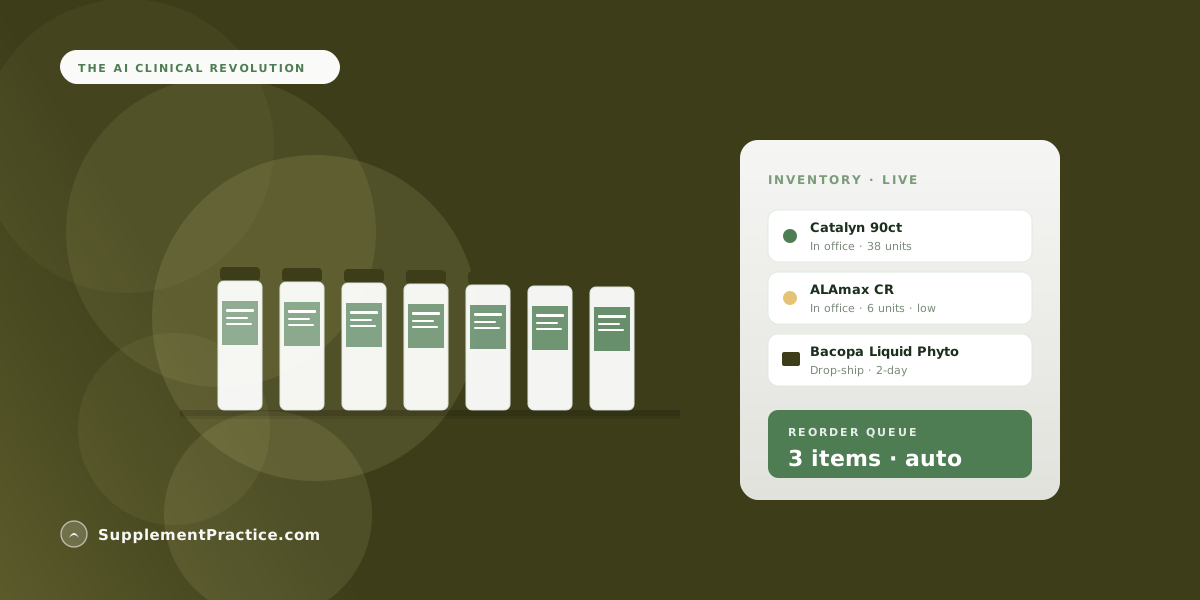
Good AI survey analysis grounds against the practice's carried brands. The output references real SKUs at real doses the practice can dispense. This is the difference between an analysis tool that produces useful clinical output and one that produces text the practitioner has to manually translate to real-world products.
Structured intake design — the input quality problem
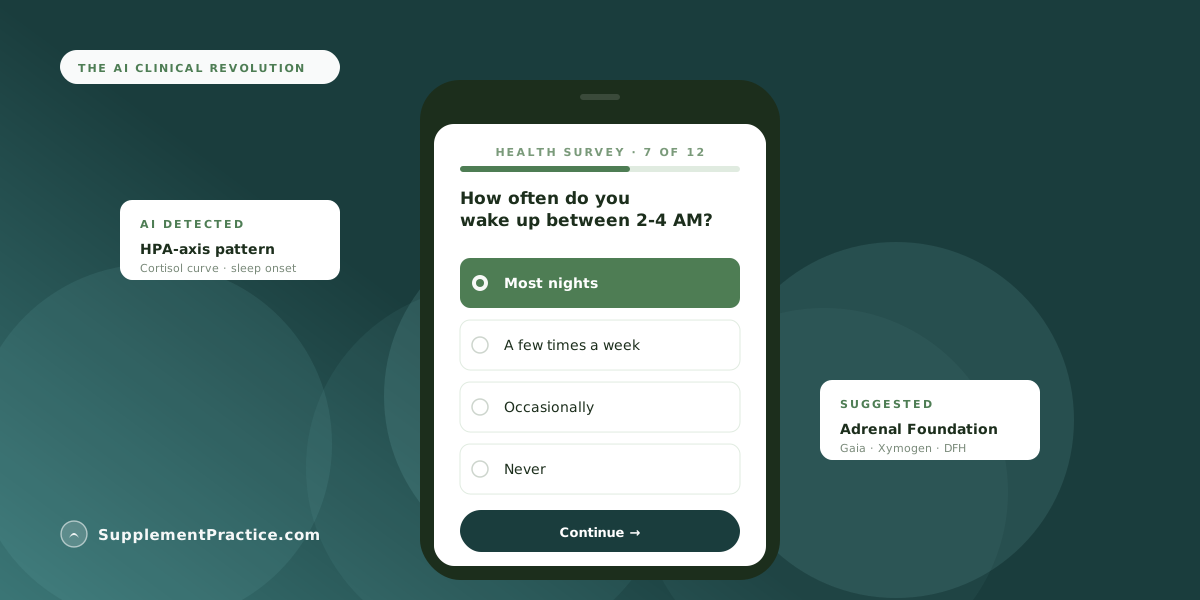
AI analysis quality is bounded by intake quality. A free-text "tell me about your symptoms" intake produces analysis that requires guessing at duration, severity, frequency, and patterns. A structured intake with severity scales, explicit duration windows, complete medication lists, and lifestyle inventories produces analysis the AI can reason about with confidence.
The structured fields that matter most:
Severity ratings. 1-10 scales for each major symptom complaint, plus a separate "how much does this affect your daily life" rating. Distinguishes a 2/10 background symptom from a 9/10 dominant complaint.
Duration windows. Explicit dates or durations — "fatigue for the past 18 months, worsening for the past 4" — not "for a while now."
Complete medication list. Active prescriptions, OTCs taken regularly, supplements currently being taken, recent (within 90 days) changes. The interaction screen depends on this being accurate.
Prior protocol history. What the patient has already tried, what worked, what didn't, why they stopped. Prevents the AI from recommending products the patient has already cycled through.
Lab uploads. Recent labs (within 12 months) as PDF or image upload. The AI can extract deficiency markers, inflammatory load, methylation indicators, lipid patterns, etc.
The four common failure modes to plan around
1. Symptom-to-supplement direct mapping. Produces shopping-list protocols. Plan around it by selecting AI tools that explicitly do root-cause clustering, not keyword matching.
2. Generic LLM without catalog grounding. Produces hallucinated SKU recommendations. Plan around it by requiring native catalog integration for any AI tool considered.
3. Lab data ignored or under-weighted. Misses critical deficiency information. Plan around it by verifying the AI tool can ingest and reason about lab uploads, not just text symptom descriptions.
4. No medication reconciliation. Interaction screen runs against stale data. Plan around it by building a forced "confirm current medications" step into the intake workflow before AI analysis runs.
49-year-old patient, complex multi-system intake, AI analysis output
A 49-year-old female patient submits the practice's structured intake: chief complaints include fatigue (7/10), anxiety (6/10), peri-menopausal symptoms (5/10), sleep disturbance (8/10), digestive bloating (4/10), and joint stiffness (3/10). Medications: levothyroxine 50 mcg, occasional NSAID. Recent labs uploaded: TSH 2.4, free T3 borderline-low, vitamin D 26, ferritin 31, MTHFR C677T heterozygous (prior genetic panel).
AI analysis output: Primary root-cause cluster 1 — HPA dysregulation (sleep + anxiety + fatigue pattern). Cluster 2 — Methylation impairment (C677T heterozygous + low B-vitamin patterns in lab + symptom overlap). Cluster 3 — Sub-optimal thyroid function despite medication (low-normal T3 + symptom load). Cluster 4 — Iron and vitamin D depletion contributing to fatigue layer.
Risk flags: borderline ferritin warrants iron-handling check; consider stool analysis if gut symptoms expand. Recommend Cyrex Array 5 if autoimmune markers suspected given peri-menopausal hormone shifts.
Suggested protocol layers, against carried brands (SP + Xymogen): HPA layer (Drenamin, Cataplex G, Min-Chex), methylation layer (Xymogen Methyl Protect), foundational nutrition (Catalyn, Cataplex F, Tuna Omega-3), targeted (vitamin D 5,000 IU, iron-C, magnesium glycinate PM). Drug-supplement screen: iron and calcium 4-hour separation from levothyroxine; otherwise no critical interactions.
Practitioner reviews this output in 3-4 minutes, validates the clustering, adjusts the iron dose based on patient-specific tolerance history, discusses priorities with the patient (lead on sleep and HPA per patient preference). Total protocol composition time: 6 minutes. Manual equivalent would have been 45+ minutes of pattern recognition and SKU lookup.
How AI survey analysis complements SP Symptom Survey and similar instruments
Standard Process's Symptom Survey is the canonical structured intake for SP-anchored practices — 200+ items mapped to SP protocol categories with decades of refinement. Modern AI survey analysis doesn't replace this instrument; it complements it. The Symptom Survey provides SP-specific pattern recognition; AI analysis provides cross-brand protocol composition and broader functional medicine reasoning.
Practices running both use the Symptom Survey for the structured intake and pattern recognition, and the AI analysis for the protocol composition that may pull from multiple brands. The two systems agree most of the time on the foundational layer; they sometimes diverge on the targeted layer where brand availability matters.
Common mistakes
Five anti-patterns in AI survey analysis
- Free-text intake. Produces ambiguous analysis. Invest in structured intake design.
- Trusting symptom-to-supplement mapping. Shopping-list output isn't analysis.
- Generic LLM without catalog grounding. Hallucinated SKUs.
- Skipping medication reconciliation. Stale data → missed interactions.
- Treating AI analysis as final answer. Structured starting point for practitioner judgment, not autonomous decision-maker.
Frequently asked questions
What should AI patient-survey analysis actually produce?
Root-cause clustering, risk flags, supplement category suggestions from carried brands, drug-supplement interaction pre-screen, lifestyle prerequisites, practitioner override checkpoints.
How does intake structure affect AI analysis quality?
Substantially. Structured intake with severity scales, duration windows, complete medication list produces analysis 4-6x more useful than free-text intake.
What are common AI-analysis failure modes?
Symptom-to-supplement direct mapping, generic LLM without catalog grounding, lab data ignored, no medication reconciliation.
How does this integrate with practitioner workflow?
Patient submits structured intake pre-visit; AI analysis runs immediately; practitioner sees output at start of visit. Clinical conversation focuses on validating pattern recognition and patient priorities.
What's the practitioner's role?
Validate root-cause clustering, adjust suggested categories based on patient priorities, catch patient-specific factors the structured intake missed. AI provides starting point; practitioner provides clinical judgment.
How is this different from SP Symptom Survey?
SP Symptom Survey is SP-specific 200-item pattern recognition instrument. AI analysis is brand-agnostic, operates against structured intake, recommends across whatever brands the practice carries. They complement each other.
Where to go next
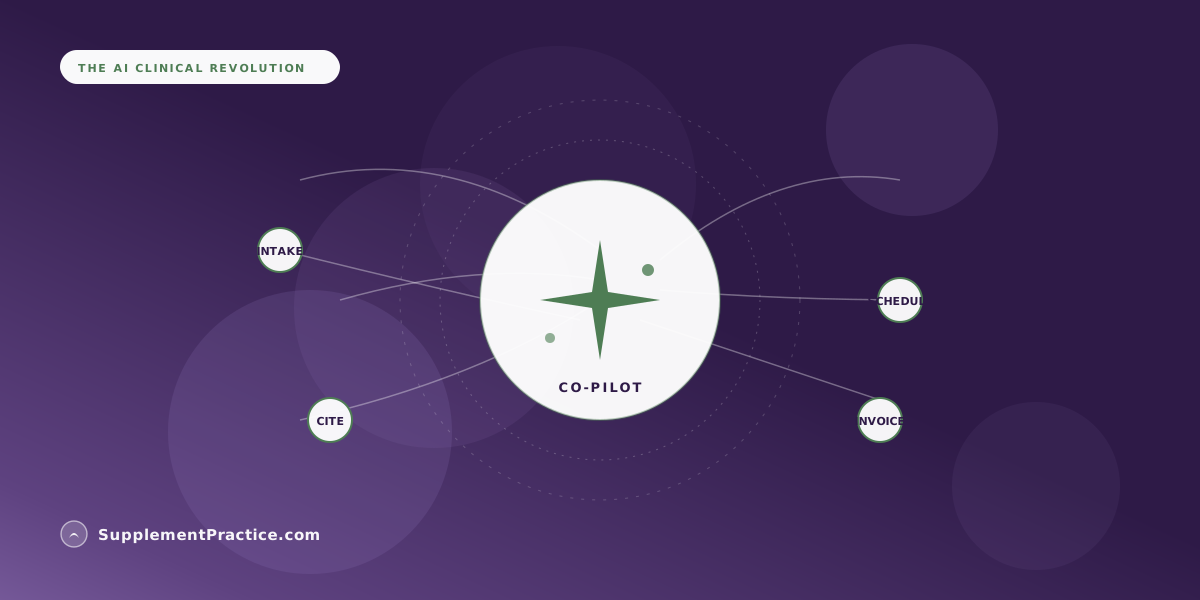
Three companion pieces: the protocol-composition workflow that builds on the survey analysis, the drug-supplement interaction screening layer, and the broader clinical-accuracy framework. Supplement Practice's AI Co-Pilot grounds in the practice's catalog and produces the structured analysis output described above.