Legacy practice management software wasn't designed for functional medicine. The architecture was built around general medical practice workflows that don't include supplement-dispensary operations, AI-assisted protocol composition, brand-catalog integration, or inventory binding. The cumulative operational drag costs 25-40 hours per practitioner per week — roughly the equivalent of an extra full work-week of administrative load on every clinician. This piece walks through the five specific gaps, what they cost, and when migration to integrated FM-native infrastructure makes sense.
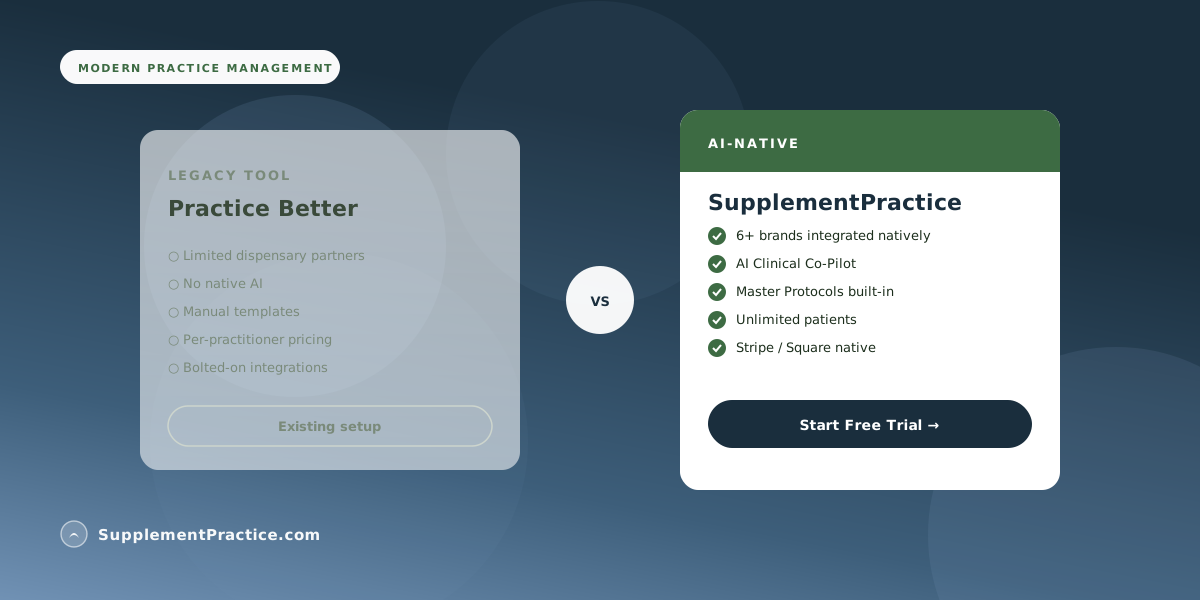
Five Gaps in Legacy PM Software for FM Practice
- No native supplement catalog integration (tab-switching to brand sites)
- No AI-assisted protocol composition (every protocol from scratch)
- No inventory binding (recommendations may not be fulfillable)
- Separate billing tools (manual reconciliation against chart)
- Intake forms that don't feed protocol composition (re-entry required)
- Total cost: 25-40 hours/practitioner/week of operational drag
Gap 1: No native supplement catalog integration
The single largest source of operational drag in legacy EHRs for FM practice. The practitioner identifies a clinical need ("patient needs methylated B-complex"), then tab-switches to xymogen.com or designsforhealth.com to look up the specific SKU, dose, and bottle size. Across multiple brands and multiple SKUs per protocol, this consumes 10-15 minutes per patient. Across 25 patients per week, 4-6 hours of lost time.
The fix: native catalog integration where the SKUs from carried brands appear in the chart's product search. Practitioner types a few characters, the catalog filters, the SKU populates automatically with current dose and bottle size. Time per protocol drops from 12 minutes to 30 seconds.
Gap 2: No AI-assisted protocol composition
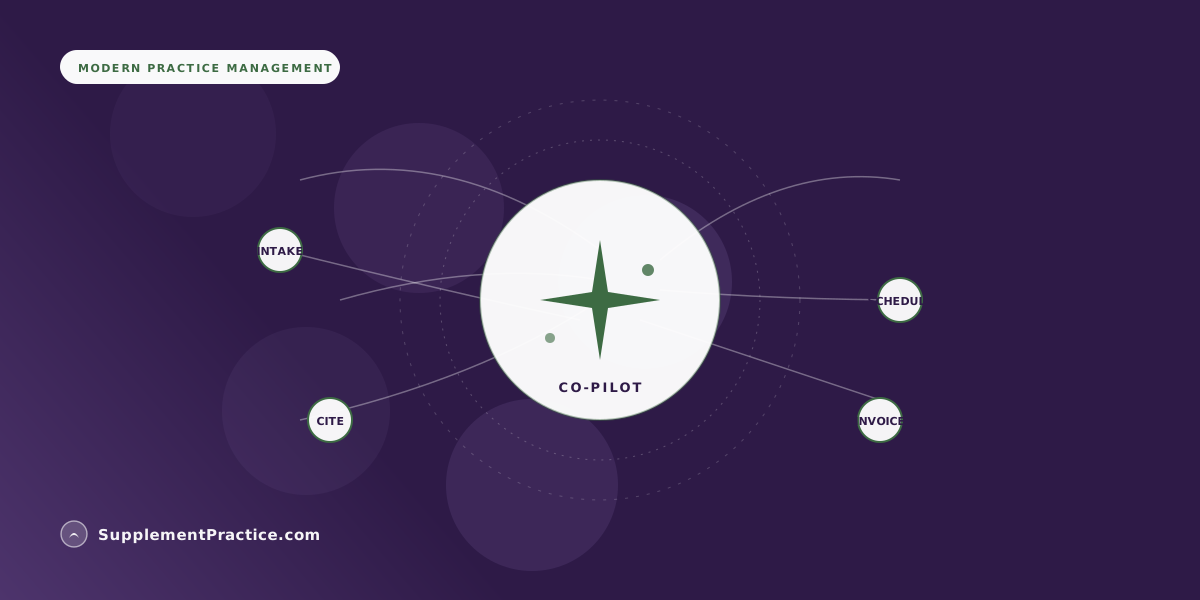
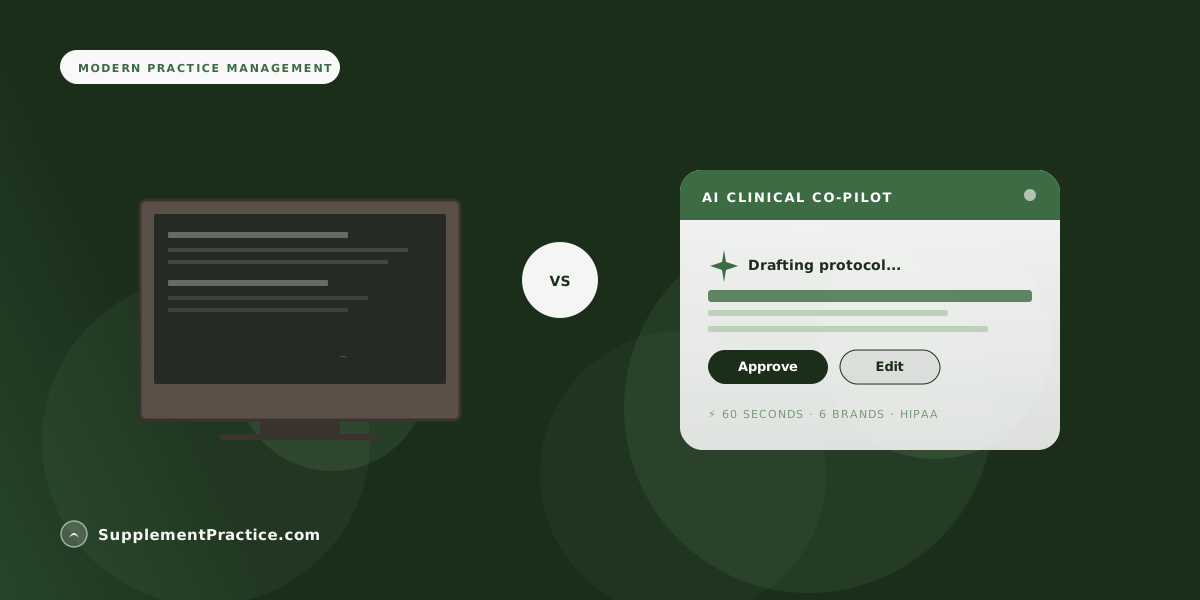
Without AI, every protocol gets composed from scratch — pattern recognition from the patient intake, product selection, dose computation, sequencing, drug-interaction screening, schedule formatting, chart documentation. 60-95 minutes per patient per protocol. With AI Co-Pilot drafting against Master Protocol templates and the practice's catalog, composition collapses to 12-15 minutes per patient including practitioner overrides. Time recovery per practitioner: 15-25 hours per week.
Gap 3: No inventory binding
Legacy systems don't link protocol composition to inventory status. The practitioner can confidently recommend a 6-product stack that, at dispense time, the clinic discovers can't fulfill because one SKU is out of stock. The patient leaves with a partial protocol or empty-handed. Adherence collapses.
Fix: real-time inventory binding so the AI Co-Pilot's recommendations are constrained to in-stock products (with dropship fallback flagged). The patient walks out with a complete protocol every time.
Gap 4: Separate billing tools
Most legacy PM workflows have the chart in one system and the billing/payment in another. Reconciling visits + dispensed products + invoices manually consumes 3-6 hours per week for a mid-size clinic. The reconciliation errors compound — missed charges, double-billed products, refund disputes.
Fix: integrated billing where the visit charge, the supplement charge, and the invoice all flow from the chart. Auto-charge at visit-end against card-on-file. Reconciliation backlog eliminated.
Gap 5: Intake forms that don't feed protocol composition
Paper intake or PDF intake produces data the AI Co-Pilot can't read. The practitioner manually interprets the intake, types relevant data into the chart, then composes the protocol. Each step is re-entry. Total time cost: 15-20 minutes per new-patient consult.
Fix: structured digital intake that flows directly into the chart and feeds the AI Co-Pilot's analysis. The practitioner sees structured output at the start of the visit. Re-entry eliminated.
4-practitioner clinic, before/after migration from Epic + Fullscript + QuickBooks stack
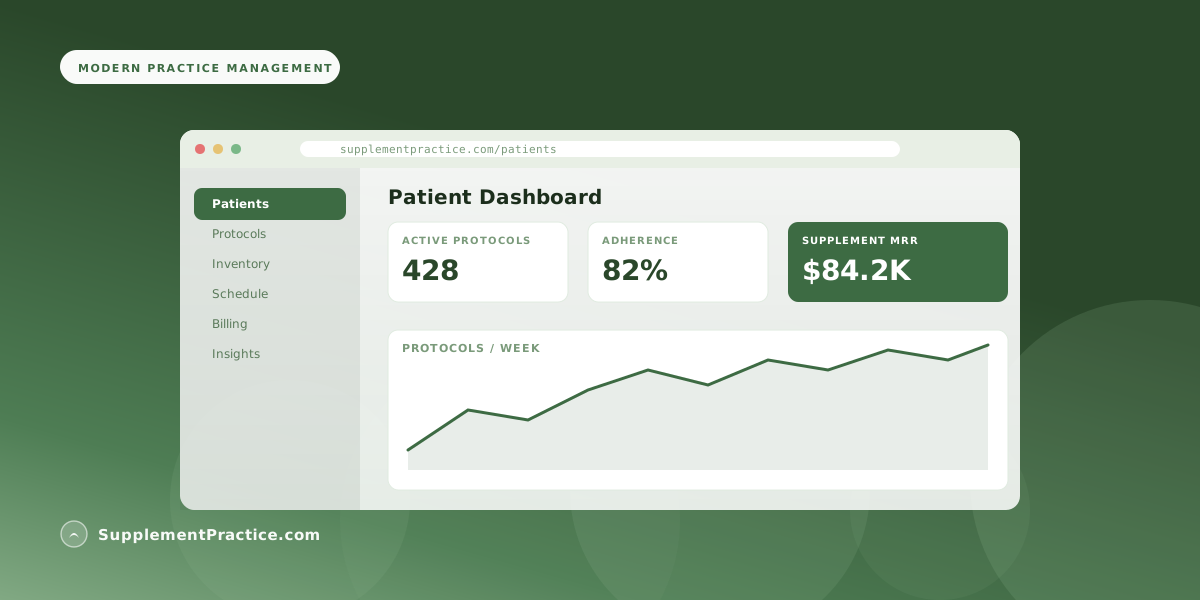
A 4-practitioner FM clinic ran on a legacy stack: Epic for charting, Fullscript for supplement dispensing, QuickBooks for billing, Acuity for scheduling, Google Forms for intake. Operational drag was significant — practitioners averaged 8-12 hours of weekend protocol composition; front-desk reconciliation backlog was 3-4 days; inventory accuracy in Fullscript drifted 8-15% from actual stock weekly.
Migrated to integrated FM-native platform over 6 weeks. Productivity dip during weeks 1-3 (~15% reduction in patient volume as the team learned the new workflows). Weeks 4-6 returning to baseline. Weeks 7-12 above baseline — by week 10 the team's weekly hours dropped roughly 30 hours total across the four practitioners, with patient volume slightly up. Weekend protocol composition eliminated; reconciliation backlog 1 day; inventory accuracy 99%+.
Migration cost: ~$12K including platform setup, data migration, and the productivity dip during ramp. Payback at day 75 via operational time savings. Year-1 ROI ~18x platform cost.
What signals migration is needed
Three concrete signals together indicate the legacy infrastructure is bottlenecking.
Practitioner burnout signals. Chronic overtime, vacation time that doesn't happen, evening or weekend protocol composition that's become routine rather than occasional.
Inventory accuracy drift. Manual tracking systems no longer match physical stock. Stockout incidents at dispense. Reorder management consuming disproportionate front-desk time.
Patient experience degradation. Adherence rates drop. Patient satisfaction softens. Recurring complaints about scheduling, billing, or dispense issues.
Any one signal alone is workable. Two or three together indicate the platform is the bottleneck and migration is overdue.
Common mistakes
Anti-patterns in legacy software decision-making
- Tolerating "good enough" because migration feels disruptive. The accumulated drag exceeds the migration cost within 90 days.
- Bolting on AI tools to a legacy stack. Partial savings; reintroduces tab-switching friction.
- Underestimating migration time. Realistic timeline is 4-8 weeks; budget for productivity dip.
- Not training the team explicitly. Without training, staff revert to legacy habits.
- Not measuring before/after. Can't justify the migration if the savings aren't quantified.
Frequently asked questions
What's specifically wrong with legacy PM software for FM?
Five gaps: no catalog integration, no AI protocol composition, no inventory binding, separate billing, intake that doesn't feed protocols.
How much time does this cost?
25-40 hours per practitioner per week of operational drag.
Why don't legacy EHRs add these features?
Architecture lock-in and customer mix priorities. Legacy EHRs designed for general medical practice; adding FM-specific features requires re-architecture.
What about Practice Better, Healthie, similar tools?
Fill some gaps (scheduling, telehealth, patient communication) but typically not catalog integration with AI composition + inventory binding in the same workflow.
What's the migration cost?
4-8 weeks operational disruption, training, data migration. For 3-practitioner clinic: $8-18K total. Payback at 60-90 days.
What signals migration is needed?
Practitioner burnout signals, inventory accuracy drift, patient experience degradation. Two or three together indicates legacy infrastructure is the bottleneck.
Where to go next
Three companion pieces: the dollar ROI math on migration, why practitioners specifically leave Fullscript, and where the admin drag comes from. Supplement Practice is the FM-native integrated platform that addresses the five gaps directly.