Administrative drag isn't one big problem — it's five smaller problems that compound when systems don't talk to each other. Protocol composition, chart documentation, scheduling/rescheduling, inventory and dispensing, billing reconciliation. In a typical mid-size clinic running disjointed tools, these consume 35-50% of total operational time. An integrated platform with AI-assisted workflows reduces most of each, recovering 35-50 hours weekly across a 3-practitioner clinic. This piece walks through where the drag actually comes from and the specific operational moves that reduce it.
Five Sources of Administrative Drag
- Protocol composition: manual SKU lookup, dose math, transcription
- Chart documentation: SOAP notes, structured chart entry
- Scheduling/rescheduling: cascade rebooking, reminder calls
- Inventory and dispensing: count, reorder, expiry tracking, point-of-dispense
- Billing reconciliation: matching invoices to dispensed products and visits
- Integrated platform reduces 35-50 hours/week for 3-practitioner clinic
Source 1: Protocol composition
Manual protocol composition takes 60-95 minutes per patient: 15-25 minutes of catalog SKU lookup across multiple brand websites, 30-45 minutes of composition (matching products to clinical pattern, computing doses, sequencing), 10-15 minutes of dose math and bottle-supply calculation, 10-15 minutes of transcribing the protocol into the chart. Across 25 patients per week per practitioner, that's 25-40 hours of weekly composition work.
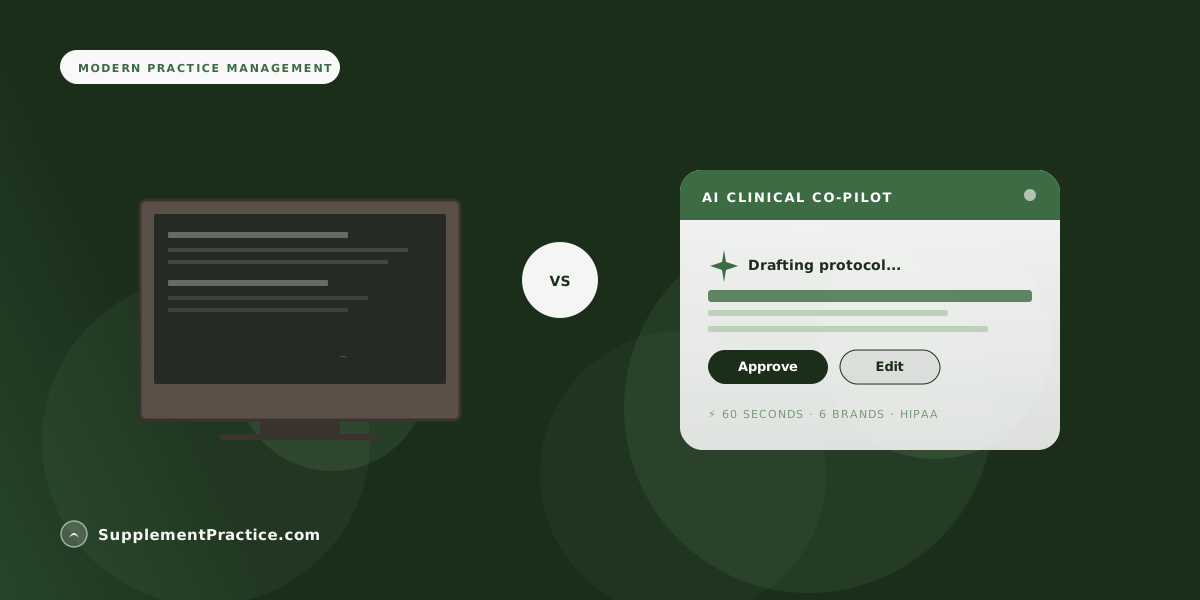
AI-assisted composition with native catalog and Master Protocol templates collapses this to 12-15 minutes per patient. The lookup is in-chart. The composition is template-driven with practitioner override. The math is auto-computed. The chart entry auto-generates from the structured protocol record. Time savings per practitioner: 18-30 hours weekly.
Source 2: Chart documentation
SOAP-format chart notes are the operational backbone of clinical documentation but consume meaningful time when done manually. Typical post-visit documentation takes 8-15 minutes per patient. For a busy practitioner running 25-35 visits weekly, that's 3-9 hours of weekly documentation time.
AI-generated chart notes drawn from the structured protocol record + AI-summarized visit content (when the practice uses transcription) reduce this to 2-3 minutes of practitioner review/sign-off per note. The practitioner verifies accuracy; they're not authoring from blank page. Time savings per practitioner: 4-7 hours weekly.
Source 3: Scheduling and rescheduling
Phone-based scheduling and rescheduling consume disproportionate front-desk time, particularly in practices where one patient cancellation creates a cascade of follow-up calls to fill the slot. A typical mid-size clinic runs 15-25 reschedule events weekly, each consuming 5-10 minutes of front-desk time.
One-click patient rebooking (the SMS-with-link pattern), automated reminder cadence (24h email + 2h SMS), and patient-initiated rescheduling through a patient portal eliminate most of this load. Front-desk time savings: 5-10 hours weekly. Side benefit: no-show rates drop substantially because patients can rebook themselves when conflicts arise rather than no-show by default.
Source 4: Inventory and dispensing
Manual inventory tracking (spreadsheet + counting) consumes 2-4 hours weekly for a typical mid-size clinic, plus the reorder management cycle. Dispensing itself (counting bottles, labeling, tracking what went where) consumes additional time at each patient checkout.
Integrated inventory with auto-decrement at protocol approval, days-of-cover reorder triggers, per-bottle expiry tracking, and bottle math computed at dispense reduces this to roughly 30 minutes weekly of inventory review. Time savings: 1.5-3.5 hours weekly. Bigger savings if the clinic was experiencing stockout-driven patient frustration that consumed additional reactive time.
Source 5: Billing reconciliation
Billing reconciliation — matching invoices to dispensed products and visits — is the operational pain that compounds when systems don't talk. Front-desk runs the visit charge; separate dispensing tool tracks what bottles went home; separate billing software produces the invoice; reconciliation requires manual cross-checking. Typical reconciliation drag: 3-6 hours weekly.
Integrated billing with auto-charge at visit-end, supplement order tied to the visit, and unified invoice generation eliminates this. Time savings: 2-5 hours weekly.
3-practitioner clinic, 92 weekly admin hours → 38 hours after integration
A 3-practitioner FM clinic running pre-integration was at roughly 92 hours/week of total administrative time across practitioners and 2 front-desk staff. Breakdown: protocol composition 48 hours (16 per practitioner), chart documentation 18 hours (6 per practitioner), scheduling 12 hours (front-desk), inventory 6 hours, billing reconciliation 8 hours.
Post-integration onto a unified platform with AI-assisted workflows: protocol composition 18 hours (-30), chart documentation 8 hours (-10), scheduling 4 hours (-8), inventory 1 hour (-5), billing reconciliation 2 hours (-6). Total: 33 hours/week — a 59-hour reduction.
The clinic redirected 30 of the recovered hours to additional patient slots (~8 more new-patient consults per week, ~$2,800 incremental weekly revenue). 20 hours went to reducing one front-desk role from full-time to 30 hours (saving ~$22K annually). 9 hours went to senior practitioner time for case review and Master Protocol library maintenance — reinforcing the consistency mechanisms that keep the platform working.
What still requires manual work — and should
Not everything should be automated. Three categories that stay manual: clinical judgment during patient visits (the AI drafts; the practitioner judges); patient communication that requires empathy or nuance (cancer-related conversations, complex bad-news framing, patient anxiety about protocols); and edge-case decisions where the AI's draft doesn't apply (rare conditions, severe polypharmacy, unusual presentations).
The goal of integration isn't full automation. It's eliminating the operational waste that doesn't require human judgment so that practitioners can spend more time on the work that does.
Common mistakes
Anti-patterns in admin-drag reduction
- Bolt-on AI without integrating the rest. Partial savings only.
- Not canceling the old tools. Stack consolidation savings require actually decommissioning replaced tools.
- Trying to automate clinical judgment. Wrong target; keeps practitioners in the loop appropriately.
- Skipping training. The integration produces no savings if practitioners revert to manual habits.
- No before/after measurement. Can't defend or replicate what isn't measured.
Frequently asked questions
What are the five sources of administrative drag?
Protocol composition, chart documentation, scheduling/rescheduling, inventory and dispensing, billing reconciliation. Together 35-50% of total clinic operational time.
What's the biggest single lever for reducing drag?
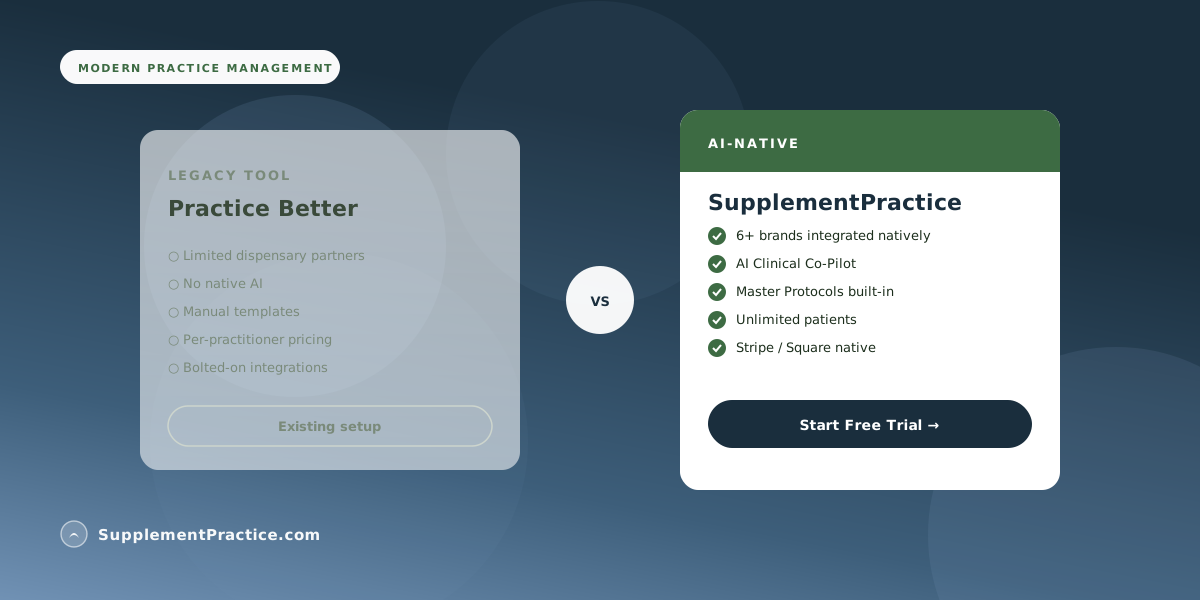
Integrated platform handling all five in one system rather than 5-8 separate tools. Inter-task waste (re-entry, reconciliation) often exceeds in-task time.
How much admin time can be recovered?
3-practitioner clinic: 35-50 hours/week of weekly administrative time recoverable. Approximately one full-time equivalent.
What stays manual that shouldn't be?
Spreadsheet inventory outside PM system, separate billing software, manual rescheduling, paper/PDF intake, separate patient communication.
How does AI specifically reduce drag?
Protocol composition (95min → 12min), chart documentation auto-generated, bottle-supply math automatic, drug-interaction screening automated.
What's the ROI on integration?
3-practitioner clinic: 15-30x platform cost in year one. Time savings dominate; revenue lift and stack consolidation add.
Where to go next
Three companion pieces: the dollar ROI math, the per-protocol time breakdown, and scaling FM practice without proportional staff growth. Supplement Practice consolidates the five sources of admin drag into a single integrated workflow.