Supplement Practice and Practice Better are different platform philosophies serving overlapping but distinct FM practice patterns. Practice Better is a general FM-targeted practice management platform with strong scheduling, telehealth, and patient communication — supplement dispensing happens via Fullscript integration. Supplement Practice is built around the supplement-protocol workflow as the central feature — native catalog integration with AI Co-Pilot, Master Protocol library, inventory binding to physical and dropship stock. For high-volume FM clinics where supplements are central to the clinical product, the architectural difference matters. This piece walks through where each platform wins.
Architectural Comparison
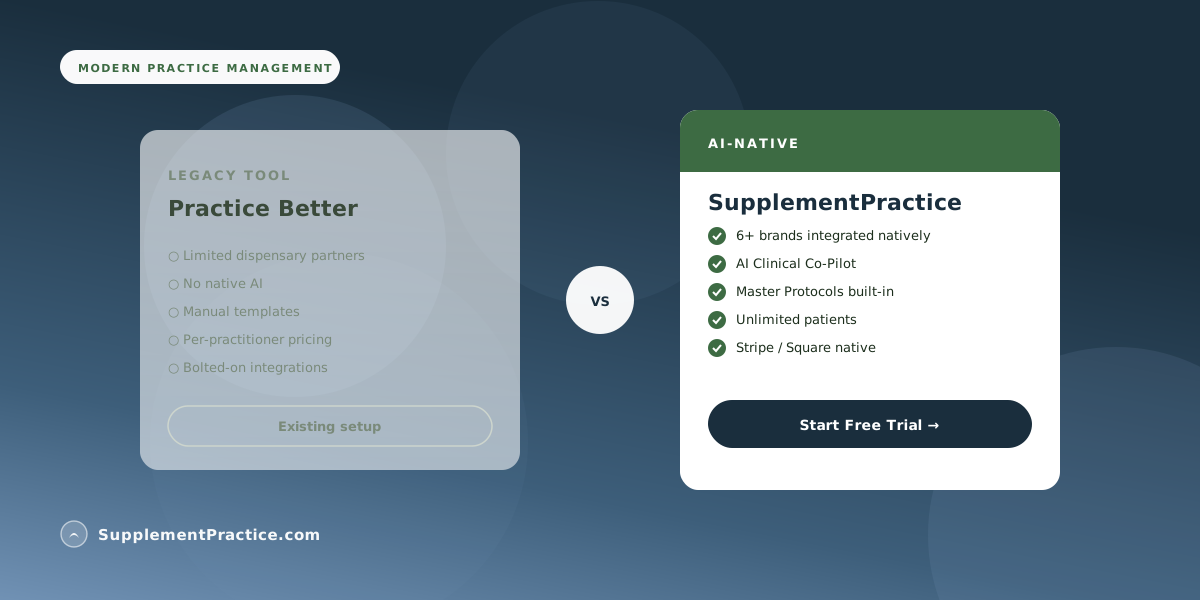
- Practice Better: general FM PM with Fullscript dispense integration
- Supplement Practice: supplement-workflow-first architecture
- AI: Practice Better focuses on communication; Supplement Practice on protocol composition
- Inventory binding: Supplement Practice native; Practice Better via Fullscript dropship
- Master Protocols + override analytics: Supplement Practice deeper
- Scheduling, telehealth, communication: Practice Better deeper
The architectural difference
The platforms have different design centers and the operational implications follow from that.
Practice Better was designed as a general functional-medicine practice management platform. The strengths sit in scheduling, telehealth, patient communication, intake forms, and chart management. Supplement dispensing is handled via integration with Fullscript — the dispense workflow lives in Fullscript's tool, with the chart in Practice Better. For FM practices where supplements are one clinical intervention among many (lifestyle coaching, lab interpretation, behavioral health, etc.), this architecture works well.
Supplement Practice was designed around the supplement-protocol workflow as the central operational feature. Native catalog integration with the practice's carried brands, AI Clinical Co-Pilot drafting protocols, Master Protocol library, inventory binding (physical + dropship), and the dispense workflow all live in the same chart. Scheduling, communication, and the rest of the practice management stack are built around this core. For FM practices where supplement protocols are central to the clinical product, this architecture produces meaningfully different operational outcomes.
Where each platform wins
Practice Better wins when: the practice is supplement-light (telehealth nutrition coaching, lifestyle medicine, behavioral health-heavy FM). Scheduling and telehealth volume is high relative to supplement composition. Multi-program practices running courses, group programs, or coaching engagements alongside clinical care. The practice values the breadth of features and is comfortable with Fullscript handling the dispense layer.
Supplement Practice wins when: supplement protocols are the central clinical product (chiropractic-FM, nutrition-led FM, integrative medicine with significant dispensary revenue). The practice carries physical inventory in the office for same-day dispense. AI-assisted protocol composition would meaningfully reduce per-protocol time. The practice is growing and needs Master Protocol library + new-practitioner onboarding compression. Multi-practitioner clinical consistency is a critical concern.
Neither platform is universally better. The decision should follow the practice's clinical workflow center of gravity.
AI integration depth comparison
Both platforms have AI features. The depth and focus differ significantly.
Practice Better's AI is primarily focused on patient-facing communication and clinical documentation — intake summarization, AI-drafted patient messages, chart note assistance. Useful features that reduce administrative drag.
Supplement Practice's AI is built into the supplement-protocol workflow — Clinical Co-Pilot drafting protocols against the practice's carried brands with drug-interaction screening, Master Protocol grounding, and override workflow integrated into the chart. For practices where protocol composition is the dominant clinical activity, this is the higher-leverage AI integration.
Inventory binding — the meaningful operational difference
For practices carrying physical inventory in the office, the platform's inventory architecture determines whether the AI's protocol recommendations are operationally fulfillable.
Supplement Practice binds protocol composition to on-hand inventory (physical stock + dropship availability), so AI recommendations are constrained to what the practice can actually deliver. Stockouts at dispense are largely eliminated.
Practice Better delegates inventory to Fullscript for the dropship side; practices carrying physical inventory typically manage that in a separate spreadsheet or inventory tool. The protocol composition workflow doesn't see physical inventory directly. This works fine for dropship-only practices; it produces operational gaps for practices with physical inventory.
Two clinics, same patient volume, different platform fit
Clinic A: chiropractic-FM, 4 DCs, 720 active patients, $24K/month supplement revenue, carries 60+ SKUs of physical inventory across SP and Designs for Health. Heavy supplement-protocol composition (per-patient supplement spend is a meaningful portion of practice revenue). Master Protocol library + Co-Pilot grounding + physical inventory binding are operationally central. Supplement Practice fits cleanly.
Clinic B: virtual nutrition coaching practice, 2 RDs, 380 active patients, dropship-only (Fullscript) for supplements at modest volume, primary clinical product is behavior change and lifestyle coaching via group programs and 1:1 sessions. Scheduling, telehealth, patient communication, course delivery, and program management are the operational center. Practice Better fits cleanly.
Both clinics are "high-volume" by patient count. The right platform for each depends on which clinical workflows dominate the practice — not on patient panel size in isolation.
Multi-practitioner support at scale
Both platforms support multi-practitioner clinics. The feature emphasis differs.
Practice Better has strong scheduling, team-coordination, group-program management, and the multi-program structure that complex multi-disciplinary FM practices benefit from. For practices running mixed clinical and group-coaching offerings, this is operationally significant.
Supplement Practice emphasizes the Master Protocol library + override analytics + outcome benchmarking that support clinical-consistency work across practitioners. For high-volume FM clinics where consistency across the team is a critical concern, this tooling is more developed.
Common mistakes
Anti-patterns in platform selection
- Choosing on per-practitioner price. Operational time savings dwarf platform cost differential.
- Treating "supplement workflow" as a peripheral feature. For supplement-heavy FM clinics, this is the central workflow.
- Ignoring inventory architecture. Physical-inventory practices need binding; Fullscript-only integration leaves gaps.
- Picking based on AI marketing rather than AI integration depth. Verify the AI features address the workflow that actually consumes practitioner time.
- Not piloting before committing. A 4-week structured pilot produces the data needed for confident selection.
Frequently asked questions
What's the core difference?
Practice Better: general FM PM platform with Fullscript dispense integration. Supplement Practice: supplement-workflow-first architecture with native catalog, AI, inventory.
Which is better for high-volume FM specifically?
Depends on clinical workflow center of gravity. Supplement-heavy FM: Supplement Practice. Behavior-coaching/group-program FM: Practice Better.
How does AI integration compare?
Practice Better: patient communication, intake summarization. Supplement Practice: protocol composition with catalog grounding and interaction screening.
What about inventory binding?
Supplement Practice native (physical + dropship). Practice Better via Fullscript (dropship only).
Multi-practitioner support?
Practice Better: scheduling and team-coordination depth. Supplement Practice: Master Protocols + override analytics + outcome benchmarking depth.
Cost comparison?
Per-practitioner subscription on both. All-in cost typically comparable for full-workflow coverage. Don't choose on per-practitioner price; operational time savings dwarf cost.
Where to go next
Three companion pieces: the broader legacy-software case, specifically on Fullscript migration, and platform ROI math. For practices already on Practice Better evaluating a switch, the migration timeline is typically 3-6 weeks.