The "80% reduction in research hours" claim is real, but it needs to be unpacked or it sounds like marketing. The savings come from compressing five specific tasks — brand SKU lookup, protocol composition, schedule formatting, drug-interaction screening, and chart note transcription — that collectively dominate the per-protocol time budget in most functional medicine practices. This piece breaks down where the hours actually go, what AI compresses cleanly, and what stays manual because it should.
Per-Protocol Time Breakdown: Manual vs. AI-Assisted
| Task | Manual | AI-assisted | Where the savings come from |
|---|---|---|---|
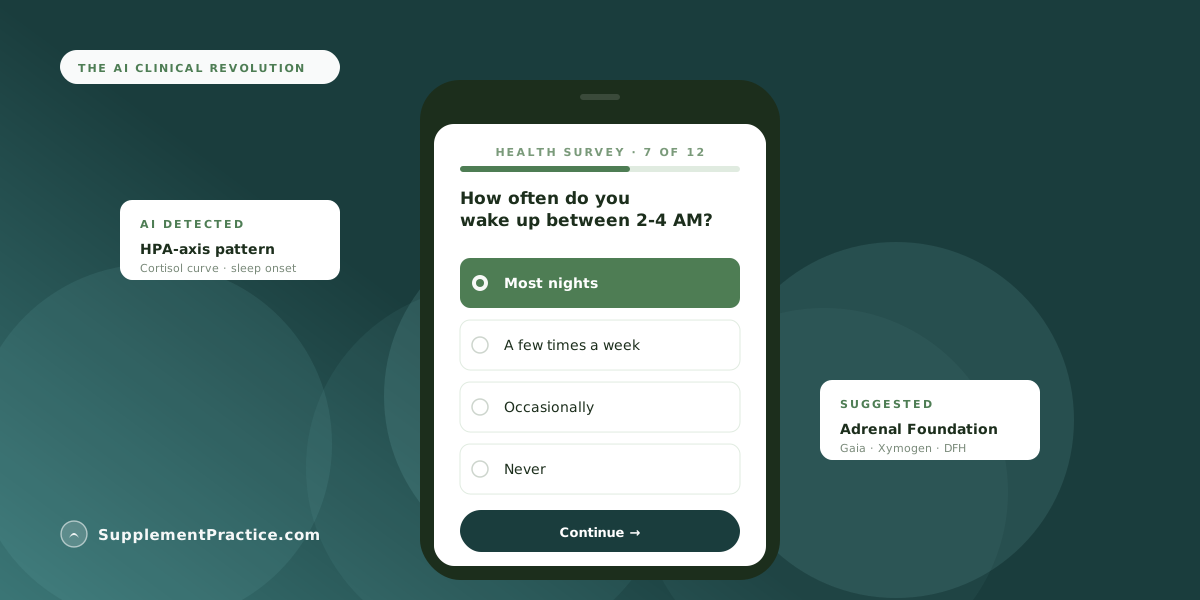
| Intake review | 20 min | 3 min | AI clusters symptoms into root-cause patterns |
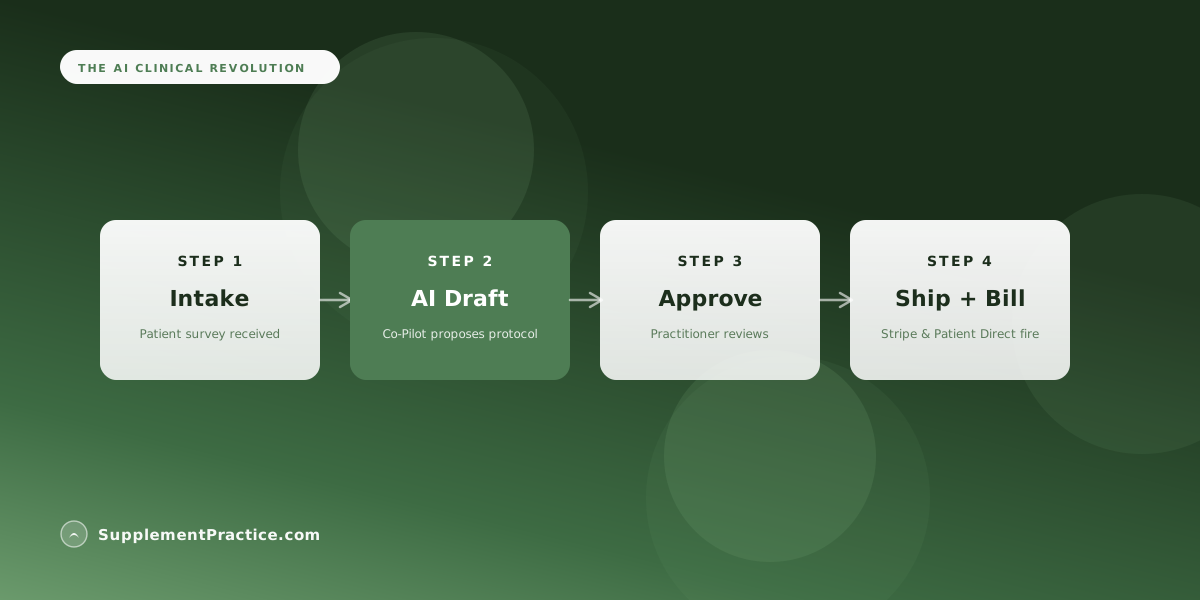
| Protocol composition | 30-45 min | 3 min review | AI drafts; practitioner overrides |
| Brand SKU lookup | 10-15 min | ~0 min | Native catalog in chart |
| Drug-interaction screening | 10-20 min | ~0 min | Automated cross-reference |
| Schedule + bottle math | 8-12 min | ~0 min | Auto-computed |
| Chart note transcription | 10-15 min | 2 min review | Auto-generated from structured protocol |
| Patient handoff | 10 min | 3 min | Schedule/invoice/order auto-sent |
| Total per protocol | 95-130 min | 11-15 min | ~85-90% reduction |
What "research hours" actually means in a real practice
The phrase "supplement research hours" tends to evoke an image of the practitioner reading PubMed at 11 PM, but that's not where the time mostly goes. In real functional medicine practices, the research hours are dominated by five operational tasks that don't look like research but functionally are.
Brand catalog lookup. The practitioner sits with the patient intake, decides "this patient needs a B-complex with active folate plus a calcium product the patient can tolerate," and then has to figure out which specific SKUs in which brands match that intent. Standardprocess.com in one tab, xymogen.com in another, Designs for Health in a third. 10-15 minutes per protocol on tab-switching, scrolling product pages, copying SKU codes back to the chart. This isn't clinical research — it's catalog research — and it's the single largest time sink.
Protocol composition. Once the SKUs are identified, composing the AM/PM schedule, computing doses and durations, picking the bottle sizes that match the protocol length, and writing out the rationale for each product takes 30-45 minutes for a complex multi-system protocol. Again, this isn't original research — it's structured composition that follows reliable patterns.
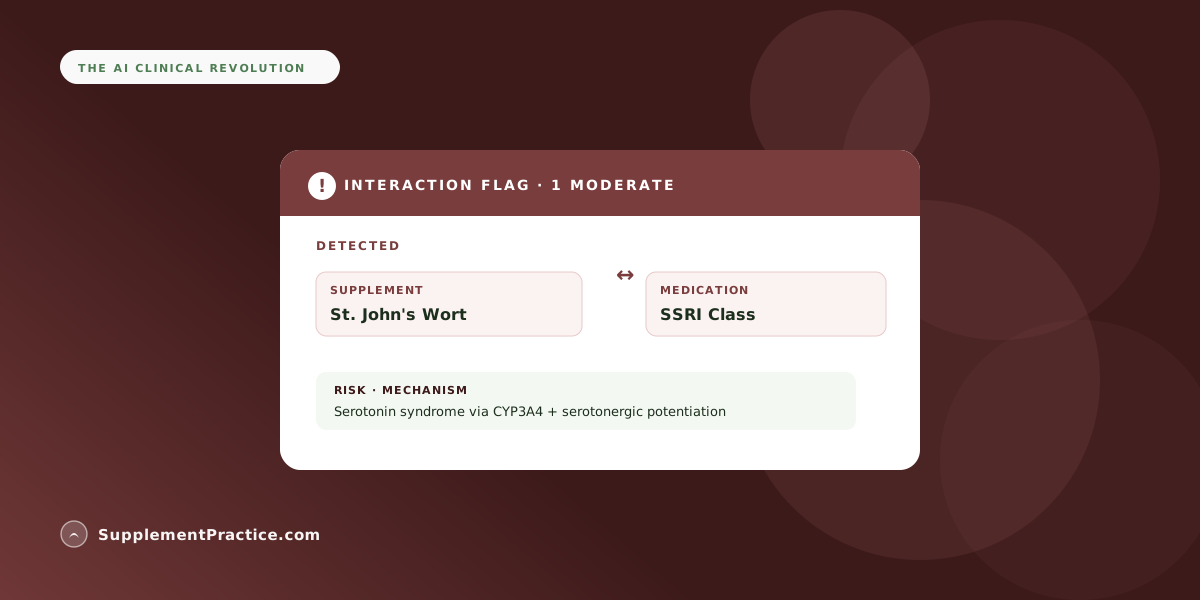
Drug-interaction screening. Looking up each supplement against the patient's medication list in Lexicomp or Natural Medicines Comprehensive Database. 4-8 minutes per pairing. Most practitioners skip this step partially or entirely because manual screening is impractical at clinic volume — and that's the patient safety risk the AI eliminates.
Schedule formatting and bottle-supply math. Generating the printable AM/PM schedule with bottle counts, days-of-supply math, and patient-readable formatting. 8-12 minutes manually; trivially automated.
Chart documentation. Transcribing the protocol decision-making into a SOAP-format chart note. 10-15 minutes if done thoroughly; often skipped in busy practices, which produces documentation-quality issues at audit time.
Where AI compresses cleanly
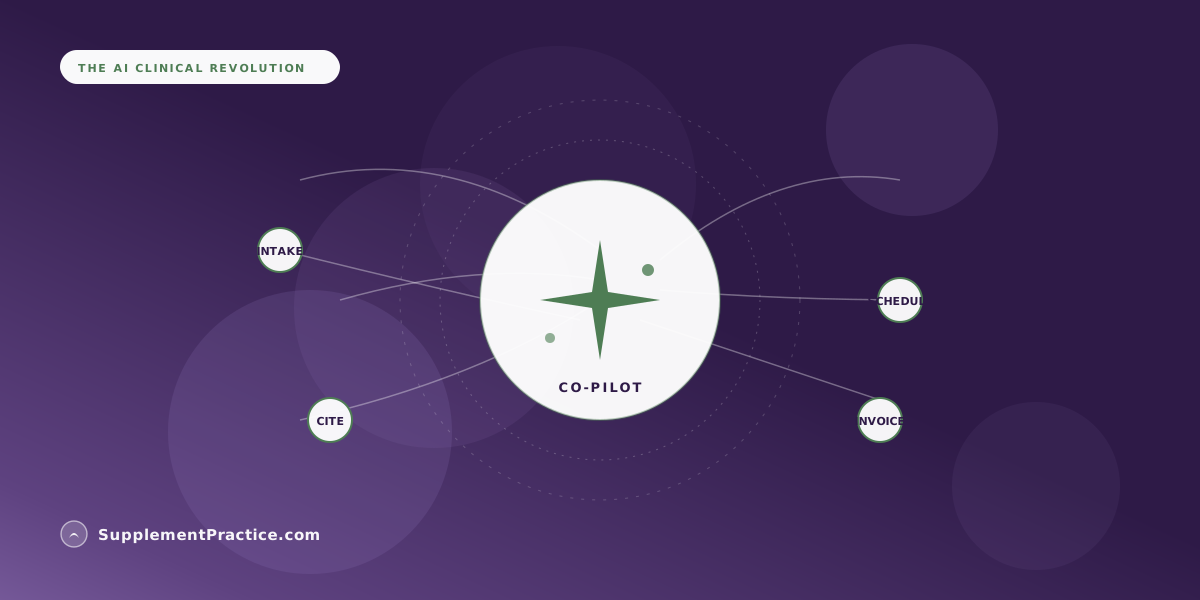
All five of the tasks above compress cleanly when the practice management software has three specific capabilities. Native brand catalog integration eliminates the tab-switching. AI Clinical Co-Pilot with catalog grounding eliminates the composition friction — the practitioner reviews and overrides instead of authoring from scratch. Inventory binding means the recommendations match what the clinic actually carries, so the patient walks out with the bottles.
The result is per-protocol time dropping from ~95 minutes to ~11-15 minutes — including the practitioner overrides, the chart note review, and the patient handoff. Across a practice running 25 protocols per week, the reclaimed time is roughly 30 hours weekly per practitioner. That's not a marketing number; it's measured during onboarding audits in the practices we work with.
What does not compress (and shouldn't)
The clinical conversation with the patient. The decision about which root-cause pattern to address first. The judgment about whether a particular patient needs the standard dose or a titrated start. The negotiation about cost, lifestyle, and compliance priorities. The patient education about what to expect in the first 14 days. All of these are practitioner work, not catalog or composition work, and they shouldn't get compressed by the AI workflow.
A 30-minute new-patient consultation that used to be 5 minutes of conversation + 25 minutes of after-hours protocol writing now becomes 30 minutes of conversation + 5 minutes of in-visit protocol review. The patient gets more face time; the practitioner stops doing protocol homework at 11 PM. That's the right trade.
The three patterns of how practitioners use the reclaimed time
In the practices that have made this transition, the reclaimed hours flow into one of three patterns, roughly evenly distributed.
More face time per patient. Some practitioners stretch the new-patient visit to 75-90 minutes, the follow-up visit to 45 minutes. The clinical conversation becomes the differentiator versus other practices in the area. This pattern works when the practice is brand-new or trying to upmarket its positioning.
Higher visit volume. Other practitioners add 2-3 additional appointment slots per day. At a $180-260 per-visit fee structure, that's $9,000-16,000 in incremental monthly revenue. This pattern works when the practice has waitlist demand and is operating below capacity.
4-day clinical work week. A growing pattern is dropping one day of patient visits and reinvesting the time into case review, continuing education, or just rest. This pattern works when the practitioner is at or near burnout — which most functional medicine practitioners are — and the practice can afford the volume reduction without economic strain.
Solo functional medicine practitioner, 28 protocols/week, 9-hour Saturday catch-up day eliminated
A solo FM practitioner running 28 protocol patients per week pre-transition was spending Saturdays from 8 AM to ~5 PM catching up on protocol writing and chart documentation from the week. The Saturday day wasn't billable; it was just "the cost of running the practice." Total weekly hours: roughly 55, with the Saturday block being the primary burnout vector.
Post-transition (native catalog, AI Co-Pilot, inventory binding, FAQPage schema, all the operational pieces), per-protocol time dropped from ~95 minutes (week 4 measurement) to ~13 minutes. Total weekly hours: 38. Saturday was eliminated as a work day. The practitioner reinvested 3 of the reclaimed hours into 4-5 additional weekly appointment slots (net incremental revenue: ~$2,400/month) and kept the rest as recovered time.
One subtler observation: the practitioner reported that the quality of clinical thinking during patient visits improved because they were no longer mentally fatigued from the prior week's homework. The Saturday backlog had been a hidden quality drag on Monday-Wednesday visits.
The 30-day ramp to steady state
Practices don't hit the steady-state time savings on day one. Realistic ramp:
Week 1. Slower than manual workflow. The practitioner is learning the override patterns, configuring the carried-brands filter, getting comfortable with the catalog interface. Per-protocol time is roughly equal to manual or slightly worse.
Week 2. Comparable to manual. The practitioner has internalized the workflow; specific clicks and overrides happen faster. Per-protocol time approaches 25-30 minutes, midway between manual and steady-state.
Week 3. Approaching steady state. Per-protocol time hits 15-20 minutes. The practitioner notices schedule slack opening up by mid-week.
Week 4-5. Steady state. 11-15 minutes per protocol. The practitioner adjusts visit volume or schedule structure based on the reclaimed hours.
Practices that don't see steady-state savings by week 6 usually have a structural issue — typically missing one of the three capabilities (native catalog, AI grounding, inventory binding) or a workflow habit that resists the new model.
Common mistakes
Five anti-patterns that prevent the time savings from materializing
- Authoring instead of reviewing. Some practitioners can't stop themselves from composing the protocol from scratch even when the AI has drafted a reasonable starting point. The point is to review and override, not to re-author.
- Not configuring the carried-brands filter. If the catalog isn't filtered to what the clinic stocks, the AI keeps surfacing products the practitioner has to manually swap out. 30 minutes of setup eliminates this.
- Skipping the medication reconciliation step. The interaction screen depends on an accurate medication list. Skipping reconciliation means the screen runs against stale data, which means the practitioner ends up manually checking anyway.
- Compressing the patient conversation. The time saved on catalog and composition should flow into face time or out of after-hours work — not into shortening the patient interaction.
- Not measuring the before/after. Practices that don't time-track their per-protocol hours before and after the transition can't tell whether the savings are real or imagined. Spend a week tracking actual minutes; the data is its own incentive.
Frequently asked questions
Is the 80% time-savings claim real or marketing?
Measured, but only for the supplement-protocol portion of the visit. Per-protocol time drops from ~95 min to ~11-15 min including overrides — ~85% reduction. The clinical conversation with the patient doesn't get compressed and shouldn't.
Where does the time savings actually come from?
Brand catalog lookup (10-15 min → ~0), protocol composition (30-45 min → 3 min review), schedule formatting and bottle math (auto-computed), drug-interaction screening (automated), and chart note transcription (auto-generated from structured protocol).
What do practitioners do with the reclaimed time?
Three patterns dominate: more face time per patient, higher visit volume (2-3 more slots/day), or 4-day clinical work week. Right answer depends on growth stage and burnout risk.
Does the time savings compromise protocol quality?
Not when the workflow is designed correctly. AI drafts; practitioner reviews and overrides. Override rate stays at 40-60% in well-functioning practices; only the composition friction is eliminated.
How long does it take to realize the time savings?
30 days for most practices. First 7-14 days are slower than manual as practitioners learn override patterns. Week 3-4 approaches steady-state; by week 5 the savings show reliably in scheduling.
What's the operational dependency for hitting the time savings?
Three things: native brand catalog integration, AI Co-Pilot with grounding, inventory binding. Practices with only one or two see partial savings; practices missing all three see no meaningful change.
Where to go next
Three companion pieces: the broader replacement of manual research with the Co-Pilot workflow, the dollar-level ROI math on the platform transition, and the protocol-building workflow that delivers the savings. Supplement Practice reports per-protocol time metrics inside the practitioner dashboard so the savings are measurable, not asserted.