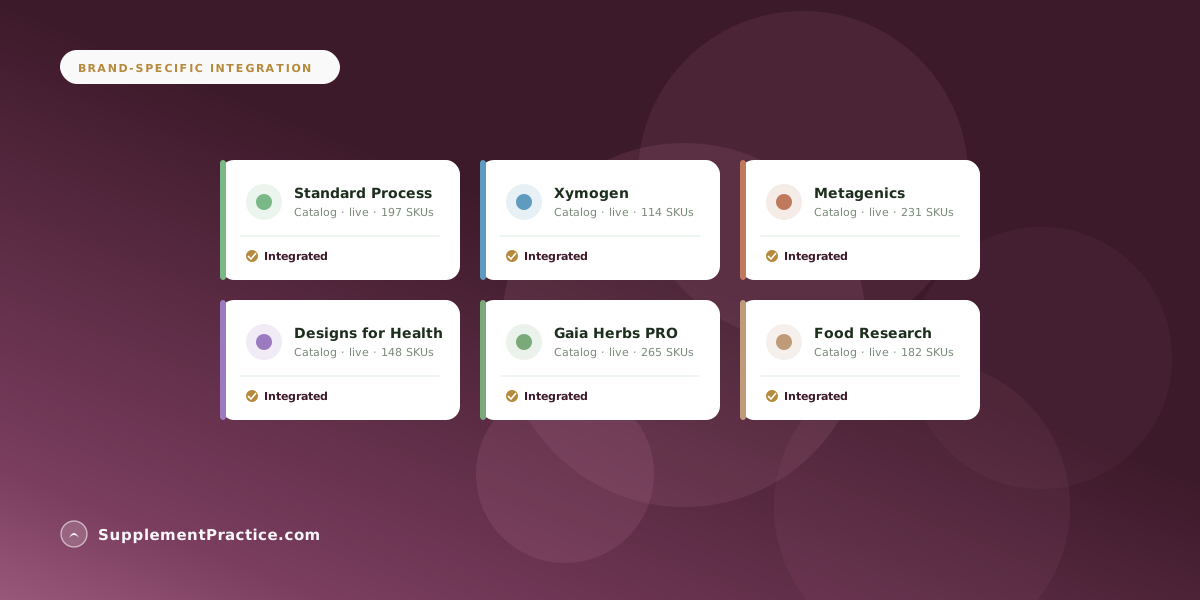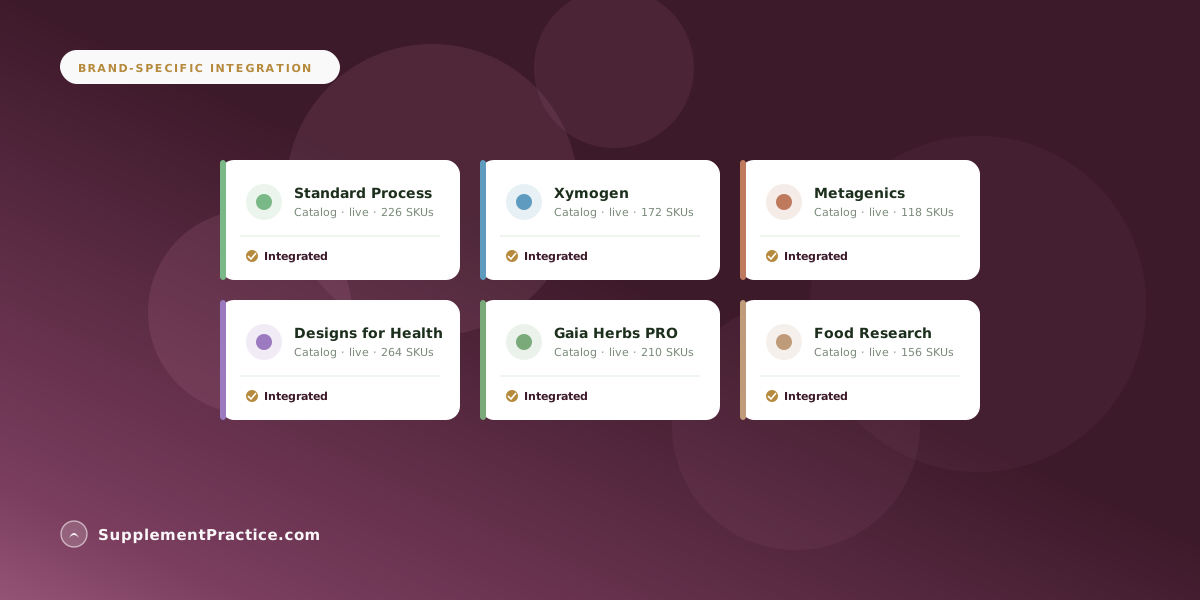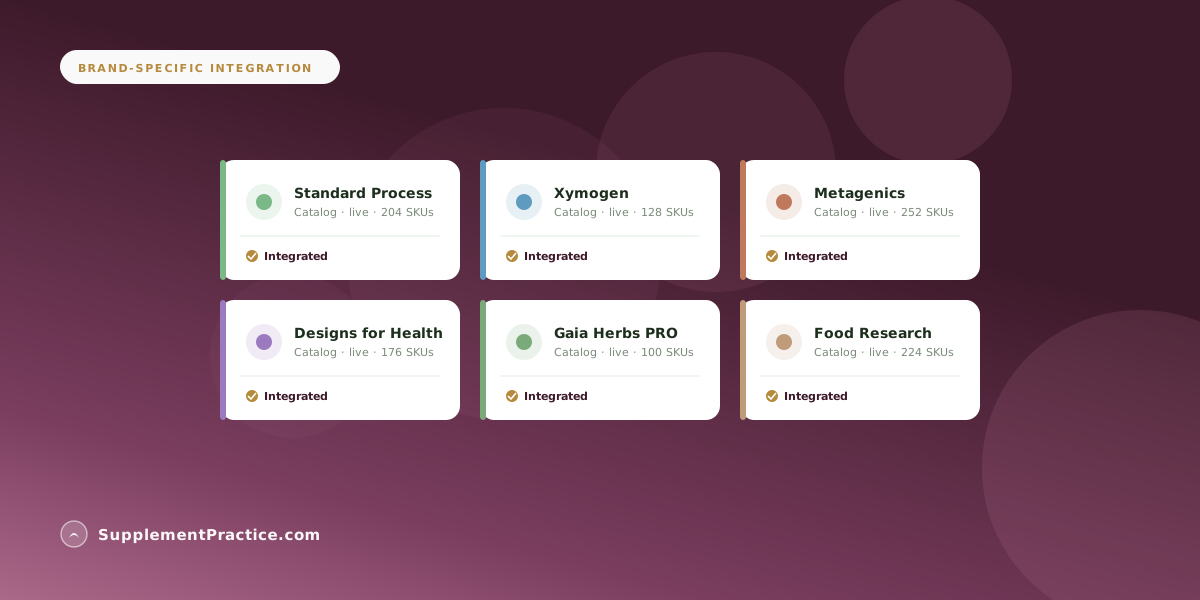
Standard Process publishes hundreds of SKUs across whole-food, glandular, herbal, and Patient Direct lines. The operational difference between "accessing the catalog" and "having the catalog inside your chart" is the difference between a 25-minute protocol and a 4-minute one — and between an AI that can confidently ground recommendations in real SKUs versus one that can't. This article details what native integration means in practice, the SP product groupings practitioners actually use, and the operational moves it unlocks.
Native SP Catalog Inside the Patient Chart
- Full SP catalog searchable from any patient chart — no portal switch
- Live SKU, dose, bottle-size, and image data — not stale PDF
- AI Co-Pilot grounds recommendations in the SP catalog (no hallucinated SKUs)
- "We carry" filter respected across catalog and AI
- Patient Direct ordering executed from the protocol screen
- Every selection auto-documented to the chart audit trail
- MediHerb herbal products included in the same searchable index
The tab-switch tax that integration eliminates
The standard workflow without integrated catalog looks like this: practitioner reviews patient intake in their chart, opens a new browser tab to standardprocess.com, logs in (or relogs in if the session timed out), searches "Cataplex B," reads the product page to confirm bottle size and dose, copies the SKU back to the chart, types the dose into the protocol field, and repeats six times for a typical six-SKU stack. The whole cycle takes 12-18 minutes per protocol, and that's assuming the practitioner remembers the right product names without further lookups.
The integrated workflow: practitioner reviews intake, types a few characters into the chart's product search, the SP catalog filters in real-time, the practitioner selects, the system fills in SKU/dose/bottle-size automatically. Four minutes for a six-SKU stack. Across 10 protocols a week, the time saving is roughly 90-140 minutes — a full clinical hour and a half returned to patient care.
The integration also eliminates a class of errors. Manual SKU copying produces a non-trivial number of typos that surface only at the dispense counter ("you wanted SP4500 not SP4505"). Auto-fill from a structured catalog kills that error category.
The SP product groupings practitioners actually use
Standard Process publishes 400+ SKUs, but a Pareto cut concentrates the dispense volume into a much smaller working set. Knowing the groupings helps the practitioner build the carried-products list intelligently and helps the Co-Pilot make tighter recommendations.
| Group | Anchor products | Typical use |
|---|---|---|
| Whole-food foundationals | Catalyn, Cataplex B, Cataplex D, Calcium Lactate, Tuna Omega-3 | Universal foundational support; ~40% of dispense volume. |
| Cardiovascular | Cardio-Plus, Vasculin, Cyruta Plus, Cataplex E2, Garlic Forte | Lipid panel support, vascular tone, blood pressure modulation. |
| Adrenal / HPA | Drenamin, Adrenal Desiccated, Min-Chex, Rhodiola & Ginseng (MediHerb) | HPA-axis dysregulation, fatigue, stress response. |
| Detox / Liver | Livaplex, Hepatrophin PMG, A-F Betafood, Spanish Black Radish | Hepatobiliary support, methylation, phase I/II conjugation. |
| Endocrine (protomorphogens) | Symplex F/M, Thytrophin PMG, Pituitrophin PMG | Glandular tissue support; female/male endocrine balance. |
| Gut | Zypan, Multizyme, Lact-Enz, Gastro-Fiber, Okra-Pepsin E3 | Digestion, intestinal repair, low-stomach-acid support. |
| MediHerb (herbal) | Boswellia Complex, Saligesic, Echinacea Premium, Ashwagandha Forte | Acute / herbal-adaptogen layer on top of foundational nutrition. |
A new practice that wants to carry a working SP inventory typically starts with the foundationals plus 2-3 groupings that match their clinical focus, then expands quarterly based on protocol patterns.
How AI grounding changes catalog usage
Catalog access on its own is operationally useful but clinically incremental. The bigger unlock is that the AI Clinical Co-Pilot grounds against the catalog when drafting protocols — meaning every product the Co-Pilot recommends is a real SP SKU at a real dose, with the bottle-supply math computed against that SKU's package size.
Without grounding, an LLM asked to recommend supplements for "47-year-old female with HPA dysregulation and methylation concerns" will produce reasonable-sounding text that contains products at doses that may or may not exist. With grounding, the same query produces "Standard Process Drenamin 1 AM + 1 PM (90-tablet bottle, 45 days supply), MediHerb Ashwagandha Forte 1 PM (40-tablet bottle, 40 days supply), Standard Process Cataplex G 1 AM (90-tablet bottle, 90 days supply)" — and every product, dose, and bottle size is verifiable in the catalog.
Standard Process-anchored clinic, 40-protocol week, before and after native catalog
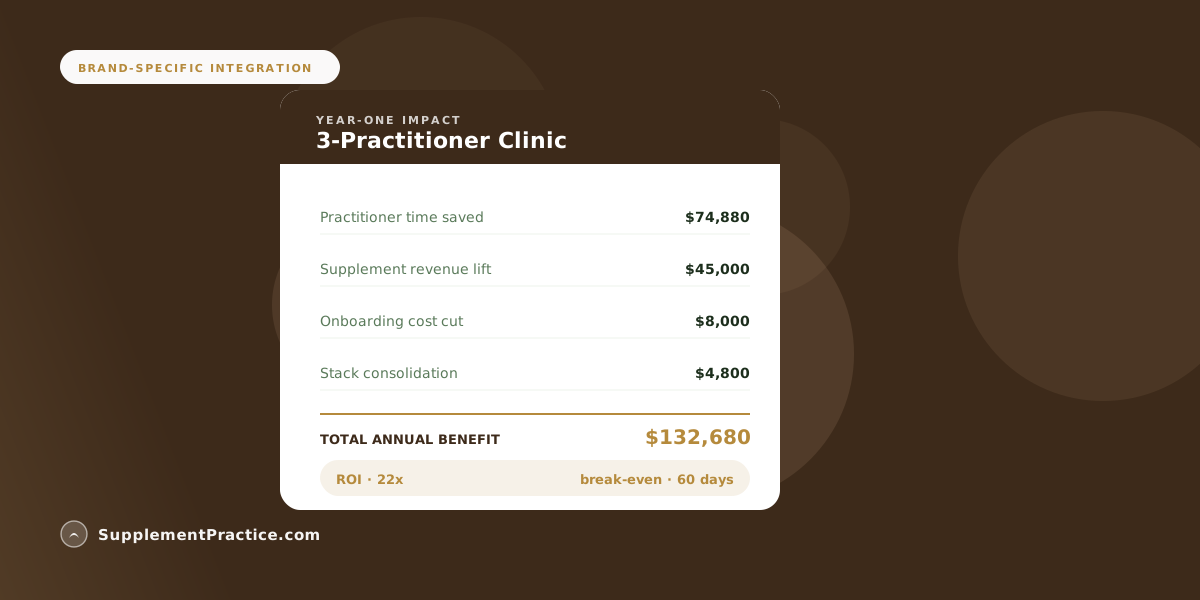
A solo chiropractor running a Standard Process-dominant practice averaged 40 protocols per week, with roughly 14 minutes of catalog lookup/transcription per protocol — about 9 hours of weekly time spent translating between the SP website and the patient chart. The error rate on transcribed SKUs ran around 4%, surfacing as dispense-counter complaints roughly twice a month.
After moving to native catalog integration with AI Co-Pilot grounding, the same 40-protocol week ran at roughly 4 minutes of catalog interaction per protocol — about 2.5 hours total. The SKU error rate dropped to near zero (the system fills the SKU). The practitioner used the recaptured 6.5 hours to add five additional appointment slots per week, at a conservative $180/visit, which produced about $3,600 of incremental weekly revenue. The integration paid for itself in the first month.
Common mistakes when first using an integrated catalog
Anti-patterns we see during onboarding
- Not configuring the "We carry" filter. If you leave the toggle off, the Co-Pilot can recommend any product in the SP catalog — including ones you don't stock. Spend an hour during onboarding marking what's carried and what isn't.
- Ignoring MediHerb. Many SP-only clinics overlook MediHerb because they don't think of themselves as "herbal" practitioners. The herbal-adaptogen layer is some of the highest clinical leverage SP offers — Boswellia Complex, Ashwagandha Forte, Echinacea Premium routinely strengthen protocols.
- Treating catalog browse as one-by-one selection. The Co-Pilot is designed to compose the protocol; the catalog browse is for verification, not assembly. Practitioners who manually browse each SKU after the AI drafts are doubling their work.
- Not updating the carried-products list when discontinuing items. If you stop carrying a product, deactivate it on the inventory dashboard immediately. Otherwise the Co-Pilot keeps recommending it and you override every time.
- Stale Patient Direct credentials. The integration requires a valid SP practitioner account. If the credentials lapse, Patient Direct ordering fails silently at checkout. Verify the link once a quarter.
Frequently asked questions
What does "native Standard Process integration" actually mean?
Native means the SP catalog lives inside the practice management tool's database, not behind an external link. Every SKU is searchable in the chart. Doses, package sizes, and product images render natively. The AI Co-Pilot grounds against this catalog. Patient Direct ordering happens from the same screen as the protocol draft.
Which Standard Process products are most often used inside practice workflows?
The foundational stack — Catalyn, Cataplex B, Cataplex D, Tuna Omega-3, Calcium Lactate — covers ~40% of dispense volume. Protomorphogens (Symplex F/M, Drenamin, Cyruta Plus, Cardio-Plus, Renafood) anchor condition-specific protocols. Glandulars and MediHerb cover the rest.
How does Patient Direct ordering work from inside a chart?
The system passes the order to Standard Process via the practitioner's account, the patient receives a confirmation, and SP ships directly. The practitioner sees order status — placed, picked, shipped, delivered — inside the patient chart.
Can the catalog filter to only the products my practice carries?
Yes. The "We carry" toggle on the inventory dashboard hides products not stocked, and the AI Co-Pilot respects the same filter when drafting protocols — preventing recommendations the patient can't get same-day.
Does the integration include MediHerb / herbal products?
Yes. MediHerb is part of the Standard Process catalog as far as the practice management tool is concerned — herbal monographs, tincture concentrations, and dosing all appear inside the same product search.
How is this different from typing "Catalyn" into the Standard Process website?
The lookup happens inside the patient chart with full clinical context (intake, medications, prior protocols), and every search/select/dose/dispense/reorder is logged to the chart's audit trail. Typing into the SP website strips both benefits.
Where to go next
Three companion pieces: the physical-vs-virtual dispensary decision once the catalog is integrated, why SP dominates musculoskeletal protocols in chiropractic practice, and the broader toolkit for SP-focused chiropractic clinics. Supplement Practice integrates the full Standard Process catalog natively — searchable in any chart, grounded for the AI Co-Pilot, and tied to Patient Direct order flow.