The "best tool" question collapses into a smaller, more useful question once you've actually tried to run a Standard Process dispensary at clinic scale: which pieces of the workflow do you actually need software to do for you, and which pieces can stay manual without slowing the practice down? This piece walks through the operational toolkit — Symptom Survey digitization, catalog integration, Patient Direct, inventory rules, protocol templates, and front-desk vs. clinical role assignment — that a chiropractic SP dispensary actually needs.
The Chiropractic SP Dispensary Toolkit
- Digital Symptom Survey with auto-scoring routed into the chart
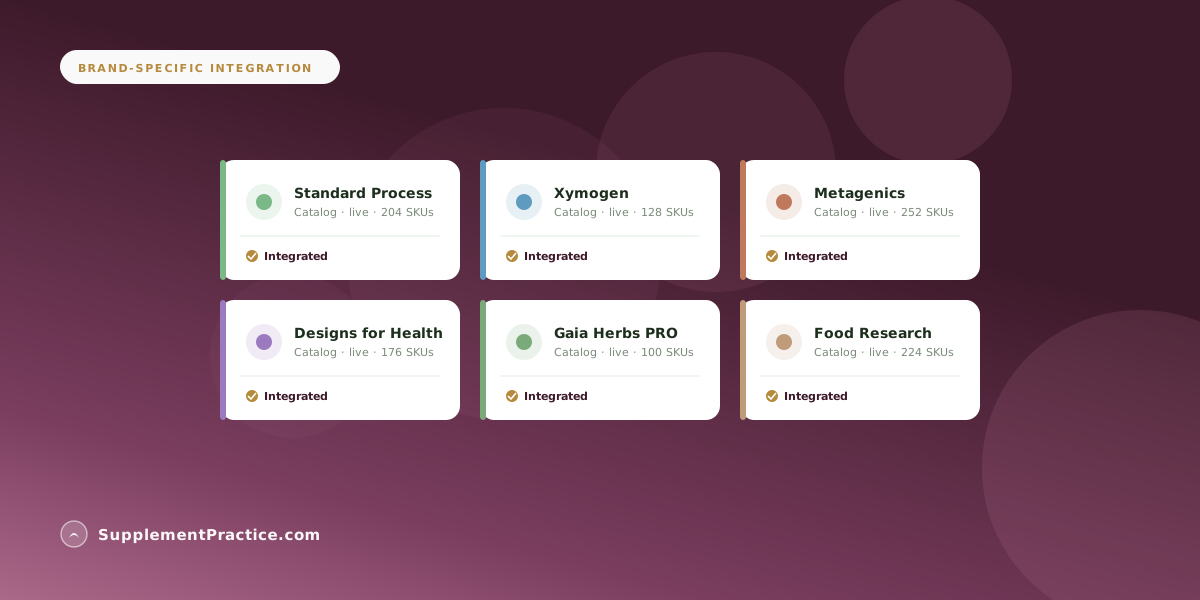
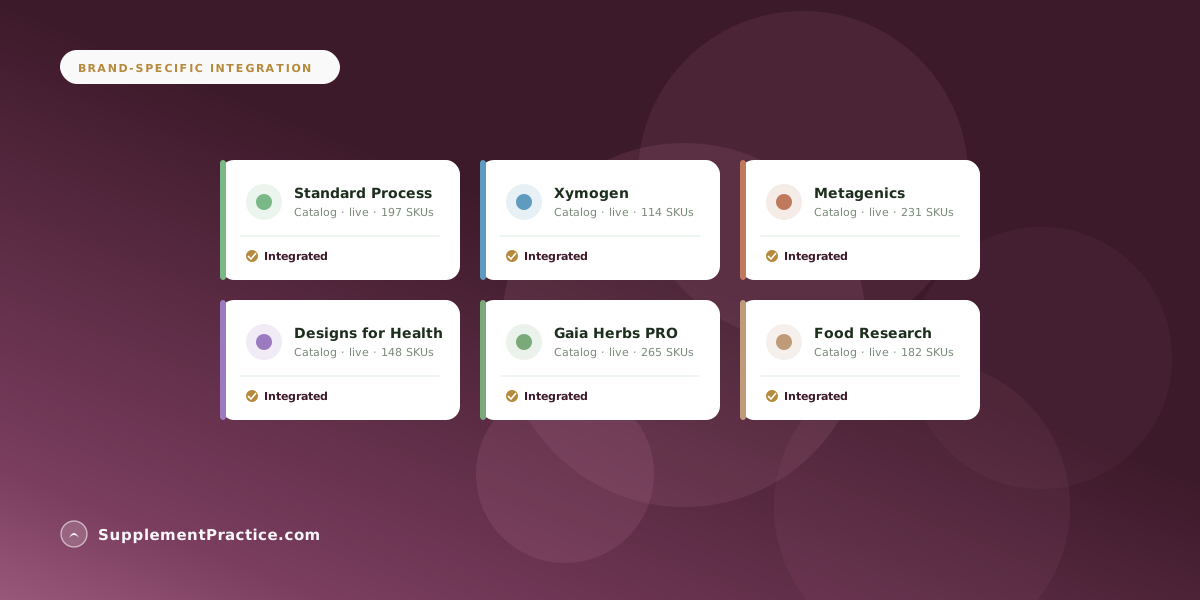
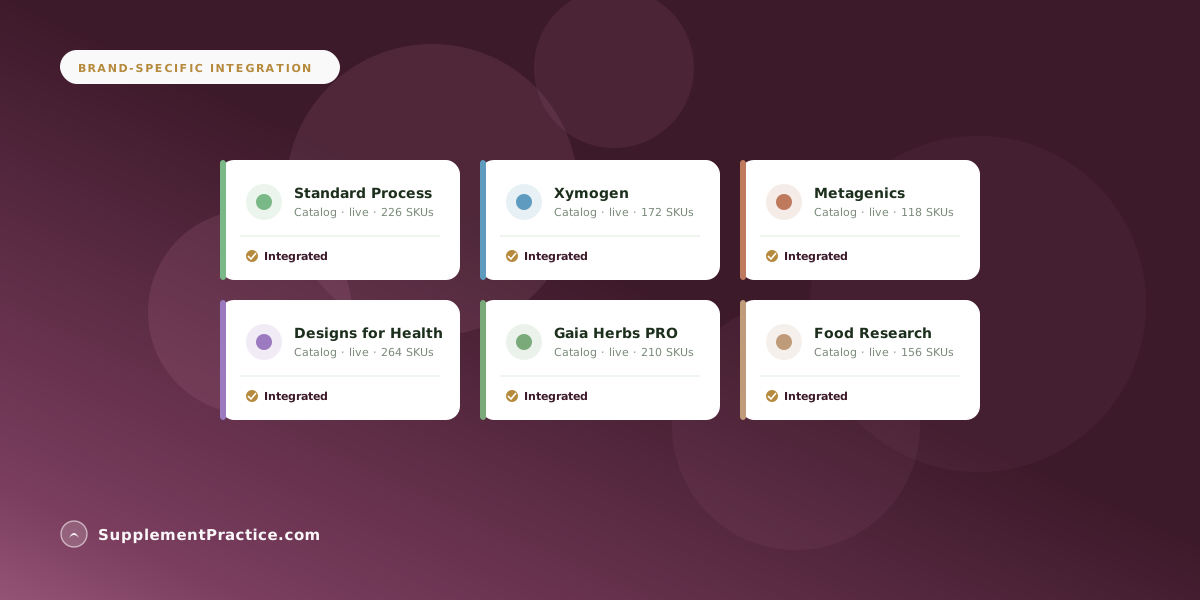
- Native SP catalog inside every patient chart
- 4 protocol templates covering ~70% of chiropractic prescribing
- AI Co-Pilot composes ad-hoc protocols for the remaining 30%
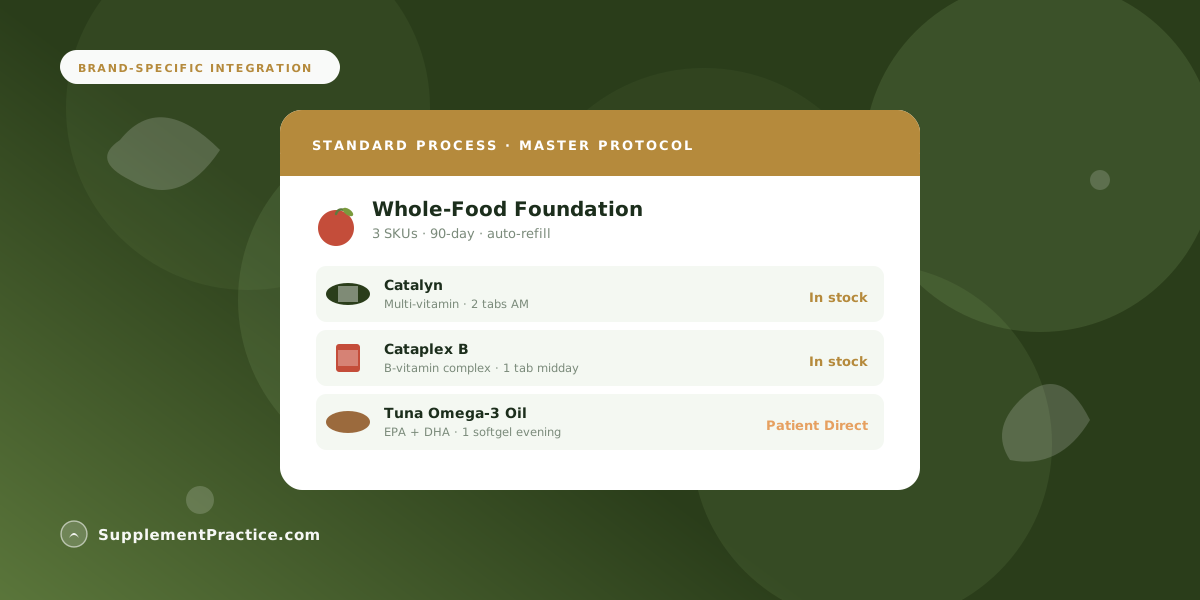
- Patient Direct in-chart ordering for non-stocked SKUs
- Centralized inventory dashboard (one front-desk owner)
- Printable AM/PM schedule with bottle math at protocol approval
The Symptom Survey, digitized — the foundation no SP-anchored chiropractor should skip
Standard Process's Symptom Survey is a 200+ item intake instrument that maps symptom patterns onto SP protocol categories — adrenal stress, sugar handling, liver/biliary, calcium handling, EFA balance, parasympathetic vs. sympathetic dominance, and so on. Decades of SP-prescribing clinical refinement sit behind it. It's still the most reliable structured pattern-recognition tool a chiropractic dispensary has for triaging which SP category a patient most needs.
The historical problem with the Symptom Survey is operational, not clinical. The paper version costs the patient 25-40 minutes to complete, costs the practitioner or staff 15-25 minutes to score, and the results often arrive too late in the visit to actually drive the protocol the patient walks out with. The digital version solves this: the patient completes the survey before the visit (intake email, patient portal), the auto-scoring runs the moment they submit, and the pattern routes into the chart before the practitioner even sits down with the patient.
Practices that have moved off paper Symptom Survey report two things consistently: completion rates climb (patients actually fill it in carefully when it's a structured digital form rather than a 14-page paper packet), and the survey actually drives the protocol instead of being filed away unused.
Native SP catalog inside every patient chart
The second toolkit foundation is having the full Standard Process catalog searchable inside the patient chart — not as an external bookmark to standardprocess.com, but as a native database the chart can read from and the AI Co-Pilot can ground on. The operational difference is significant: 12-18 minutes of tab-switching, copying, and transcribing per protocol drops to 3-4 minutes of in-chart selection.
This is covered in depth in a companion piece on native SP catalog access; the relevant point here is that for a chiropractic dispensary, this isn't a nice-to-have. A solo chiropractor seeing 35-40 protocol patients per week saves roughly 7-10 clinical hours per week with native catalog access. That's an entire half-day of additional appointment slots.
Four protocol templates that cover ~70% of chiropractic prescribing
Most chiropractic Standard Process prescribing converges on a small number of canonical patterns. Setting up the templates once eliminates 70% of the protocol-composition work for the next year of patients. The four that pull the most weight:
Post-adjustment recovery. Catalyn + Calcium Lactate + Cataplex F + Ligaplex I + Tuna Omega-3. The first 30-60 days after a significant adjustment series. Anchor template for new patients with significant ligamentous laxity or active soft-tissue work.
Connective tissue maintenance. Catalyn + Cataplex F + Ligaplex II + Glucosamine Synergy + Tuna Omega-3. The maintenance form after the recovery window. Used during longer care plans with adjustment maintenance cadence.
HPA-axis / stress support. Drenamin + Cataplex G + Min-Chex + Catalyn. For patients with adjustment-resistant patterns driven by chronic muscular guarding, sympathetic overdrive, or sleep dysfunction underlying the structural complaint.
Cardiovascular foundation. Cardio-Plus + Tuna Omega-3 + Cyruta Plus + Cataplex F + CoQ10. Daily preventive nutritional support for patients 45+ or with cardiovascular risk factors. Often added as a foundational layer beneath whatever else the patient is on.
These templates get loaded into the protocol library once. The Co-Pilot uses them as starting drafts for matching patient phenotypes, with the practitioner overriding specifics — dose, duration, brand substitution — based on the individual case.
Inventory rules for a multi-practitioner chiropractic clinic
The single most common operational failure in a chiropractic SP dispensary is unclear inventory ownership. Three or four DCs each ordering independently into a shared back-room stash produces some combination of over-ordering (every practitioner reorders the same product the same week), under-ordering (each assumes someone else has it), and stale stock (slow-movers nobody is paying attention to).
The fix is structural, not behavioral:
- One front-desk owner. One person at the clinic has formal responsibility for the dispensary. Reordering, expiry tracking, receiving, and shelf rotation all flow through that role.
- Auto-reorder at 30-day cover. The system fires a reorder when on-hand stock drops below 30 days of trailing-90-day velocity. Not a fixed bottle count — a velocity-derived cover, which self-tunes as the clinic grows.
- Per-bottle expiry tracking. Bottles within 90 days of expiry get flagged. The flag is visible to the dispensing practitioner so the bottle gets dispensed first (FIFO rotation).
- Quarterly velocity review. Promote SKUs to physical stock when they cross 5 bottles/month sustained; demote to Patient Direct when they fall below.
This is covered in detail in the physical-vs-virtual inventory piece; the chiropractic-specific point is that multi-practitioner clinics need centralized inventory ownership more than solo practitioners do, because ambiguity scales worse than complexity.
4-DC chiropractic clinic, paper Symptom Survey + standardprocess.com tab-switching + spreadsheet inventory → integrated workflow
A four-DC clinic in 2024 was running a paper Symptom Survey (filled in during the visit, scored after), tab-switching to standardprocess.com mid-visit for SKU lookups, and managing inventory in a Google Sheet that two of the four DCs had access to. Average new-patient consultation: 75 minutes. Average return-visit-with-protocol-update: 40 minutes. Symptom Survey completion rate: ~55% (patients found the paper version intimidating).
After integration into a unified platform with digital Symptom Survey (sent before the visit), native SP catalog in the chart, and centralized inventory: New-patient consultations dropped to 50 minutes — the Co-Pilot had a draft protocol composed from the pre-visit Symptom Survey by the time the DC sat with the patient. Return visits with protocol updates dropped to 25 minutes. Symptom Survey completion climbed to 87% (digital submission was less intimidating). The clinic re-allocated the saved time to two additional appointment slots per DC per day, adding ~$2,000/week in incremental revenue across the four practitioners.
The AI-Co-Pilot vs. manual decision tree
Practitioners sometimes ask "should I use the AI Co-Pilot, or just compose protocols manually from the templates?" The right framing is that they're complementary, not competing:
- Use templates directly when the patient phenotype maps cleanly onto one of the four canonical protocols above. New patient with post-adjustment laxity? Template loads in one click; practitioner adjusts doses; done.
- Use the Co-Pilot when the patient has multiple overlapping patterns the templates don't cleanly cover, or when polypharmacy requires drug-interaction screens the templates don't run, or when the intake has surfaced something unusual that warrants a fresh composition.
- Use the Symptom Survey + Co-Pilot together for complex new patients. Survey provides the structured pattern; Co-Pilot composes the protocol from the pattern plus the rest of the chart context.
The point is that nothing in this stack is "AI replacing the chiropractor." The Co-Pilot drafts; the chiropractor signs. The templates accelerate; the chiropractor adjusts. The Symptom Survey diagnoses pattern; the chiropractor selects the protocol.
Common mistakes
Five anti-patterns we see in chiropractic SP dispensaries
- No digital Symptom Survey. Still running paper packets in 2026 is a self-inflicted operational drag. The digital version completes faster, scores instantly, and routes into the chart.
- Tab-switching to standardprocess.com mid-visit. Burns 12-18 minutes per protocol and produces transcription errors. Native catalog integration is the highest-ROI single operational change.
- No protocol templates. Composing every protocol from scratch is double work when 70% of cases fit four canonical patterns. Load the templates once.
- Decentralized inventory. Three DCs each ordering independently produces stockouts AND over-orders simultaneously. One owner, system-driven reorder triggers.
- Patient Direct as second-class. Some clinics treat Patient Direct fulfillment as a fallback rather than a deliberate long-tail strategy. Routing the bottom-quartile-velocity SKUs through Patient Direct is the right answer for most clinics; design the patient communication around it rather than treating it as a workaround.
Frequently asked questions
What's the most important tool for a chiropractic Standard Process dispensary?
A practice management system with the full SP catalog integrated into the patient chart, including Patient Direct ordering and inventory binding. Everything else flows from that single integration. Without it, the chiropractor is tab-switching to standardprocess.com mid-visit and the workflow runs twice as slow.
Should chiropractors still use the SP Symptom Survey?
Yes, but digitally. The paper version is operationally painful; the digital version, with auto-scoring and pattern routing into the chart, restores the clinical value without the friction.
Can the AI Co-Pilot replace the Symptom Survey?
Not really — it complements it. The strongest workflow uses both: Symptom Survey provides the structured SP-specific pattern, Co-Pilot composes the protocol from the pattern plus everything else in the chart.
How do chiropractors manage SP inventory in a multi-practitioner clinic?
Single inventory dashboard with shared visibility, 30-day-cover auto-reorder thresholds, per-bottle expiry tracking, quarterly velocity review, and one front-desk owner of dispensary operations. Decentralized inventory in multi-practitioner clinics produces both stockouts and over-orders simultaneously.
What about chiropractors who don't carry physical SP stock?
Patient Direct works as a fully virtual model, but the 3-5 day ship time drops same-day adherence meaningfully. The hybrid model (top 20-30 SKUs physical, long tail Patient Direct) is usually right; pure-virtual is appropriate for new practices testing demand.
What chiropractic-specific protocol templates should I have set up?
Four templates cover ~70% of chiropractic SP prescribing: post-adjustment recovery, connective tissue maintenance, HPA/stress support, and cardiovascular foundation. The Co-Pilot composes ad-hoc protocols for the remaining 30%.
Where to go next
Three companion pieces: how SP catalog integration works in the chart, the clinical reasoning behind chiropractors anchoring on SP for musculoskeletal care, and the physical-vs-virtual dispensary economics. Supplement Practice ties the digital Symptom Survey, native SP catalog, four-template protocol library, and centralized inventory into a single chiropractic dispensary workspace.
Clinical & Technical References
- Standard Process — Practitioner Resources
- Standard Process — Clinical Research Library
- American Chiropractic Association — Practice Resources
- Foundation for Chiropractic Progress — Clinical Resources
- Institute for Functional Medicine — Practitioner Resources
- Standard Process — Symptom Survey Overview