Chiropractors anchor on Standard Process for reasons that aren't really about brand loyalty — they're about the chemistry. Calcium Lactate's acid-independent absorption, Ligaplex's manganese-and-protomorphogen profile, Cataplex F's whole-food EFA chemistry, and the protomorphogen line's tissue-specific targeting map cleanly onto the soft-tissue, ligamentous, and neuromuscular recovery windows that follow a chiropractic adjustment. This piece walks through the SKU groupings, the clinical reasoning, and the adjustment-pairing logic chiropractors actually use.
Standard Process Picks for Chiropractic Care
| Tissue goal | Anchor SKU | Pairs with |
|---|---|---|
| Connective tissue, acute | Ligaplex I | Glucosamine Synergy + Cataplex F |
| Connective tissue, chronic / maintenance | Ligaplex II | Cataplex F + Trace Minerals-B12 |
| Calcium handling / neuromuscular tone | Calcium Lactate | Cataplex D + Cataplex F |
| Bone matrix density | Calcifood | Cataplex F + Calcium Lactate |
| EFA balance / cell-membrane health | Cataplex F | Tuna Omega-3 |
| Nervous-system recovery | Cataplex G | Min-Chex + Drenamin |
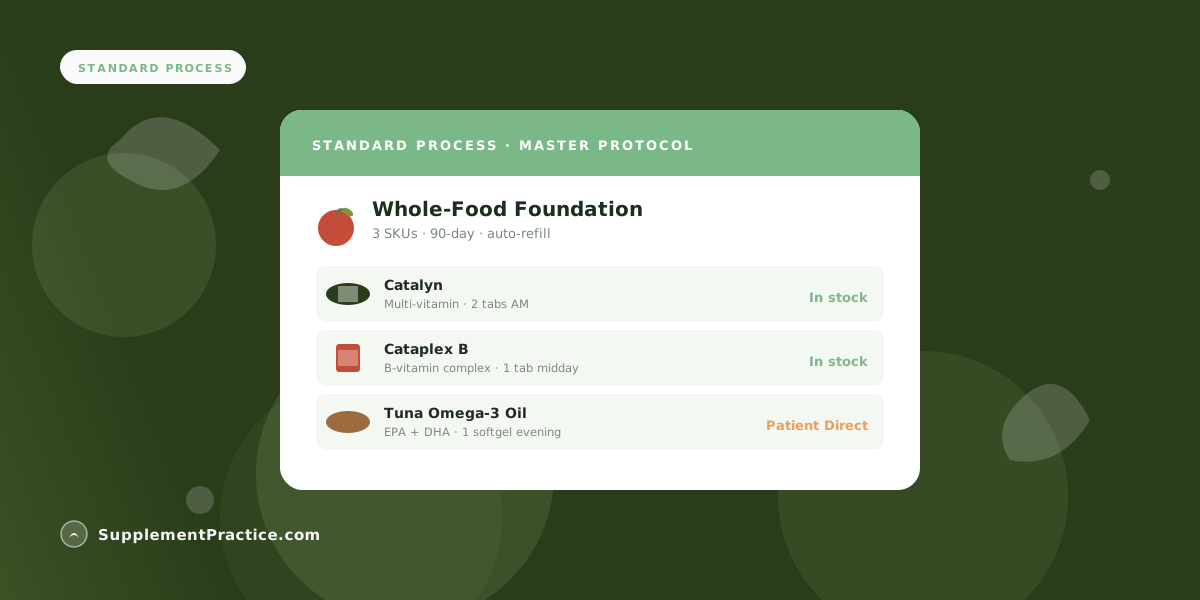
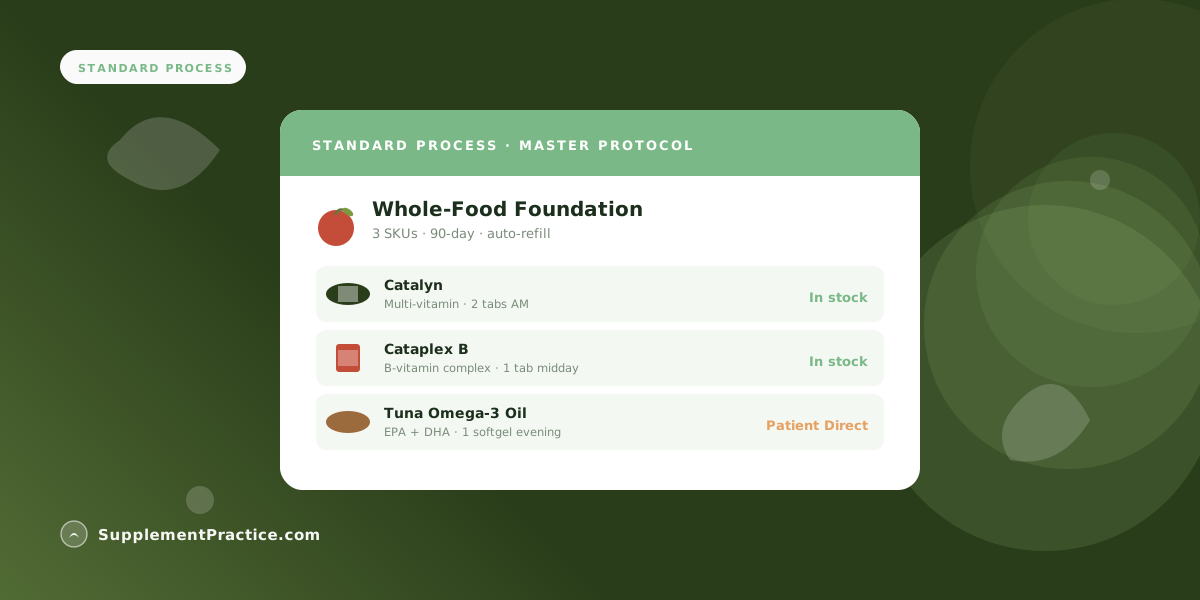
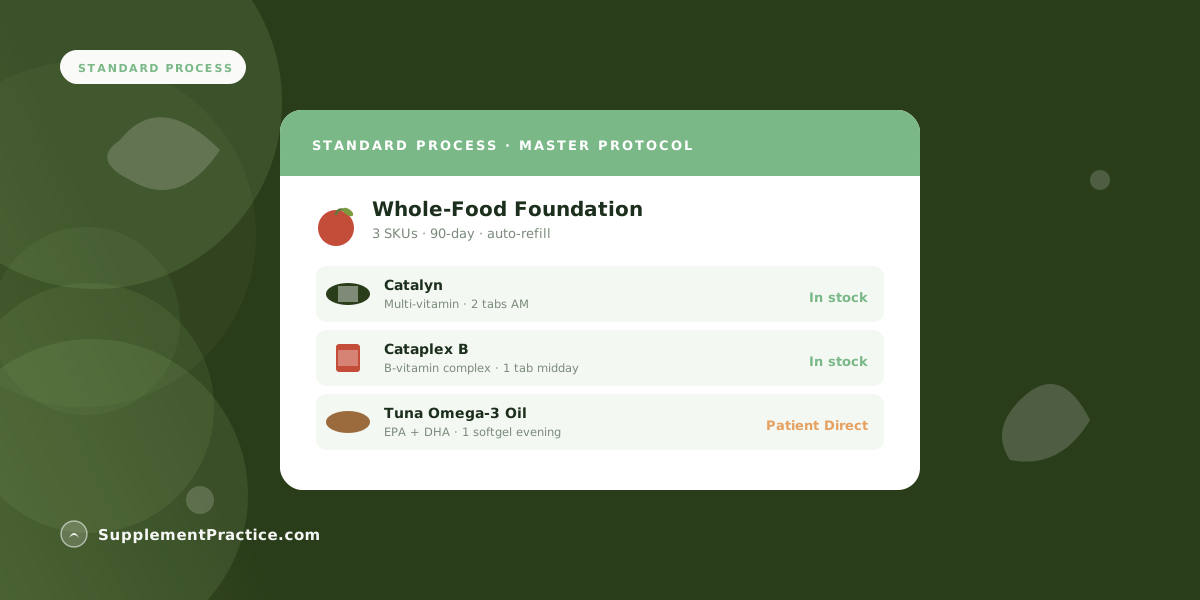
| Whole-food foundation | Catalyn | Trace Minerals-B12 |
The adjustment-to-tissue chemistry gap that nutrition closes
A chiropractic adjustment restores joint mechanics in seconds. What happens in the next 14–30 days — the inflammatory cascade, the connective-tissue remodeling, the neuromuscular adaptation — is biochemistry, not mechanics. A patient on a poor diet with marginal calcium handling and low EFA status will heal differently from a patient whose tissue chemistry can support the remodeling load. This is the gap targeted by Standard Process: not "supplement instead of adjustment," but "supplement so the adjustment holds."
The clinical reasoning is what differentiates Standard Process from most retail supplement lines. SP's formulation history traces back to Royal Lee's mid-20th-century focus on whole-food complexes — vitamin C as a complex rather than an isolated ascorbic acid molecule, calcium in the Krebs-cycle lactate form, EFAs from food-derived lipid complexes rather than fish-pressed concentrates. The chiropractic-nutrition pedigree comes with that formulation philosophy: targets soft-tissue chemistry, doses at clinically meaningful gram-level loads, and pairs across multi-SKU stacks rather than relying on a single multivitamin.
Calcium Lactate: the acid-independent calcium that survives PPI patients
Most retail calcium products are calcium carbonate — cheap, dense in elemental calcium per pill, but absorption-dependent on stomach acid for ionization. For an aging chiropractic patient on a PPI for reflux, or a patient with the age-related hypochlorhydria common after 60, calcium carbonate absorbs poorly. The patient takes the pill and the calcium passes through largely unutilized.
Calcium Lactate uses the Krebs-cycle lactate form — already ionized, already absorbable, no acid required. The elemental calcium per tablet is lower than carbonate (around 82 mg vs. 200 mg+), but the bioavailability is dramatically higher in the patients most likely to need it. Practical dosing in a chiropractic protocol is 6–9 tablets daily spread across meals, which delivers roughly 500–750 mg of well-absorbed calcium and meaningful soft-tissue support.
The soft-tissue point matters specifically. Calcium isn't just bone; it's neuromuscular tone, smooth-muscle contraction, and the calcium-mediated cascade that supports post-adjustment recovery. A chiropractic patient with adjustments that don't hold often has a calcium-handling issue underneath, not a manipulation issue.
Ligaplex I vs. Ligaplex II: the acute-vs-chronic decision
Ligaplex is Standard Process's connective-tissue formula, and the I-vs-II distinction is one of the more clinically meaningful choices a chiropractor makes. Both products carry manganese (critical for proteoglycan synthesis in cartilage and ligamentous tissue), the protomorphogen extracts that target ligamentous tissue chemistry, and the Cataplex F backbone that supports EFA-mediated cell-membrane integrity.
The difference is the dose curve. Ligaplex I carries the higher manganese load and the formulation profile designed for acute rebuilding — fresh strains, sprains, the 30-day post-adjustment window for patients with significant ligamentous laxity. Ligaplex II is the maintenance form, with a moderated manganese load suited for long-term use during ongoing care plans. The transition logic: Ligaplex I for the first 30–60 days post-injury or aggressive adjustment phase; Ligaplex II for the subsequent maintenance period.
Practitioners who use Ligaplex II as the only form, or who use Ligaplex I indefinitely, are leaving clinical leverage on the table. The acute formulation drives the rebuild; the maintenance formulation supports the holding.
The protomorphogen line and what it actually claims to do
The protomorphogen (PMG) products — Symplex F/M, Drenamin, Renafood, Hepatrophin PMG, Thytrophin PMG — sit at the most distinctive part of the Standard Process catalog and the part newer chiropractors take longest to internalize. The clinical claim is tissue-specific nutritional support: bovine glandular extracts that, taken orally, provide tissue-specific nutritional substrate matching the target organ.
For musculoskeletal care, the PMG products that matter most are Drenamin (adrenal support for nervous-system recovery), Symplex F/M (endocrine balance during hormonal-influence MSK conditions like perimenopausal joint pain), and Cardiotrophin PMG (less common in pure MSK, but relevant when cardiovascular load complicates recovery). The dosing convention is typically 1–3 tablets daily with meals, with the protocol designed around the chronicity of the condition.
42-year-old patient, recurrent lumbar adjustments that don't hold, 6-week protocol
A 42-year-old patient presents with recurrent lumbar adjustments that haven't been holding past 3-4 days. History: sedentary work, daily NSAID use for the past 18 months, marginal dietary calcium, no fish intake. Recent labs show borderline ferritin, low vitamin D (24 ng/mL), and normal calcium serum (which is misleading — serum calcium is tightly regulated and doesn't reflect tissue handling).
The 6-week protocol: Catalyn (2 with each meal, 6 daily), Calcium Lactate (3 with each meal, 9 daily) for 6 weeks, Cataplex F (3 with each meal, 9 daily), Cataplex D (1 daily until 25(OH)D reaches 40), Ligaplex I (2 with each meal for first 30 days, then 1 with each meal), Tuna Omega-3 (2 daily). NSAID use was tapered with the practitioner's MD coordination. Continued chiropractic adjustments at the same cadence.
By week 4, adjustments were holding 10-14 days. By week 8, the patient was on adjustment maintenance at a 3-week cadence, transitioned to Ligaplex II for ongoing support, and on a reduced Calcium Lactate maintenance dose. The clinical hypothesis: the calcium-handling improvement plus EFA-mediated cell-membrane support plus connective-tissue rebuild collectively shifted the soft-tissue chemistry enough that the manipulation held.
Why a single multivitamin doesn't replace the stack
The frequent objection from patients (and occasionally from practitioners) is "can't I just take a multivitamin?" The answer is no — and the reason is dose, not philosophy. A chiropractic-nutrition protocol targeting connective-tissue rebuild needs gram-level calcium handling, gram-level EFA support, and tissue-specific manganese and PMG loads that simply don't fit into a single tablet. Catalyn provides the foundational micronutrient backdrop at low individual doses; the targeted SKUs (Ligaplex, Cataplex F, Calcium Lactate, Glucosamine Synergy) carry the therapeutic loads.
The practical framing for patients: Catalyn is the foundation. The other products are the project-specific tools for the connective-tissue, calcium, or EFA work the adjustment is asking the body to do. When the project is done, the targeted SKUs taper and Catalyn continues.
Common mistakes in chiropractic Standard Process protocols
Five anti-patterns we see in chiropractic SP dispensaries
- Recommending without dose context. "Take Calcium Lactate" without "3 with each meal, 9 daily" leaves the patient at a sub-therapeutic dose. The SP labels are written for general consumer use; clinical doses are higher and need to be communicated specifically.
- Skipping Cataplex D when adding Calcium Lactate long-term. Calcium handling depends on adequate vitamin D. Long-term calcium supplementation without D status checks risks soft-tissue calcification.
- Using Ligaplex II for acute injuries. The maintenance formula is under-dosed for the acute rebuild window. Use Ligaplex I for the first 30-60 days.
- Not pairing Cataplex F with the calcium products. The EFA backbone supports the calcium-membrane chemistry. Calcium Lactate alone is less effective than Calcium Lactate + Cataplex F.
- Ignoring nervous-system recovery. Chronic adjustment patterns often have an HPA-axis component (chronic muscular guarding, sympathetic overdrive). Drenamin and Cataplex G layered into the protocol address the nervous-system side of "why doesn't this hold."
Frequently asked questions
Why is Calcium Lactate the preferred Standard Process calcium for chiropractors?
The Krebs-cycle lactate ion absorbs without requiring gastric acid to ionize it — meaning patients on PPIs, with hypochlorhydria, or with age-related acid decline still absorb it effectively. For chiropractic patients where soft-tissue calcium handling supports neuromuscular tone post-adjustment, Calcium Lactate's bioavailability profile makes it the standard pick.
What's the difference between Ligaplex I and Ligaplex II, and when do I use each?
Ligaplex I is the acute formulation, higher manganese, designed for the 30-60 day post-injury or aggressive-adjustment window. Ligaplex II is maintenance, suited for long-term use during ongoing care plans. Transition I→II at 30-60 days when the rebuild phase is complete.
Do chiropractors need to be licensed nutritionists to recommend Standard Process?
In most states, no — chiropractic scope includes dietary supplement recommendations as nutritional support. Some states (California, New Jersey, others) have restrictive scope language; verify your board's current position. SP's practitioner materials are framed as nutritional support, respecting chiropractic scope.
How does Cataplex F differ from a generic omega-3 fish oil?
Cataplex F is a whole-food EFA complex from flaxseed and peanut oils with ascorbic-acid-stabilized lipid components — not a marine omega-3. It supports calcium-handling chemistry via the EFA pathway. It pairs with Tuna Omega-3 rather than replacing it: F for calcium-EFA chemistry, Tuna Omega-3 for systemic inflammation modulation.
What's a typical Standard Process protocol for post-adjustment recovery?
A 30-day stack: Catalyn (1 with each meal), Calcium Lactate (3 daily spread), Cataplex F (3 daily with meals), Ligaplex I (3 daily for 14 days then 2 daily), Tuna Omega-3 (2 daily). Add Cataplex G for nervous-system support in high-adjustment-frequency patients. Reassess at day 30 and transition Ligaplex I to Ligaplex II.
Why don't chiropractors use a single multivitamin instead of a stack?
Therapeutic chiropractic-nutrition targets specific tissue chemistries at doses well above what fits in a single multi. Catalyn provides the foundational micronutrient backdrop; targeted SKUs deliver the gram-level loads that drive clinical change. A single multivitamin can't carry that therapeutic load.
Where to go next
Three companion pieces for SP-anchored chiropractic practices: how to integrate the full SP catalog inside your patient chart, the broader toolkit for SP-focused chiropractic clinics, and the physical-vs-virtual dispensary decision for SP carry. Supplement Practice ties the Standard Process catalog, the Co-Pilot's protocol drafting, and the dispense workflow into one workspace built for chiropractic + nutrition.
Clinical & Technical References
- Standard Process — Calcium Lactate Monograph
- Standard Process — Ligaplex I Monograph
- Standard Process — Ligaplex II Monograph
- Standard Process — Clinical Research Library
- NIH ODS — Calcium Health Professional Fact Sheet
- Linus Pauling Institute — Manganese
- American Chiropractic Association — Practice Resources