Catalyn is the foundational whole-food multivitamin that anchors most Standard Process protocols — and the product most frequently mis-dosed by new practitioners. The label says "1 tablet 2-3 times daily;" the clinical dose is 2 tablets with each meal (6 daily). The product is designed around the 6-tablet multi-meal cadence, not single-capsule consumer use, and patients who take it at 1 daily get roughly 80% under-dose. This piece walks through what's in the formula, why the clinical dose is what it is, the patient phenotypes that benefit most, and the common attribution mistakes when Catalyn "doesn't work."
Catalyn — Clinical Quick Reference
- Adult clinical dose: 2 tablets with each meal (6 daily)
- Catalyn Junior: pediatric/adolescent dose (2-4 daily by age)
- Take before meals — bioavailability of whole-food matrix peaks empty-stomach
- Subjective effect at days 14-21 of consistent dosing
- Long-term use safe and intended — no toxicity ceiling at clinical dose
- Stays in the protocol when targeted SKUs rotate in and out
What "foundational" actually means in clinical context
Catalyn sits at a specific point in the protocol architecture: it provides the background micronutrient substrate the body uses for daily function, while targeted products (Cataplex F for EFA chemistry, Calcium Lactate for calcium handling, protomorphogens for tissue-specific support, herbal extracts for acute interventions) sit on top to deliver therapeutic loads in specific layers. Without the foundation, the targeted products work against a depleted background; with the foundation, they work against an adequately resourced background and produce better outcomes.
The "foundational" framing matters for patient communication. Catalyn is not the product the patient will feel dramatically; it's the product that lets every other product work better. Patients who expect Catalyn to produce a noticeable energy boost in week 1 are evaluating it against the wrong yardstick. The right framing is: Catalyn is the foundation; the targeted SKUs are the project work; both layers matter.
What's in the formula and why it's structured this way
Catalyn's ingredient list reads differently from a synthetic multivitamin's because the formulation philosophy is different. The active ingredients are whole-food extracts: bovine adrenal, liver, kidney, spleen, and bone fraction; carrot, alfalfa, sweet potato, oat flour, dried mushroom, pea vine. Vitamins and minerals appear in the form they exist in those food sources — not as isolated chemical compounds with megadose labels.
Per-tablet vitamin content is deliberately modest. A single Catalyn tablet contains roughly 4% RDV of vitamin C, 2% of B6, similar small percentages across the B-complex. This makes a Catalyn tablet look "weak" against a drugstore multivitamin's "100% DV in one pill" label. The clinical reality is the opposite: the drugstore multi delivers isolated nutrients the body has to work to recognize and absorb; Catalyn delivers food-matrix nutrients that absorb more efficiently and produce fewer GI complaints at the multi-tablet clinical dose.
The 6-tablet daily dose distributes the nutrient delivery across three meals, which mirrors how the body evolved to absorb food-based nutrients. This is not a "more pills is better" marketing trick — it's a formulation choice made to support the dosing pattern the body uses well.
Why "1 tablet daily" is the most common Catalyn prescribing error
Practitioners new to Standard Process frequently prescribe Catalyn at the label's "1-2 tablets, 2-3 times daily" framing and the patient hears "1 tablet a day" as the practical dose. The patient takes one daily for 3-4 weeks, doesn't notice much, and concludes Catalyn doesn't work. The actual issue is sub-therapeutic dosing.
The clinical convention across SP-prescribing practitioners is 2 tablets with each meal (6 daily) for an adult of typical body size. Larger patients may go to 3 tablets per meal (9 daily) for the first 30-60 days of an active nutritional repletion phase, then taper to maintenance. Smaller patients or those with GI sensitivity start at 1 per meal (3 daily) and titrate up.
The communication that works with the patient: "Catalyn is concentrated whole foods, not a synthetic megadose multivitamin. The clinical dose is 2 with each meal, 6 total per day. It's deliberately formulated this way — you're taking nutrient-dense food in tablet form, distributed across your meals, not a single high-dose pill. Most patients notice subtle shifts in baseline energy and steadiness at week 2-3 of consistent dosing."
Three patient phenotypes where Catalyn is the strongest pick
Chronic diet inconsistency. Patients who skip meals, eat processed-heavy diets, or have post-illness depletion benefit from Catalyn's broad foundational micronutrient profile more than from targeted single-nutrient supplementation. The food-matrix delivery matches how their digestive system was designed to extract nutrients, even when the meal itself is suboptimal.
Pediatric and adolescent patients. Catalyn Junior at age-appropriate dose (2-3 daily for younger children, 3-4 for adolescents) provides foundational nutritional support without the synthetic isolated nutrients that dominate drugstore kids' vitamins. Particularly valuable for picky eaters, post-illness recovery, and athletic adolescents with elevated nutrient demands.
Patients with GI sensitivity to synthetic multivitamins. Patients who report nausea, loose stool, or "metallic taste" from synthetic multis frequently tolerate Catalyn without those complaints, because the whole-food matrix delivers nutrients in a form the gut processes without the GI irritation that high-dose isolated nutrients can produce.
34-year-old patient, "I've taken Catalyn for 6 weeks and feel nothing"
A 34-year-old patient returns for follow-up: "I took the Catalyn you prescribed for 6 weeks. Honestly, I don't feel any different." Chart review: prescription was for 1 tablet daily because the practitioner had hesitated on the higher dose with a smaller patient.
Diagnosis: sub-therapeutic dosing. 1 daily delivers ~17% of the intended clinical dose. The patient was effectively taking a placebo for 6 weeks.
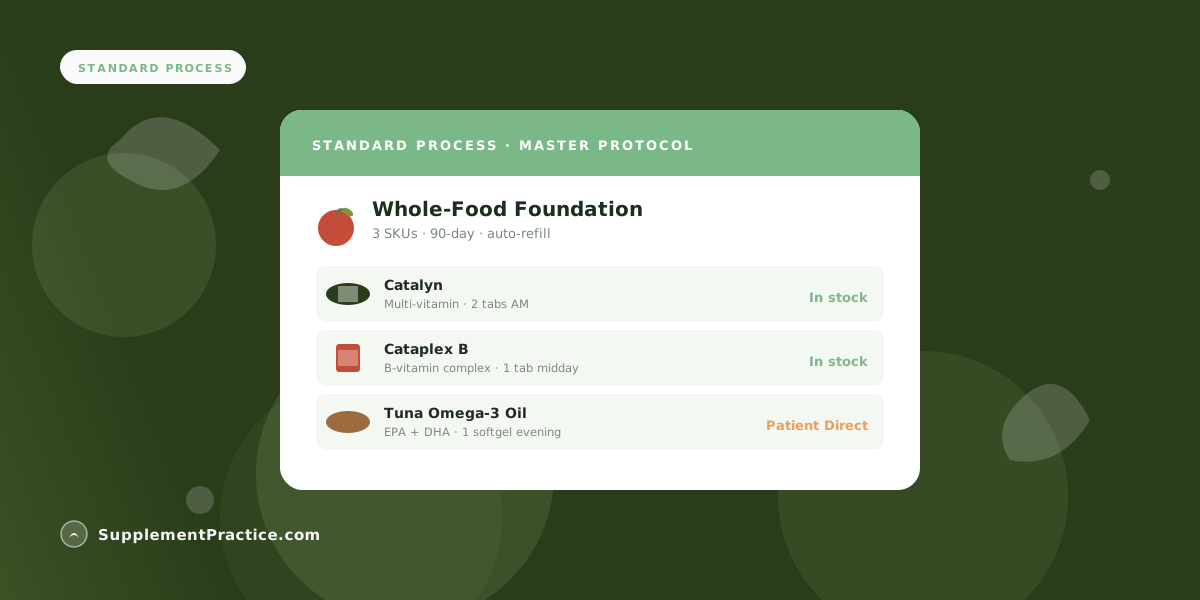
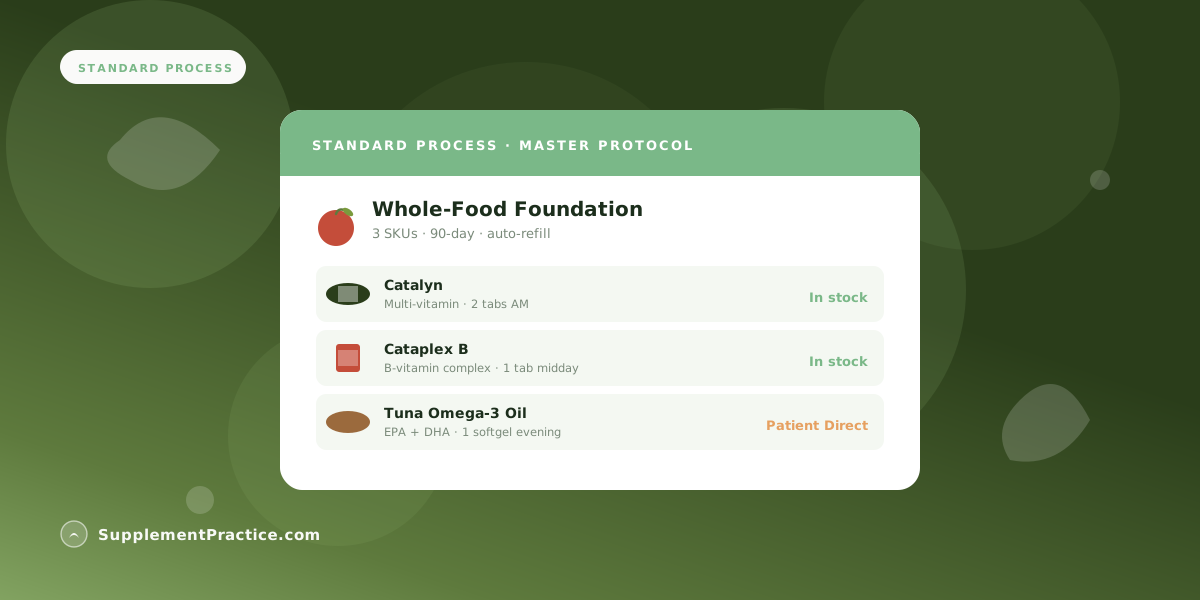
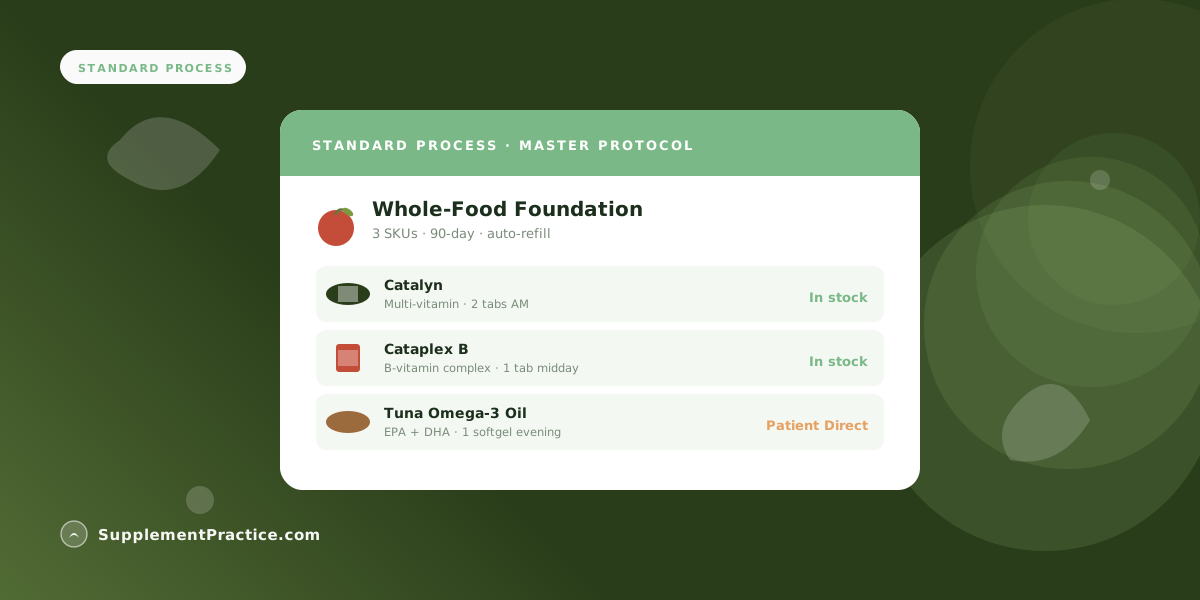
Revised protocol: Catalyn 2 with each meal (6 daily), Cataplex B 1 with each meal, Tuna Omega-3 2 daily. Patient education: explained the formulation logic and the clinical dose convention. At 4-week follow-up: patient reports improved baseline energy, more consistent afternoon focus, "I feel like the multivitamin is actually doing something this time." Clinical interpretation: at 6 tablets daily the patient is finally receiving the foundational nutritional substrate the formulation was designed to deliver.
How Catalyn pairs with the rest of the SP catalog
Catalyn is the constant; the targeted layer rotates. For a typical 12-month patient relationship, Catalyn stays in the daily stack while targeted products move in and out:
Months 1-3 (acute repletion). Catalyn + Cataplex B + Cataplex F + Tuna Omega-3 + condition-specific targeted (Drenamin for HPA, Ligaplex I for musculoskeletal, Cardio-Plus for cardiovascular).
Months 4-6 (transition). Catalyn + reduced Cataplex B + maintenance Cataplex F + Tuna Omega-3 + targeted (shifted from acute to maintenance).
Months 7+ (maintenance). Catalyn + Cataplex F + Tuna Omega-3 + as-needed targeted. The patient settles into a daily foundation that they'll likely take indefinitely as long-term nutritional support.
Common mistakes
Five anti-patterns we see with Catalyn prescribing
- Prescribing at 1 tablet daily. The most common error. Sub-therapeutic by ~80%. Patients conclude Catalyn doesn't work; actually it was never tested at the clinical dose.
- Not explaining the dosing rationale to the patient. Patients see a "weak" label and a high pill count and assume they're being oversold. Explain the formulation logic up front.
- Expecting acute energy effects. Catalyn is foundational, not stimulant. Patients evaluating it on week-1 energy shifts are using the wrong yardstick.
- Stopping Catalyn when the targeted protocol ends. Catalyn stays; the targeted SKUs rotate. Patients who stop Catalyn lose the foundation that made the targeted layer work.
- Substituting a drugstore multivitamin for Catalyn during cost-sensitivity conversations. The synthetic substitute is meaningfully different. Explain why mechanistically — don't allow blanket substitution.
Frequently asked questions
What's actually in Standard Process Catalyn?
Bovine adrenal, liver, kidney, spleen, and bone tissue extracts plus carrot, alfalfa, sweet potato, oat flour, mushroom, pea vine — whole-food matrix delivering vitamins and minerals in the form the body recognizes. Per-tablet doses are modest because the formulation is designed for clinical multi-tablet dosing.
Why is Catalyn dosed at 2 with each meal, not 1 daily?
Per-tablet nutrient density is intentionally lower than a synthetic megadose. The 6-tablet daily clinical dose spreads micronutrient delivery across meals and matches how the body absorbs food-bound nutrients. 1 daily is sub-therapeutic by ~80%.
Which patient phenotypes benefit most from Catalyn?
Patients with chronic diet inconsistency, pediatric/adolescent patients (Catalyn Junior), and patients with GI sensitivity to synthetic multivitamins.
How long does it take to feel Catalyn working?
Subjective shifts at days 14-21 of consistent 6-tablet daily dosing. The shift is gradual, not dramatic — "more steady" rather than "energized." Patients expecting stimulant-like effects should be redirected; Catalyn is foundational, not therapeutic-dose targeted.
Can patients take Catalyn long-term?
Yes, indefinitely. Most patients on 12+ month protocols stay on Catalyn while targeted SKUs rotate. No toxicity concern at the clinical dose.
Catalyn vs. Catalyn Junior — when does each apply?
Catalyn Junior for pediatric/adolescent (ages 4-14, 2-4 daily by age and size). Also useful for adult patients with GI sensitivity needing half-dose entry. Adult patients with normal tolerance use standard Catalyn at 6 daily.
Where to go next
Three companion pieces: the broader case for whole-food foundational supplements, how to communicate the whole-food story to patients, and a side-by-side comparison with Metagenics PhytoMulti. Supplement Practice includes Catalyn as the default foundational slot in the AI Co-Pilot's standard protocol templates.