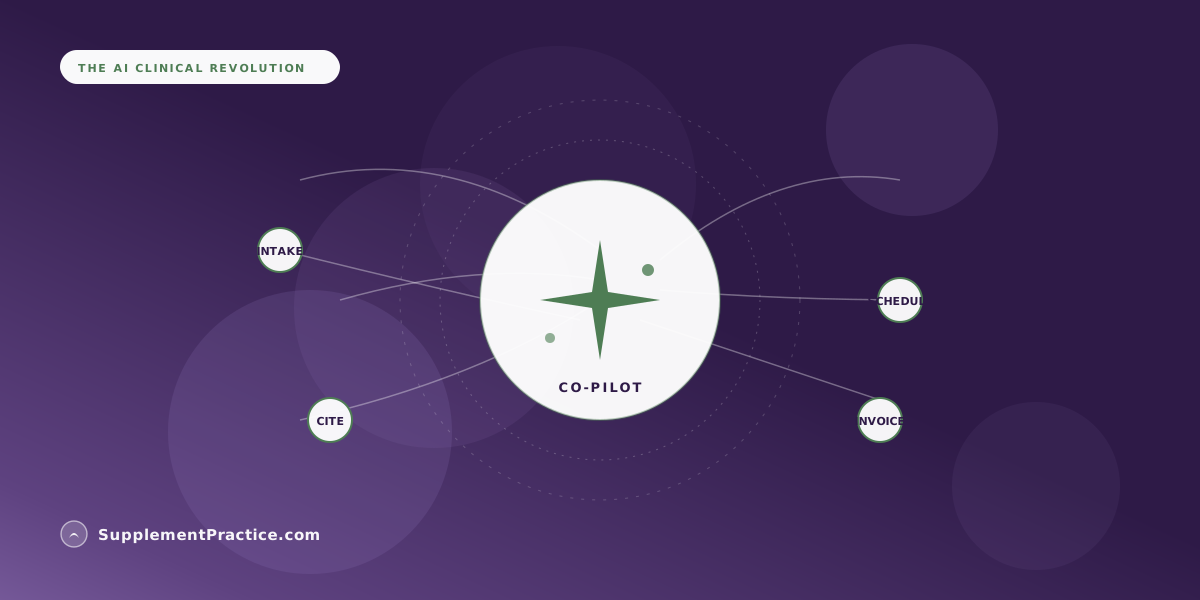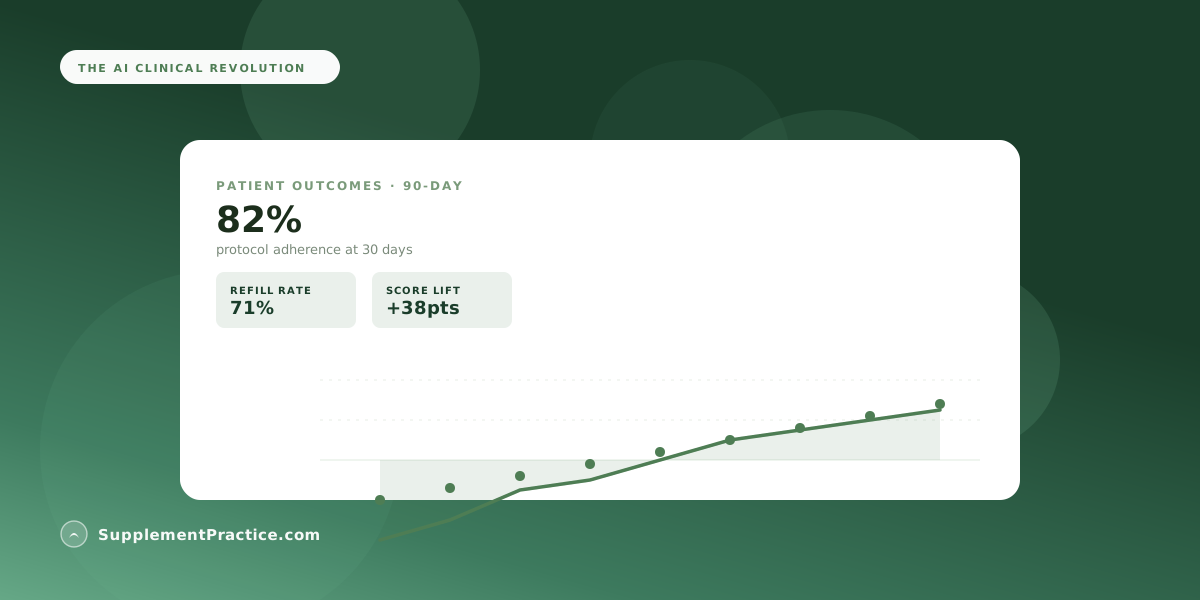
The best software to track patient protocol adherence for Standard Process users turns each protocol into a printable, emailable supplement schedule, sends automated refill reminders before a patient runs out, and tracks every fulfillment and refill in the patient's record. Because it integrates with Standard Process Patient Direct, the schedule the patient follows and the orders they place are the same data — so adherence becomes a number you can see, not a guess. Supplement Practice was built to close exactly this loop.
What Adherence-Tracking Software Must Do
- Turn any protocol into a clear, printable and emailable dose-by-time-of-day schedule
- Send automated refill reminders before the patient runs out, not after
- Track fulfillment and refills so you can see who reordered and who lapsed
- Integrate with Standard Process Patient Direct so orders and schedule share one record
- Show adherence at a glance because adherence predicts clinical outcomes
- Flag lapsed patients so front-desk follow-up is a list, not a memory
- Keep it all inside the chart, not in a separate app the patient ignores
Adherence is a data problem before it is a motivation problem
Most practitioners try to fix adherence with better pep talks. But patients who abandon a Standard Process protocol rarely decide to quit — they simply run out, lose the handwritten list, or forget which bottle goes with breakfast. The best adherence software attacks those failure points directly: it makes the schedule impossible to lose, makes reordering automatic, and makes the practitioner able to see, at a glance, exactly who is still on track. Motivation matters, but structure is what moves the number.
So when clinicians search for script adherence tools or patient adherence program software, what they actually need is a system that closes the loop from protocol to schedule to refill to visible tracking — inside the chart, not scattered across a printout, an email, and a separate ordering portal.
Start with a printable, emailable supplement schedule
The single highest-leverage feature is turning a protocol into a schedule the patient can actually follow: which product, how much, and at what time of day, laid out as a grid rather than a paragraph. A patient who leaves with “2 caps Catalyn, morning and evening; 1 Cataplex B with lunch” on a clean printed sheet — and the same sheet in their inbox — adheres far better than one handed a bottle and a verbal instruction. Generating that sheet automatically from the protocol is exactly the workflow in AI-generated printable supplement schedules, and it is the foundation everything else builds on.
The reason the format matters so much is cognitive load. A Standard Process regimen can easily run six or eight products with different timings, and a paragraph of instructions asks the patient to hold all of that in their head three times a day. A grid — rows for products, columns for morning, lunch, and evening — turns the whole plan into a glance. Patients tape it to the fridge, and spouses and caregivers can follow it too. Offering both a printed copy for the counter and an emailed copy for the phone covers the two places adherence actually happens: the kitchen and the pocket.
Automate the refill reminder before the bottle is empty
The second failure point is the gap between running out and reordering. If a 90-count bottle at two per day empties in 45 days, the reminder should fire around day 38 — not when the patient next happens to think about it. Good adherence software calculates the run-out date from the dose and count on the schedule and sends the reminder automatically, ideally with a one-tap reorder link. This is also the engine of a recurring-revenue refill model: the same automation that keeps a patient adherent keeps your dispensary revenue predictable. The timing math is not something a busy front desk can do by hand across a full patient panel, which is exactly why it has to be automatic — a per-product run-out date, recalculated whenever the dose changes, is the sort of small, relentless task software does perfectly and humans forget.
Track fulfillment and refills so lapses become visible
Reminders are only half of it — you have to know whether they worked. Fulfillment and refill tracking records each order against the protocol, so your front desk can pull a list of patients who were due for a refill and did not place one. That converts adherence follow-up from something a busy provider tries to remember into a concrete worklist. The reason this belongs in the chart rather than a standalone app is the same reason adherence drops when schedules live outside the EHR: data that is not in the record does not get acted on.
Why adherence predicts outcomes — and why tracking it matters
A protocol only works if the patient takes it as designed. A perfectly reasoned Standard Process regimen delivers nothing if the patient stops at week three, and the practitioner who cannot see that lapse will misread it as protocol failure and change a plan that was actually working. Making adherence a visible metric protects your clinical judgment: when a patient is not improving, you can tell whether the issue is the protocol or the follow-through before you adjust anything. That single distinction is why serious integrative practices track adherence as deliberately as they track lab values.
Visible adherence also changes the conversation at the follow-up visit. Instead of asking a vague “have you been taking everything?” and accepting a hopeful nod, you can open the record and see that the patient reordered on schedule for two months and then stopped — which turns the visit into a specific, useful question about what happened around that date. Patients are more honest, and more coachable, when the data is on the screen between you rather than relying on memory. Over time, tracking adherence per patient also tells you which parts of your protocols are realistic: if half your patients abandon a ten-product plan by week four, the plan, not the patients, may need simplifying.
A chiropractor and Standard Process user in Michigan
Dr. Ray Kessler had built his practice around Standard Process whole-food supplements and prescribed them at nearly every visit. But his reorder rate was dismal — patients bought one bottle and vanished — and he had no way to tell who had actually stayed on protocol between appointments.
He moved his prescribing into Supplement Practice, which generated a printable and emailable schedule from each protocol, connected to Standard Process Patient Direct so patients ordered through the same system, and fired a refill reminder a week before each patient's run-out date. Within two months his front desk was working a weekly “due for refill, no order” list instead of guessing, refill rates climbed, and Ray could finally see adherence as a number next to each patient's chart.
| Adherence gap | Manual approach | Adherence-tracking software |
|---|---|---|
| Following the plan | Handwritten or verbal instructions | Printable and emailable schedule by time of day |
| Reordering in time | Patient remembers, or doesn't | Automated reminder before run-out, one-tap reorder |
| Seeing who lapsed | Not visible until next visit | Refill tracking flags patients with no reorder |
| Ordering channel | Separate Patient Direct portal | Integrated so schedule and orders share a record |
| Judging outcomes | Guess whether patient adhered | Adherence visible before you change the plan |
How Standard Process Patient Direct integration closes the loop
The feature that makes all of this real for a Standard Process practice is Patient Direct integration. When the schedule the patient follows and the orders they place flow through the same system, adherence stops being an estimate and becomes measured: the software knows what was prescribed, what was ordered, and when the next reorder is due. That is the difference between hoping a patient is compliant and knowing it. It is also why a platform that natively supports Standard Process alongside brands like Xymogen and Designs for Health — the approach in protocol software for modern practices — beats a generic tool bolted onto a separate ordering portal.
One practical note: how you handle patient communications, reminders, and any protected health information is governed by HIPAA and related privacy rules, and the specifics of consent and messaging vary by state and change over time. Treat this as general operational guidance rather than legal advice, and confirm your reminder and communication workflows against current HIPAA guidance and your state's requirements.
Common adherence-tracking mistakes
- Handing out a bottle with no schedule. A verbal instruction is forgotten by the parking lot; a printable, timed schedule is not.
- Reminding after the patient runs out. The reminder has to fire before the bottle is empty, calculated from dose and count — not on a fixed monthly date.
- Ordering in a separate portal. If the schedule and the orders live in different systems, you can never actually measure adherence.
- Never pulling a lapsed-patient list. Tracking is useless if no one works the list; make refill follow-up a weekly front-desk task.
- Changing the protocol before checking adherence. A patient who stopped taking it is not a protocol failure — see the adherence data before you adjust the plan.
Frequently asked questions
What are the best script adherence tools for a Standard Process practice?
The most effective script adherence tools generate a printable and emailable supplement schedule from the protocol, calculate each product's run-out date, and send automated refill reminders before the patient runs out. For a Standard Process practice, the key differentiator is Patient Direct integration so the schedule and the orders share one record and adherence becomes measurable.
How does patient adherence program software actually improve compliance?
Patient adherence program software improves compliance by removing the three things that break it — a lost schedule, an empty bottle, and an invisible lapse. It gives the patient a clear timed schedule, reminds them to reorder before they run out, and flags lapsed patients so your team can follow up. See why adherence drops outside the EHR.
Does the software integrate with Standard Process Patient Direct?
Yes — the right platform connects to Standard Process Patient Direct so patients order through the same system that holds their protocol and schedule. That integration is what lets the software track fulfillment and refills against what was prescribed, turning adherence into a number instead of a guess.
Can it send automated refill reminders?
Yes. Good adherence software calculates each product's run-out date from its dose and count and sends the reminder a week or so before the bottle empties, often with a one-tap reorder link. This is the same automation behind a recurring-revenue refill model.
Why does adherence matter for clinical outcomes?
A protocol only works if the patient takes it as designed, so tracking adherence protects your clinical judgment — when a patient is not improving, you can tell whether the plan is wrong or simply was not followed before you change anything. That distinction keeps you from abandoning a protocol that was actually working.
Where to go next
Read how to generate printable supplement schedules, why adherence drops outside the EHR, and how to build recurring refill revenue.