A telehealth nutrition practice doesn't fail because the video drops — it fails because the visit ends without closing the loop. The protocol, the schedule, the patient's payment, and the supplement order all need to fire before the patient hangs up. This is the HIPAA, scheduling, billing, and visit-end checklist a nutrition practice actually needs, plus the BAA / state scope / no-show / payment questions that come up at month one.
Telehealth Visit-End Loop That Converts
- Signed BAA with the practice management vendor (non-negotiable)
- State-by-state scope verified before booking out-of-state patients
- Confirmation email 24h out + SMS 2h out with one-click rebook
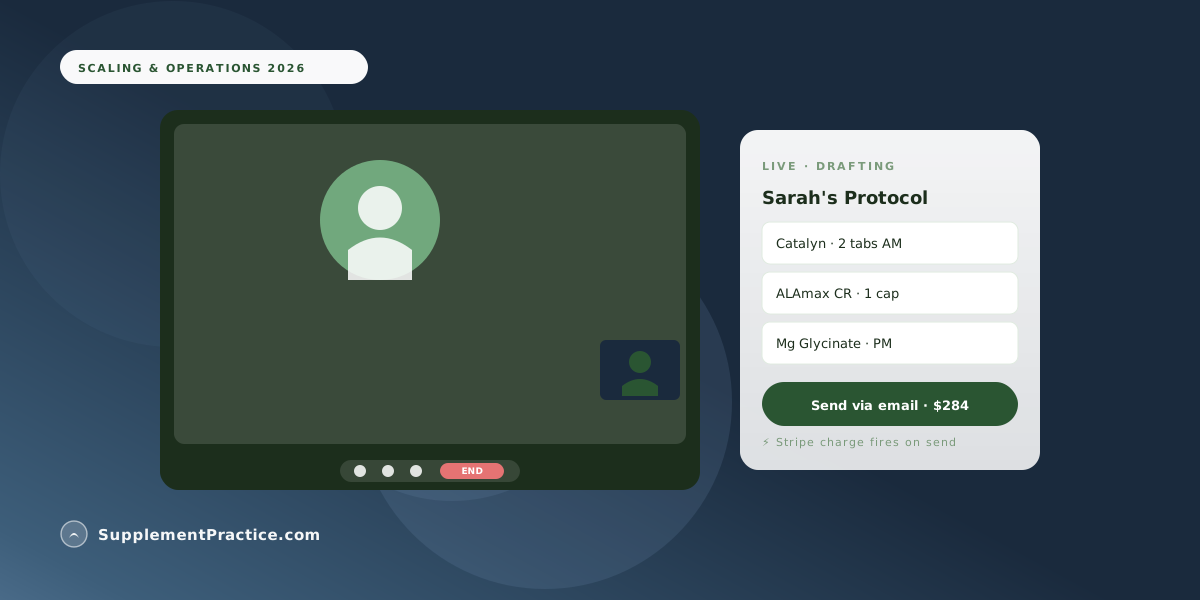
- Co-Pilot drafts the protocol live during the visit, not after
- Supplement schedule emailed before the call ends
- Card on file runs the invoice + dropship order while patient is on call
- Chart note auto-generated from session structure (verified by practitioner)
The HIPAA layer is the floor, not the differentiator
Most telehealth marketing leads with "HIPAA-compliant" as if that's a feature. It isn't — it's the licensing floor below which a platform cannot legally be used for clinical visits. What HIPAA compliance actually requires is concrete: a signed Business Associate Agreement (BAA) with the vendor, TLS 1.2+ encryption in transit, encryption at rest for any stored video / notes / chart content, role-based access controls, and audit logs of who viewed what and when. Consumer Zoom, FaceTime, and Google Meet do not meet these requirements out of the box (Zoom for Healthcare and Google Workspace business tiers can, with the BAA, but require active configuration).
The differentiator isn't HIPAA — it's everything that happens once the secure room is open: who drafts the protocol, when the schedule is sent, when the invoice runs, whether the supplement order ships before the patient closes the browser tab. Practitioners who pick a platform on "HIPAA-compliant" alone end up stitching three or four other tools together and lose the loop anyway.
State-line scope is messier than most practitioners realize
Practitioner credential and the patient's physical location at the time of the visit together determine whether the visit is legal. The patient's home address on file is irrelevant if they're in a hotel room in another state when the call connects.
For licensed dietitians (RD/RDN), most states require state-specific licensure; a handful recognize compact licensure or have explicit telehealth carve-outs. For Certified Nutrition Specialists (CNS), scope varies more — some states recognize the CNS credential explicitly, others fall back to dietitian licensure rules. For unlicensed health coaches, scope is the widest but also the most ambiguous, and the safe boundary is "education and behavior change, not medical nutrition therapy."
The practical rule that keeps practices out of trouble: verify scope state-by-state before scheduling a patient outside your home state, confirm the patient's physical state at booking, and decline visits where the patient will be traveling across state lines into a state where you can't practice. A short "I'll be in Hawaii when we talk Thursday" message can require a rebooking.
The appointment cadence that minimizes no-shows
Telehealth no-show rates run noticeably higher than in-person — typically 15-25% on default scheduling versus 5-10% in-person. The mechanism is behavioral: the patient who has to drive to a clinic forecasts the visit in their day; the patient who needs to "open a browser" treats it as flexible until something more pressing happens.
The cadence that drops the no-show rate into single digits combines three triggers. Twenty-four hours out: a confirmation email with the visit link, intake reminders, and a one-click rebooking option. Two hours out: an SMS reminder with the same link and rebooking option. Fifteen minutes before: a brief "we're starting in 15 — here's your link" SMS or email. The 15-minute reminder catches the patient who genuinely forgot, not the patient who decided not to come — and the rebooking option in every touchpoint converts ambivalent patients into rescheduled patients rather than no-shows.
One-click rebooking is the often-missed lever. Asking the patient to call the office to reschedule loses them; embedding a rebooking link in the SMS keeps them in the practice's calendar.
Integrated billing: where the visit's revenue gets captured or lost
The single biggest revenue leak in telehealth nutrition practices is the gap between visit-end and invoice payment. A platform that doesn't close the invoice while the patient is still on the call loses roughly 8-15% of charges to collection cycles, declines, and forgotten emails. The fix is operational: card-on-file at booking, automatic charge at visit-end, and the protocol-and-invoice email firing in the same outbound stream.
Stripe and Square both work as the payment-processor layer for most nutrition practices. The BAA question is more nuanced than usually portrayed: the credit card information flowing through Stripe or Square isn't tied to a diagnosis in their systems, which means HIPAA technically doesn't require a BAA at the payment processor for most cases. The BAA needs to live with the practice management platform that initiates the charge. Verify the specific posture with a healthcare attorney for your state.
The other operational consideration is the supplement order. If the protocol includes products being drop-shipped (Patient Direct, Fullscript, or direct from the brand), the dropship order should fire at the same moment as the invoice — not the next morning. A 12-hour delay between visit-end and supplement ship costs roughly 5 percentage points of 14-day adherence.
Solo dietitian, 80% telehealth, transitioning from disjointed tools
An RDN running a fully telehealth practice (Zoom Pro + Acuity Scheduling + Practice Better + Stripe) was averaging ~22% no-shows and 11-day average delay between visit-end and supplement-order-shipped. New-patient consultations took roughly 70 minutes including the post-visit work of drafting the protocol, emailing the schedule, and sending the supplement order via Fullscript.
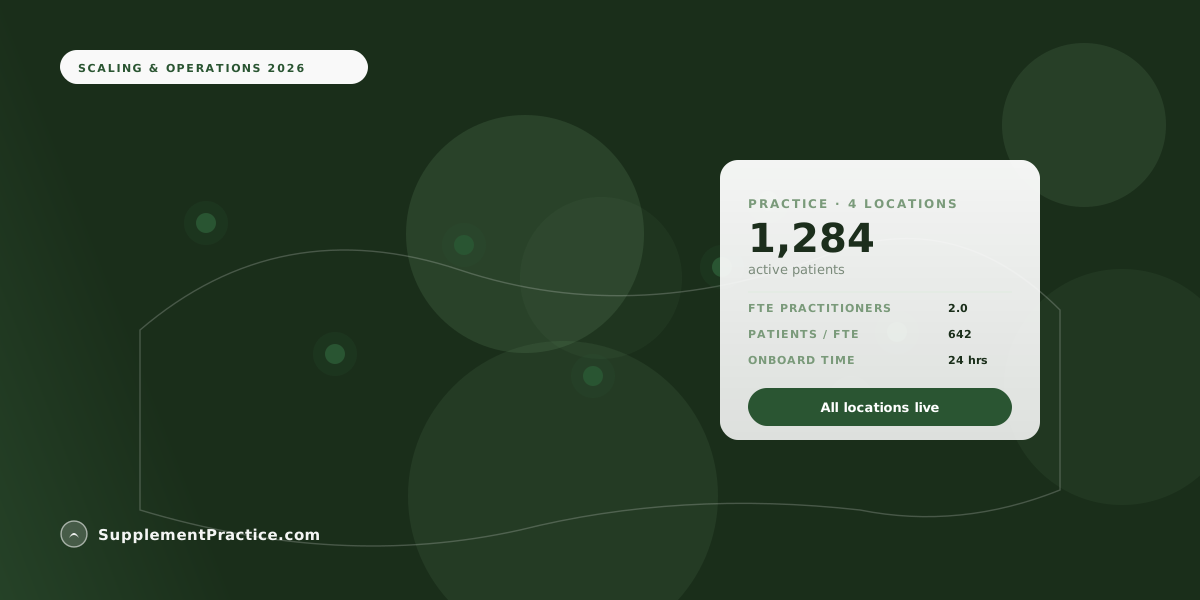
After consolidating onto a single integrated platform with the Co-Pilot drafting protocols live during visits: new-patient consult time dropped to 50 minutes (the 20 minutes of post-visit work was eliminated by closing the loop in-call). No-show rate dropped to 7% after the SMS + one-click rebook layer was added. Average visit-to-shipped delay went from 11 days to 0 days because the supplement order fires when the invoice does. The RDN reclaimed roughly 8 hours of weekly admin time and added six additional appointment slots, conservatively $1,080/week of incremental revenue.
The visit-end checklist that actually closes the loop
The 60-second window before the patient leaves the call is where adherence and revenue are won. The checklist:
- Confirm the protocol on screen. Practitioner walks the patient through the AM/PM schedule with screen-share. This is also the moment for any final overrides.
- Send the schedule. One click sends the printable AM/PM schedule to the patient's email; same content lands as a downloadable PDF in their patient portal.
- Run the invoice. Card-on-file runs for the visit fee + supplement total. Patient sees the charge confirmation on screen.
- Place the supplement order. For drop-ship items, the order fires to the brand fulfillment center. For in-clinic dispense (rare in pure telehealth), the practitioner notes the products to ship from inventory.
- Schedule the follow-up. Default to 30 days for new protocols, 60-90 for stable patients. One-click confirms the slot.
- Verify the chart note. The AI Co-Pilot drafts the SOAP / nutrition assessment note from the visit structure; the practitioner reviews and signs before the patient disconnects.
Every step happens with the patient still on the call. The patient ends the visit knowing exactly what they're taking, when it ships, what they paid, and when they'll be back — and the practitioner ends the visit with the chart closed.
Common mistakes
Five anti-patterns we see in telehealth nutrition practices
- Treating "HIPAA-compliant video" as the entire compliance story. The chart, the notes, the billing trail, and the patient portal all need the same protections. Locking down only the video is theater.
- Sending the protocol after the visit. Anything that lands in the patient's inbox after the call gets opened at 70-80% of the rate of what was sent during the call.
- Manual rebooking. If a patient needs to reschedule, they should be able to do it in two taps. Phone-call-only rebooking is a silent churn driver.
- No card-on-file. Booking without payment-on-file means chasing invoices after the visit. The collection cost on a $150 missed payment is roughly 20% of the charge.
- Recording sessions by default. Most practices shouldn't. The retention, access-control, and disclosure complexity outweighs the benefit, and the AI Co-Pilot's structured summary captures most of what a recording would.
Frequently asked questions
What makes a telehealth platform actually HIPAA-compliant for nutrition practice?
A signed BAA with the vendor, TLS 1.2+ encryption in transit, encryption at rest for stored video/notes/chart content, role-based access controls, and audit logs. Consumer Zoom, FaceTime, and Google Meet do not meet these requirements out of the box.
Do Stripe and Square sign BAAs for healthcare practices?
For most nutrition practices, a BAA at the payment-processor layer isn't strictly required because no PHI flows through them — the credit card data isn't tied to a diagnosis. The BAA needs to live with the practice management platform that initiates the charge. Always verify with a healthcare attorney for your state.
Can I see patients across state lines via telehealth?
It depends on your credential and the patient's physical location at the time of the visit. RD/RDNs typically need state-specific licensure; CNS scope varies; unlicensed coaches have wider but more ambiguous latitude. Verify scope state-by-state before scheduling out-of-state patients.
What's the appointment cadence that produces the lowest no-show rate?
Confirmation email 24h out, SMS 2h out with one-click rebooking, and a 15-minute pre-visit "we're starting" reminder. One-click rebooking is the often-missed lever — phone-call-only rescheduling loses patients.
Should I close the protocol and the invoice during the visit or after?
During. Practices that close in-visit see 30-day adherence rates 20+ percentage points above practices that send the protocol and invoice as homework, and capture roughly 8-15% more revenue per visit.
How do I record sessions, and should I?
Most practices shouldn't. The storage, retention, and disclosure complexity outweighs the benefit. If recording is required, it's PHI and must be encrypted at rest, access-controlled, and retained per state record-retention rules. AI Co-Pilot transcription summaries are a more practical middle ground.
Where to go next
Three companion pieces: how the Co-Pilot drafts the protocol during the visit, how inventory binding works for dropship-heavy telehealth practices, and the intake flow that feeds the visit. Supplement Practice ties HIPAA-compliant video, AI protocol drafting, integrated billing, and the visit-end loop into a single workspace built for nutrition telehealth.
Clinical & Technical References
- HHS — HIPAA & Telehealth Guidance
- Academy of Nutrition and Dietetics — Practice Resources
- Board for Certification of Nutrition Specialists (BCNS) — Scope & Licensure
- Stripe — Security & Compliance Documentation
- Square — Healthcare Use Guidance
- Center for Connected Health Policy — State Telehealth Laws