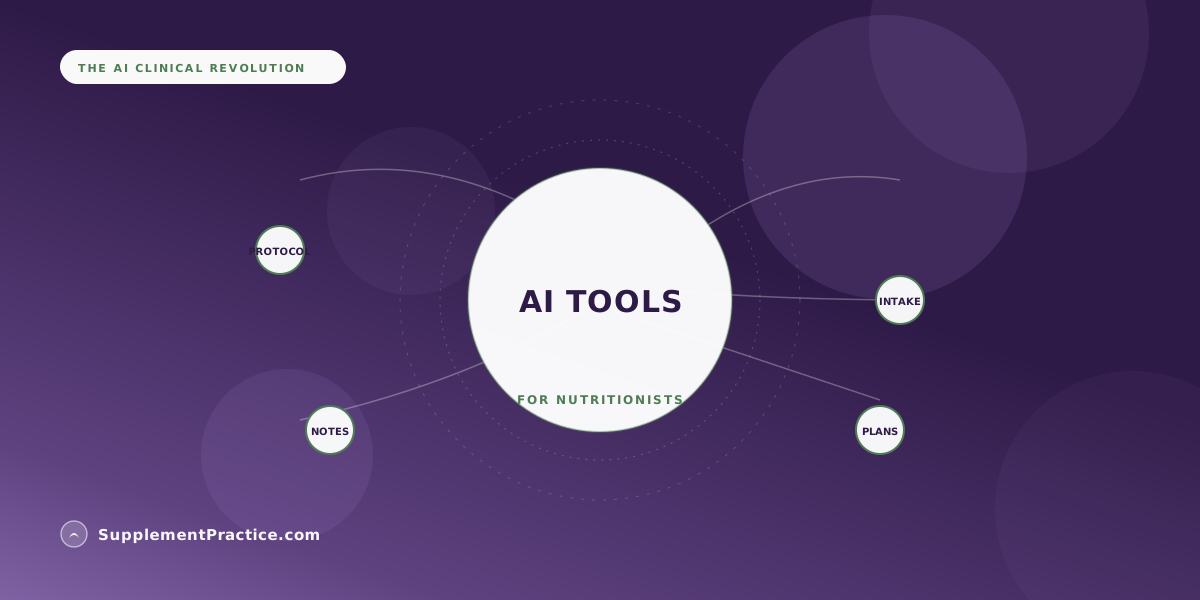
In 2026 nutritionists are mainly using four categories of AI: protocol and supplement-plan drafters that turn assessments into evidence-informed starting points, intake summarizers that condense long questionnaires and labs into a usable picture, ambient note-taking that drafts session notes from the conversation, and plan generators that produce personalized meal and supplement schedules. In every case the AI drafts and the clinician reviews and signs off — the tools save time on the first draft, not the clinical judgment.
AI in the 2026 Nutrition Practice
- AI protocol builders turn an assessment into an evidence-informed first draft
- Intake summarizers condense long questionnaires and labs into minutes
- Ambient note-taking drafts session notes from the conversation
- AI plan generators produce personalized meal and supplement schedules
- Interaction checkers flag potential supplement-drug conflicts for review
- The clinician always reviews and approves AI output before it reaches a client
- The biggest gains come from AI built into the record, not bolted on
AI is drafting the first version, not replacing the clinician
The most important thing to understand about AI in a 2026 nutrition practice is what it is actually doing: producing a fast, competent first draft that a human refines and approves. The nutritionists getting real value are not handing clients whatever a model spits out. They are using AI to compress the time-consuming first pass — the protocol skeleton, the intake summary, the note, the meal plan — and then applying their judgment on top. Framed that way, AI is less a robot nutritionist and more a very fast assistant that never gets tired of paperwork.
Four categories of tool dominate real practices this year. Here is what each does and where the human stays firmly in the loop.
1. Protocol and supplement-plan builders
The highest-impact tool for nutritionists is the AI protocol builder. You enter the client's assessment — goals, symptoms, labs, current medications — and the system drafts an evidence-informed supplement protocol and schedule in seconds, which you then edit before it goes anywhere. This turns a task that used to take real desk time into a review-and-adjust step. The workflow and its guardrails are detailed in how to use AI to build evidence-based supplement protocols in seconds. The value is speed on the draft; the clinician still owns the decision.
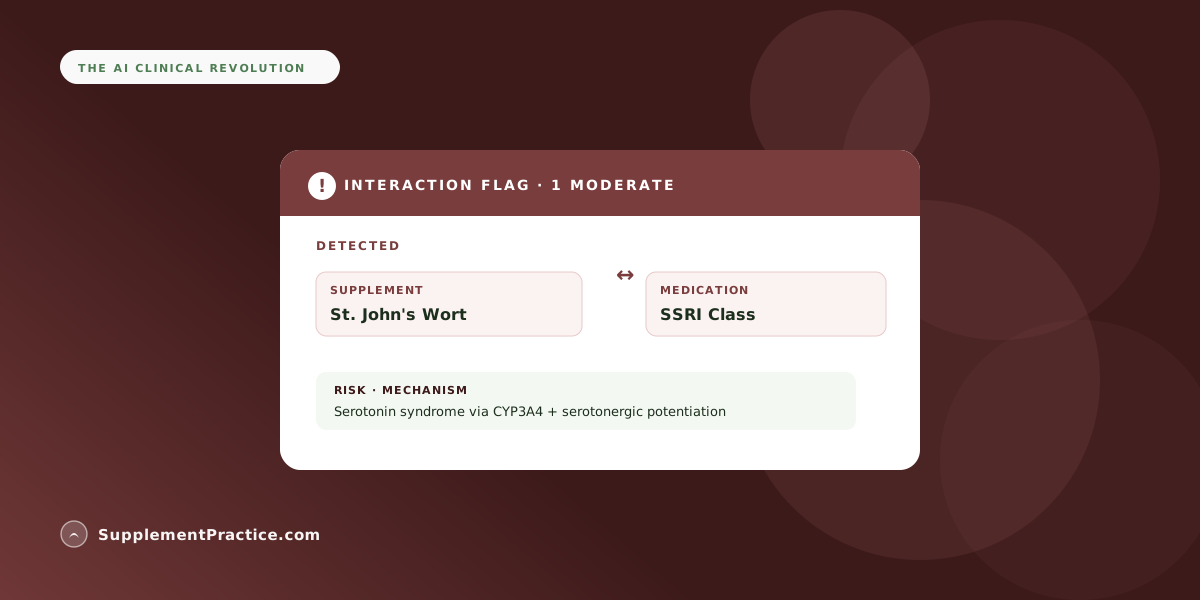
A close companion is the interaction checker. Because clients often arrive on medications and multiple supplements, AI that flags potential supplement-drug conflicts for the clinician to evaluate adds a real safety layer — covered in can AI help prevent supplement-drug interactions. It surfaces candidates for review; it does not overrule your judgment.
2. Intake and lab summarizers
Nutrition clients arrive with long questionnaires, food journals, and lab panels. AI intake summarization reads all of it and produces a concise, structured picture — key findings, flags, and open questions — so you walk into the session already oriented instead of reading during it. This is one of the quieter but most appreciated uses, because it converts pre-visit prep from a chore into a two-minute scan and lets you spend the appointment on the client rather than on their paperwork.
The same summarization is useful across a longer relationship. When a returning client's history spans months of notes, food logs, and adjusting protocols, an AI summary that surfaces what changed since last visit — new symptoms, adherence gaps, updated labs — keeps you from re-reading the entire chart before every follow-up. As with everything else here, you verify the summary against the source rather than trusting it blindly; the value is that it points your attention to what matters instead of making you hunt for it. Clients notice when their nutritionist clearly remembers their story, and this is part of how busy practices sustain that continuity at scale.
3. Ambient and assisted note-taking
Documentation is where nutritionists lose evenings. Ambient AI note-taking listens to the session (with consent) and drafts a structured note — assessment, plan, follow-up — that you review, correct, and sign. Assisted variants draft the note from your brief bullet points instead. Either way, the goal is the same: get an accurate note written without the clinician typing it from scratch after hours. This directly targets the burnout described in reducing charting fatigue, and the honest boundaries of what these tools can and cannot do are laid out in what AI can and cannot do for a wellness practice.
4. Personalized plan and schedule generators
The fourth category produces client-facing deliverables: personalized meal frameworks and clear, printable supplement schedules that tell the client exactly what to take and when. Adherence rises when the plan is legible and specific rather than a vague list, and AI is good at turning an approved protocol into that clean artifact. The connection between well-formatted schedules and clients actually following them is explored in generating printable supplement schedules that improve adherence.
Built-in beats bolted-on
Where the AI lives matters as much as what it does. A standalone AI app that drafts protocols but knows nothing about the client's chart forces you to copy data in and paste results out — friction that quietly eats the time the tool was supposed to save, and scatters health data across extra vendors. AI built into the record is different: it can draw on the intake, the labs, the medication list, and the history already there, and it writes its output back into the same chart. The draft is better because the context is richer, and there is no copy-paste tax.
This is a large part of why practices are consolidating rather than assembling a pile of point tools. When the protocol builder, the note-taker, the schedule generator, and the interaction checker all read from and write to one record, the AI compounds instead of fragmenting your workflow. That integration argument is the same one driving the broader shift toward unified platforms, and it is worth weighing before buying any freestanding AI subscription.
A virtual nutritionist in Michigan reclaims her evenings
Sofia Marchetti ran a busy virtual practice and was spending two hours most nights on notes and building supplement protocols by hand. She adopted the AI tools built into Supplement Practice: intake summaries prepped her before each call, ambient note-taking drafted her session notes, and the protocol builder turned each assessment into an evidence-informed draft she refined in minutes.
She reviewed and approved everything — nothing reached a client unedited — but the first draft was no longer hers to write from a blank page. Her documentation moved back inside working hours, she saw a few more clients a week without adding stress, and the quality of her notes actually improved because she was editing rather than rushing. The AI did not replace her expertise; it deleted the blank page.
The four categories at a glance
| AI tool category | What it drafts | Where the human stays |
|---|---|---|
| Protocol builder | Supplement protocol & schedule | Clinician reviews and edits every plan |
| Intake summarizer | Structured client & lab summary | Clinician confirms findings and flags |
| Ambient note-taking | Draft session note | Clinician corrects and signs the note |
| Plan generator | Meal & supplement schedule | Clinician approves before it ships |
Common mistakes with AI in a nutrition practice
Where AI adoption goes sideways
- Treating output as final. AI drafts; it does not decide. Sending an unreviewed plan or note to a client abdicates clinical responsibility.
- Bolting on disconnected tools. Standalone AI apps that do not touch your record create copy-paste work and data silos; AI built into the EHR wins.
- Ignoring consent and privacy. Ambient note-taking records conversations and processes health data — get consent and use tools that will sign a BAA.
- Skipping the interaction check. Drafting protocols without screening for supplement-drug conflicts wastes AI's best safety contribution.
- Expecting AI to replace expertise. The value is speed on the first draft; clients still need your judgment, and marketing otherwise invites trouble.
A note on responsibility, privacy, and claims
AI tools do not change your professional and legal responsibilities. You remain accountable for every plan, note, and recommendation an AI helped draft, and rules on documentation, data privacy, recording consent, and permissible claims vary by state and credential and continue to evolve — including how regulators view AI-assisted clinical software. Treat this as general guidance, not legal advice: use tools that protect client data and will sign a BAA, get consent before recording, keep a clinician in the loop, and verify your obligations with your licensing body and a qualified attorney. The technology accelerates the work; it does not transfer the accountability.
Frequently asked questions
What is the most useful AI tool for a nutritionist?
For most nutritionists the AI protocol builder delivers the biggest time savings, turning a client assessment into an evidence-informed supplement plan draft in seconds that the clinician then edits. See building evidence-based protocols with AI for the workflow and its guardrails.
Can AI write nutrition session notes?
Yes — ambient AI note-taking can draft a structured session note from the conversation (with client consent), which the nutritionist then reviews, corrects, and signs. It targets the after-hours documentation that drives charting fatigue, but the clinician remains responsible for the final note.
Is it safe to use AI for supplement recommendations?
It is safe when the AI drafts and a clinician reviews before anything reaches the client, and when the tool screens for supplement-drug interactions. It is not safe to send unreviewed AI output to clients — the professional accountability stays with you.
Do AI nutrition tools need to be HIPAA compliant?
If the tool handles client health data — and intake summarizers and note-takers do — it should meet the same privacy bar as the rest of your stack and be willing to sign a BAA. Ambient recording also requires client consent. Privacy obligations do not relax because a tool is AI-powered.
Will AI replace nutritionists?
No. The 2026 pattern is AI drafting first versions — protocols, notes, plans — while the nutritionist applies judgment, builds the relationship, and owns the decisions. The honest boundaries are covered in what AI can and cannot do for a wellness practice.
Where to go next
Explore building evidence-based supplement protocols with AI, what AI can and cannot do for a wellness practice, and AI-generated printable supplement schedules.