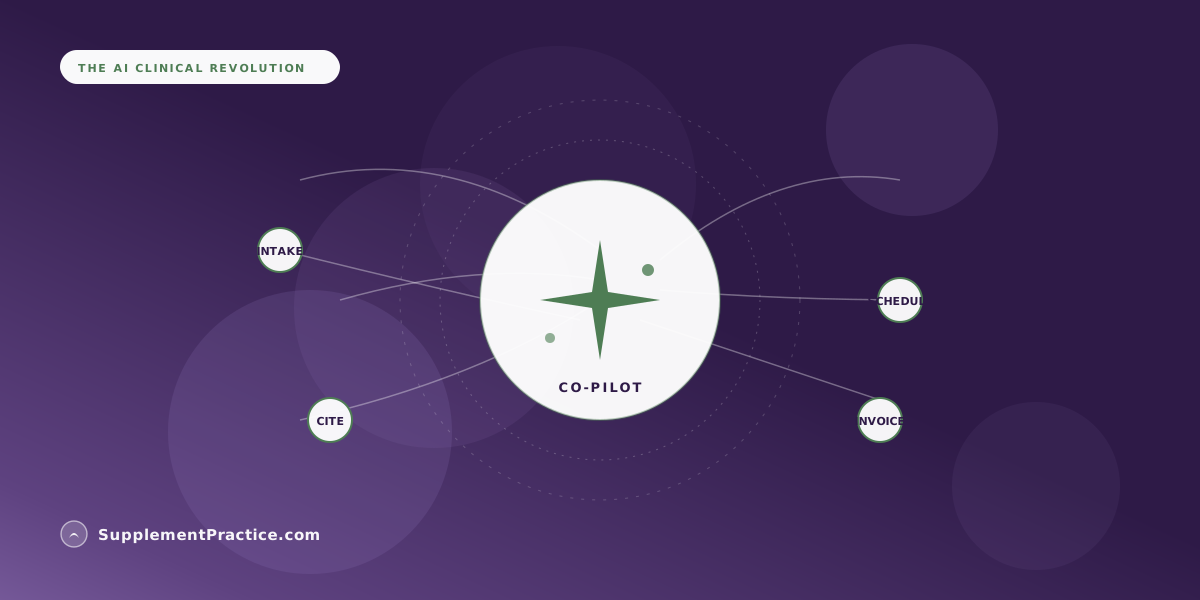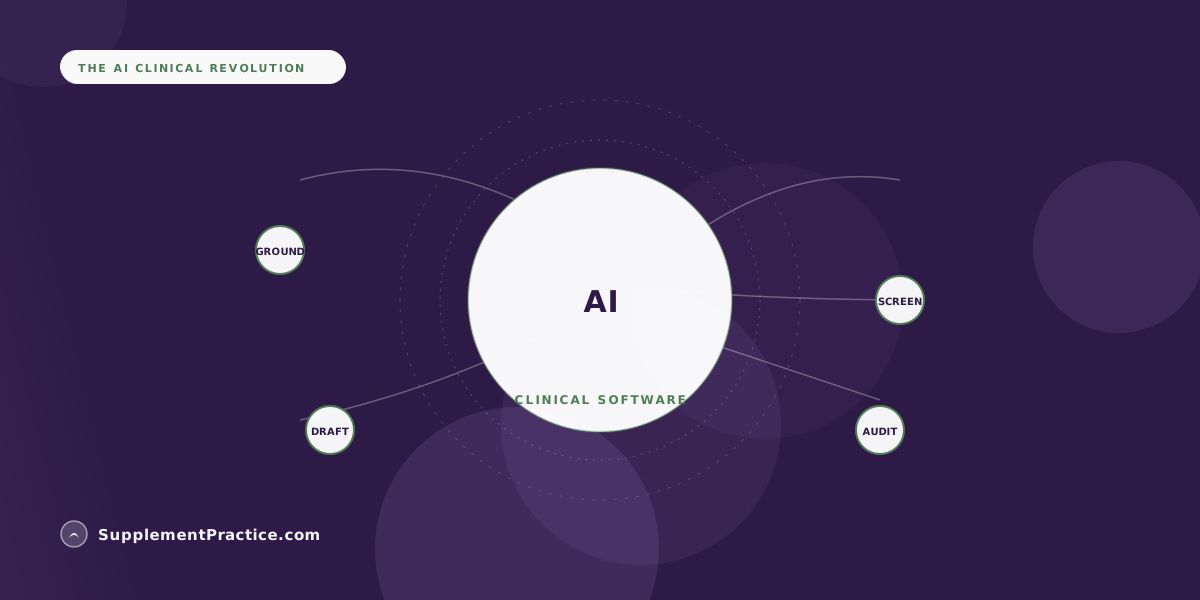
AI in healthcare software is real and useful, but it is neither the magic nor the menace the marketing implies. For a wellness practice, AI genuinely accelerates drafting protocols, screening interactions, summarizing intake, and reducing charting time — and it genuinely cannot exercise clinical judgment or be trusted ungrounded. This guide separates what AI does well from what it doesn't, and how to evaluate a vendor's claims.
What AI Can and Can't Do in a Clinical Setting
- Can: draft supplement protocols from a grounded catalog
- Can: screen proposed supplements against a medication list
- Can: summarize long intake into a usable clinical picture
- Can: cut charting time by drafting structured notes
- Can't: exercise clinical judgment or accept liability
- Can't: be trusted ungrounded — hallucination is real
- The test: is it retrieval-grounded, screened, and audited?
Two wrong mental models, and the useful one
Practitioners tend to hold one of two mistaken beliefs about AI in healthcare software. The first is that it's a near-magic clinician that will soon diagnose and prescribe on its own; the second is that it's a dangerous gimmick that hallucinates and has no place near patients. Both are wrong, and both prevent a practice from using AI where it actually helps. The useful mental model is narrower and more accurate: today's clinical AI is a fast, tireless drafting-and-screening assistant that is powerful when grounded and unreliable when not — a senior resident who produces excellent first drafts and must never be the attending. Everything practical follows from that framing.
For a wellness practice specifically, AI's value concentrates in four tasks — drafting protocols, screening interactions, summarizing intake, and reducing charting time — and its limits are equally specific. Understanding both is what separates a practice that gets real leverage from AI from one that either avoids it out of fear or trusts it out of hype.
What AI does well: drafting from a grounded catalog
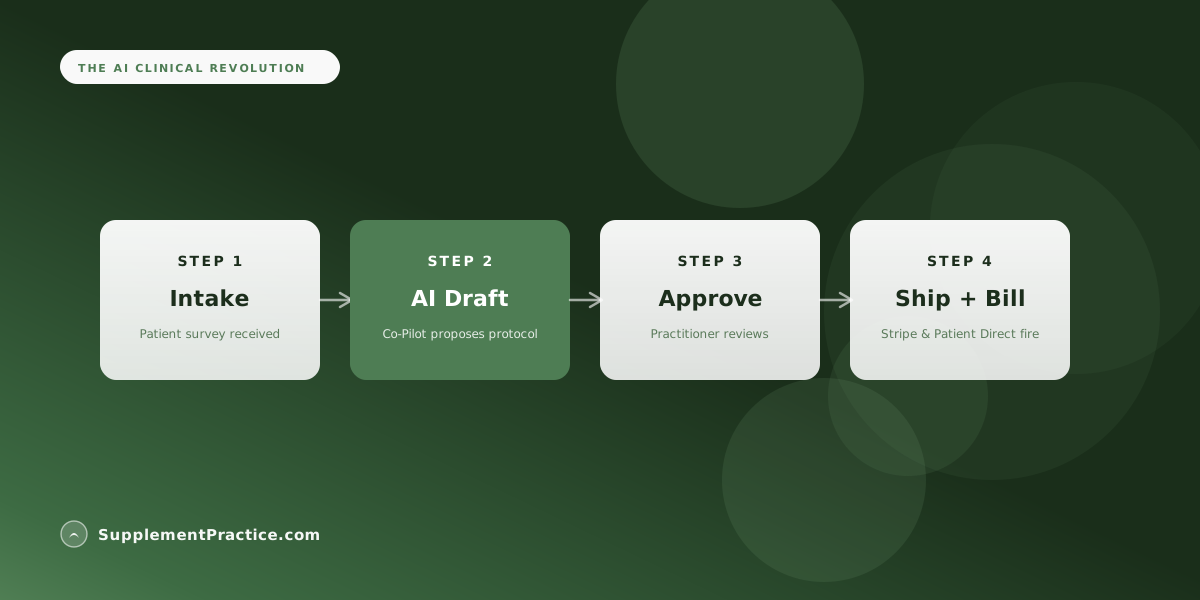
The clearest win is protocol drafting. Given a structured intake and a defined product catalog, AI can produce a first-draft supplement protocol — with brand SKUs, doses, timing, and rationale — in seconds, collapsing the research-and-assembly work that consumes much of a practitioner's protocol time. The critical qualifier is grounded: the AI must retrieve from your actual catalog rather than generate from statistical memory, or it will confidently invent products and doses that don't exist. This retrieval-augmented approach is the difference between a clinical tool and a chatbot, and it's the mechanism behind using AI to build evidence-based protocols in seconds. Drafting is where AI earns its place; the practitioner then overrides, which is where the judgment lives.
What AI does well: screening and summarizing
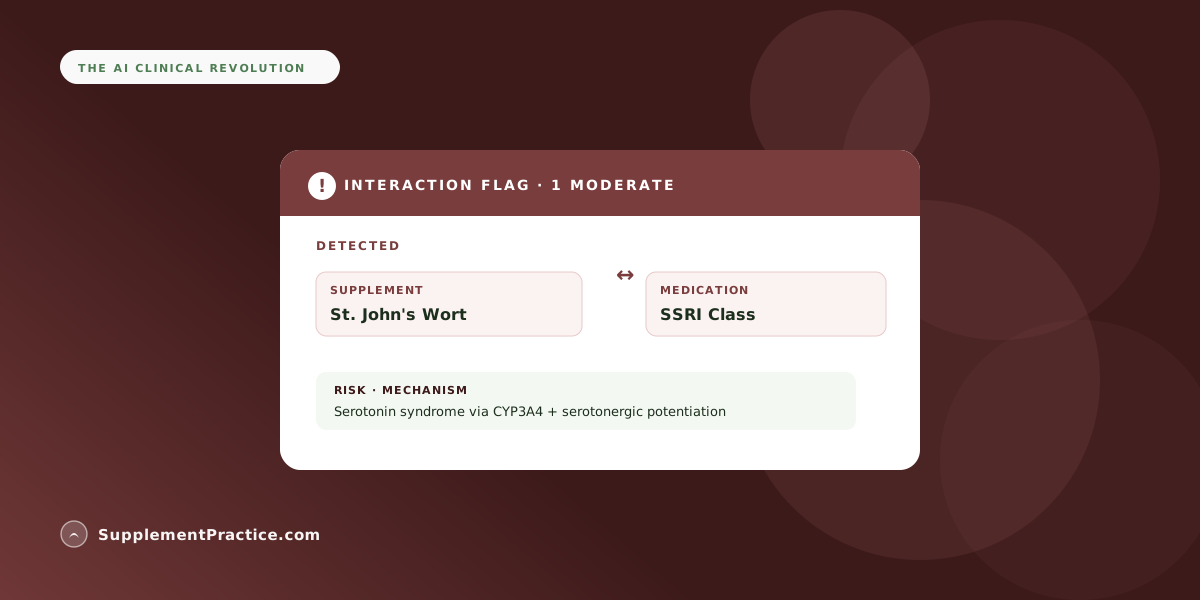
Two more tasks play to AI's strengths. Interaction screening: cross-referencing a proposed protocol against a patient's medication list to surface documented drug-nutrient interactions is pattern-matching at scale, exactly what software is good at — the substance of using AI to help prevent supplement-drug interactions. Intake summarization: a long symptom-burden questionnaire and history can be distilled into a structured clinical picture that saves the practitioner reconstruction time. In both cases AI is accelerating work the practitioner would otherwise do manually and then reviews — it's augmentation, not autonomy, and that's precisely why it's safe and useful.
What AI does well: reducing charting time
Charting is where AI's time savings are most immediately felt. Drafting structured notes from a visit, turning a protocol into documentation, and pre-filling the repetitive scaffolding of a chart all reduce the after-hours documentation burden that drives clinician burnout. The practitioner edits and signs — the note is theirs — but the blank page is filled. This connects directly to the charting-fatigue problem we address in reducing charting fatigue in a busy functional medicine office.
A naturopath separating AI hype from AI help
A naturopath had experimented with a general-purpose chatbot for protocol ideas and been burned: it recommended a product at a dose that didn't exist and cited a study she couldn't find. She nearly concluded that clinical AI wasn't ready. What she'd actually encountered was ungrounded AI — a generalist model generating plausible text with no catalog, no patient context, and no screening.
Moving to grounded clinical AI inside her practice platform changed the picture entirely. Protocol drafts now came only from her actual catalog, so invented products were impossible; every draft was screened against the patient's medication list; and each suggestion was logged to the chart with its source. She still overrode roughly a third of the drafts — sequencing priorities, adjusting doses for sensitive patients — which was the point. The AI did the assembly; she did the judgment. Her reversal was instructive: the technology hadn't changed between the two experiences, the grounding had.
What AI can't do: judgment, liability, and ungrounded trust
The limits are as important as the capabilities. AI cannot exercise clinical judgment — it can identify five plausible root causes from an intake but not decide which to address first for this patient given their budget, bandwidth, and severity. It cannot hold liability; the practitioner who signs and dispenses is responsible, which is appropriate and unlikely to change. And it cannot be trusted ungrounded: a model generating from statistical patterns rather than retrieving from verified sources will hallucinate products, doses, and citations with complete confidence. These aren't temporary limitations to be patched in the next version — the first two are inherent to what a clinician is, and the third is why the architecture of the tool matters more than the cleverness of the model.
How to tell clinical AI from a chatbot
| Question to ask | Real clinical AI | Repackaged chatbot |
|---|---|---|
| Where do recommendations come from? | Retrieved from your catalog | Generated from model memory |
| Can it invent a nonexistent product? | No — grounded | Yes |
| Does it screen the medication list? | Yes | No patient context |
| Is every suggestion logged? | Audited to the chart | No trail |
| HIPAA-eligible deployment? | Yes, with a BAA | Usually not |
| Who holds judgment? | The practitioner, by design | Unclear |
Common mistakes practices make with clinical AI
Five errors in adopting AI healthcare software
- Judging AI by an ungrounded chatbot. A generalist model's hallucination isn't evidence that clinical AI is unsafe — it's evidence that grounding is the whole ballgame.
- Trusting the first draft. The value is a draft to override, not an answer to accept. A practice that never overrides is misusing the tool.
- Treating the AI's rationale as a citation. The paraphrase isn't the source; the linked monograph or fact sheet is. Read the link when stakes are high.
- Ignoring the deployment question. Clinical AI touches PHI. If it isn't HIPAA-eligible with a BAA, it doesn't belong near patient data regardless of how good it is.
- Expecting judgment from software. AI sequences options; the practitioner sets priorities. Expecting the tool to make clinical decisions is both unsafe and a misread of what it does.
The architecture is the product
The lesson underneath every point here is that with clinical AI, the architecture matters more than the model. A brilliant model deployed ungrounded, without patient context, without screening, and without an audit trail is a liability; a competent model that retrieves from your verified catalog, screens against the medication list, logs to the chart, and hands the practitioner a draft to override is a genuine clinical asset. The marketing focuses on model capability because it's impressive; the practice should focus on grounding, screening, auditing, and deployment because that's what determines whether the AI is safe and useful. Evaluated that way, AI in healthcare software is neither magic nor menace — it's a well-scoped accelerator for the parts of clinical work that are assembly rather than judgment, and it keeps the judgment exactly where it belongs. For a fuller treatment of the standardization upside, see the role of AI in standardizing clinical workflows.
Frequently asked questions
What can AI actually do for a wellness practice?
Four things well: draft supplement protocols from a grounded product catalog, screen a proposed protocol against a patient's medication list for documented interactions, summarize long intake into a usable clinical picture, and reduce charting time by drafting structured notes. In each case it accelerates work the practitioner then reviews and signs — augmentation, not autonomy.
What can't AI do in a clinical setting?
It can't exercise clinical judgment — deciding which root cause to prioritize for a specific patient — it can't hold liability, and it can't be trusted when ungrounded. A model generating from statistical patterns rather than retrieving from verified sources will hallucinate products, doses, and citations confidently. The first two limits are inherent to what a clinician is; the third is why the tool's architecture matters.
How do I tell real clinical AI from a repackaged chatbot?
Ask where recommendations come from. Real clinical AI retrieves from your actual catalog so it can't invent a nonexistent product, screens against the patient's medication list, logs every suggestion to the chart, and runs on HIPAA-eligible infrastructure with a BAA. A repackaged chatbot generates from model memory with no patient context, no audit trail, and often no compliant deployment.
Is it safe to use AI for supplement protocols?
It is safe when the AI is grounded, screened, and audited, and when the practitioner overrides and signs. Grounding prevents invented products and doses; medication screening catches documented interactions; the audit trail documents every suggestion. The danger comes from ungrounded, general-purpose tools used without those safeguards, not from clinical AI as a category.
Will AI replace the practitioner's judgment?
No, and a tool that claims it will should worry you. AI can identify and sequence plausible options, but deciding which to address first for a given patient — accounting for severity, budget, and bandwidth — is clinical judgment that stays with the practitioner who signs and dispenses. The correct model is AI drafts, the clinician decides.
Where to go next
Continue with using AI to build evidence-based protocols in seconds, AI for preventing supplement-drug interactions, and the role of AI in standardizing clinical workflows.