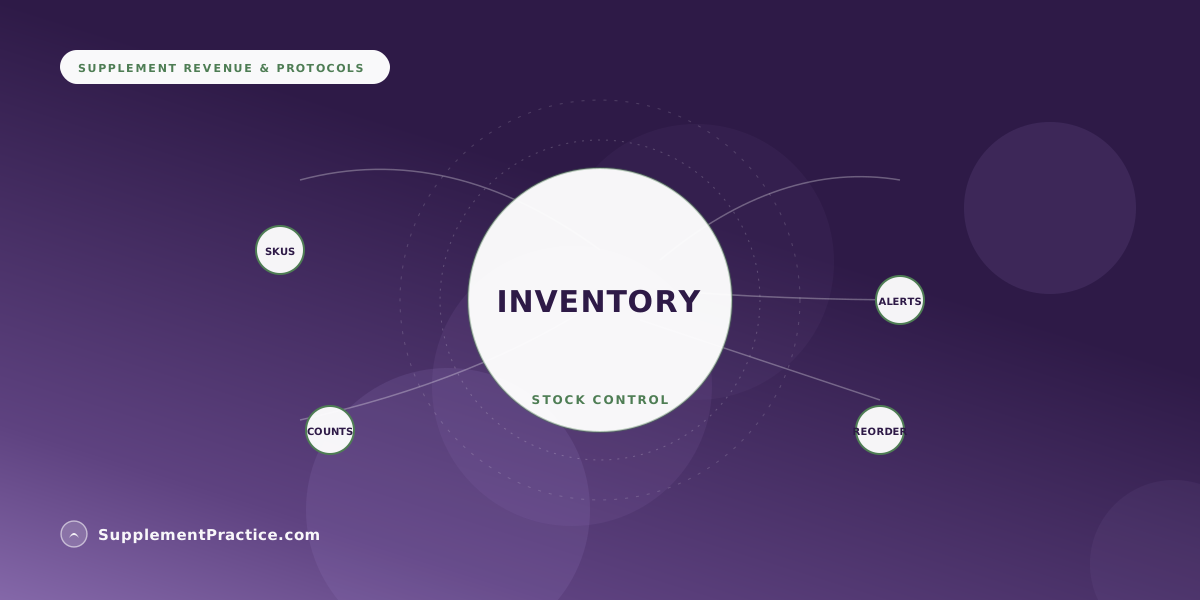
Supplement inventory costs clinics money on both sides: stockouts push a ready-to-buy patient to a retailer, and overstock expires on the shelf as a write-off. The fix isn't more inventory software for its own sake — it's par levels tied to real turnover, low-stock alerts, and a hybrid stock-plus-drop-ship model that keeps only fast movers on hand. This guide covers the system.
Where Supplement Inventory Leaks Money
- Stockouts: a ready patient sent to a retailer, margin gone
- Expiry: overstock written off at full cost
- Dead capital: cash tied up in slow-moving SKUs
- Manual counts: hours of labor and reconciliation errors
- The fix: par levels set from real turnover data
- Low-stock alerts that trigger reorders before a stockout
- A hybrid model — stock fast movers, drop-ship the long tail
Inventory leaks money in two directions at once
Most clinics think about supplement inventory as a single risk — running out — and manage it by keeping "enough" on the shelf. That instinct creates the opposite problem. Inventory leaks money in two directions simultaneously: a stockout loses the sale and, worse, sends a patient who was ready to buy straight to a retailer, where they may not come back; an overstock ties up cash and eventually expires as a full-cost write-off. Managing only the first risk guarantees the second. The job is to hold the minimum inventory that reliably prevents stockouts on the products that actually move — and to drop-ship everything else so it never sits on your shelf at all.
This is a solvable operations problem, not a matter of willpower or bigger shelves. It comes down to three things: knowing your real turnover, setting par levels from that data, and letting software trigger reorders before you run out. Done well, it turns inventory from a source of losses into a quiet, self-managing asset.
Par levels are the core discipline
A par level is the stock quantity that triggers a reorder — the point at which "we're getting low" becomes an action. Set it too high and you carry dead capital and expiry risk; too low and you stock out during a busy week. The right par level is a function of two numbers: how fast a SKU sells (its turnover) and how long it takes to restock (the lead time). A product that sells four bottles a week with a one-week reorder lead time needs a par level that covers at least a week of sales plus a safety buffer. The point is that par levels should be calculated from data, not guessed — which is why turnover reporting is the foundation the whole system sits on.
Low-stock alerts turn par levels into action
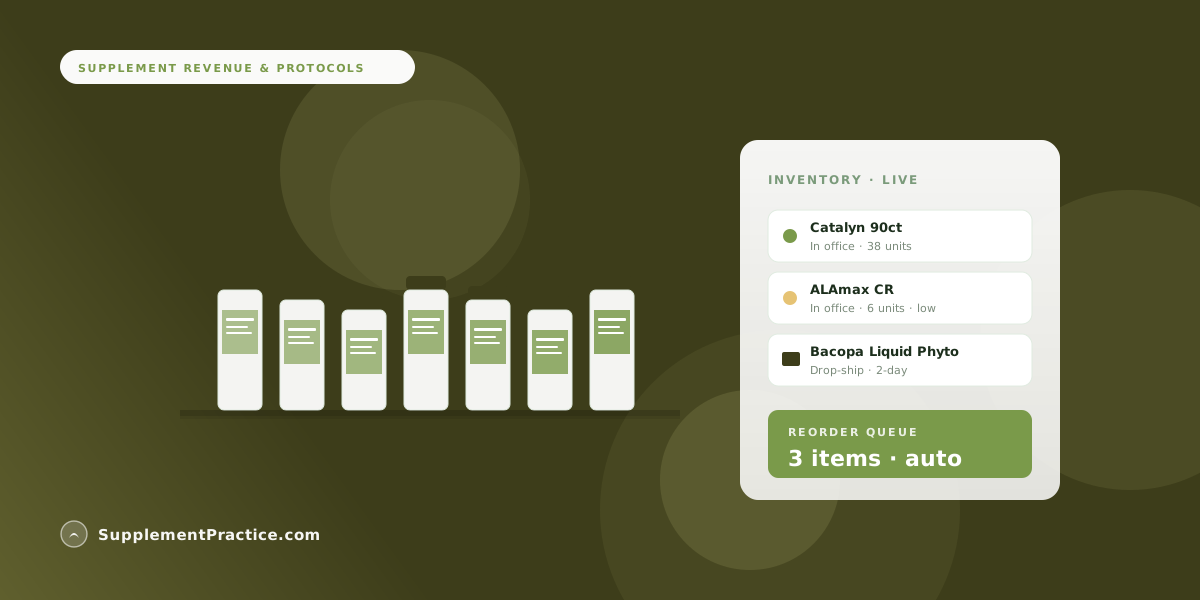
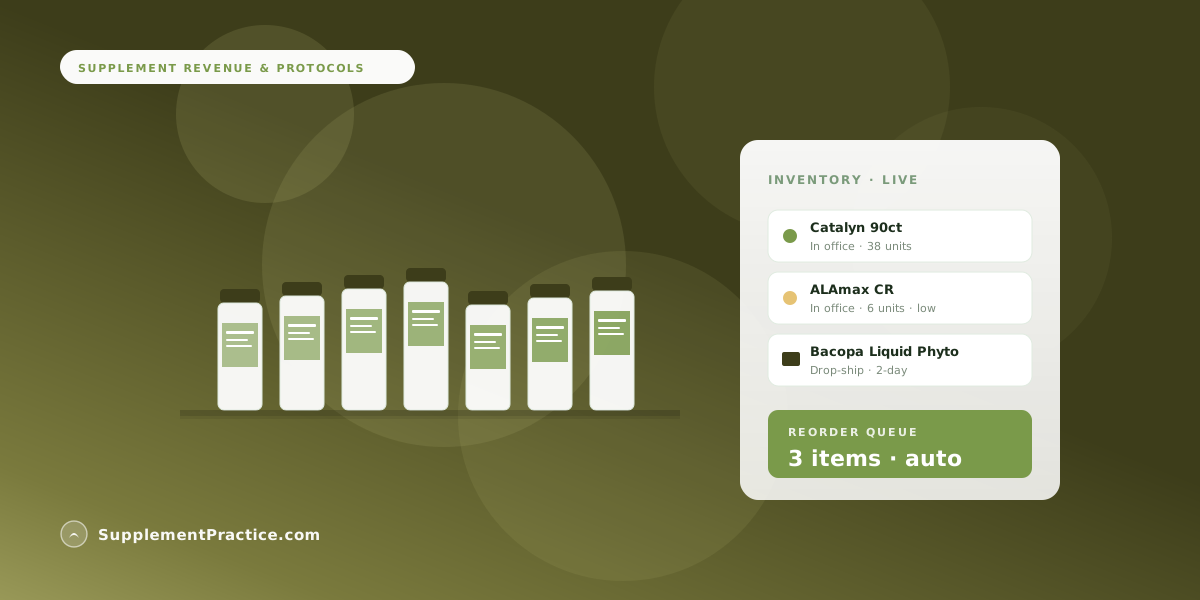
A par level is only useful if something acts on it. Manual monitoring — a staff member eyeballing shelves — fails predictably during exactly the busy stretches when stockouts hurt most. Inventory software that watches on-hand counts against par levels and fires a low-stock alert (or drafts a reorder automatically) removes the human-vigilance dependency. The alert should fire early enough to reorder and receive before the shelf hits zero, accounting for the lead time. This is the single highest-leverage automation in a physical dispensary: it converts inventory management from a daily chore into an exception-handling task.
A wellness practice bleeding margin on both ends
A busy chiropractic-and-nutrition practice stocked roughly 120 SKUs on open shelving, reordered "when it looked low," and did a full physical count once a quarter. Each count surfaced the same two problems: a dozen popular items had stocked out at some point (patients had been told to "grab it online"), and a similar number of slow movers had expired unsold and were written off at full cost. The dispensary was profitable, but both leaks were quietly eating the margin.
The fix wasn't more software features — it was discipline the software could enforce. They pulled ninety days of turnover data, cut the stocked catalog from 120 SKUs to the 35 that actually moved, set par levels on each from its sales rate, and drop-shipped the remaining 85. Low-stock alerts replaced the eyeball check. The next quarter had zero stockouts on core SKUs, the expiry write-off fell by roughly three-quarters, and the cash previously frozen in slow inventory was freed. The lesson: stocking less, more precisely, fixed both leaks at once.
The hybrid model is the structural answer
The reason the practice above could cut its stocked catalog so aggressively is the hybrid model: stock only the fast movers, drop-ship the long tail. Most of a dispensary's SKUs sell slowly — the classic long-tail distribution — and those are exactly the products that generate expiry losses and dead capital when stocked. Drop-shipping them means a patient can still order any product in your catalog, but it never occupies your shelf or your cash until it's actually sold. This structurally eliminates the overstock leak for the majority of your catalog while preserving immediate availability on the SKUs patients want to walk out with. We work through the operational details in managing physical inventory vs. drop-shipping in one dashboard.
Expiry and lot management for what you do stock
For the SKUs you keep on hand, expiry is a real cost that good inventory practice minimizes. First-expiry-first-out rotation, visibility into lot expiration dates, and alerts on approaching-expiry stock let you use or discount product before it becomes a write-off. Software that tracks expiration alongside on-hand counts turns expiry from a quarterly surprise into a managed variable. Combined with tight par levels, it means the small stocked catalog rarely generates losses — the whole point of stocking narrowly is that what you do carry, you actually sell.
Diagnosing your inventory leaks
| Symptom | Root cause | Fix |
|---|---|---|
| Frequent stockouts on popular items | Par levels too low / no alerts | Data-set par levels + low-stock alerts |
| Expired bottles written off | Overstocking slow movers | Drop-ship the long tail |
| Cash always tight | Capital frozen in inventory | Cut stocked catalog to fast movers |
| Counts take hours | Too many SKUs, manual process | Fewer SKUs, software counts |
| "Order it online" happening often | Availability gaps | Hybrid model + accurate on-hand |
Common mistakes in supplement inventory management
Five habits that keep the leaks open
- Stocking everything you might recommend. Breadth belongs in the catalog, not on the shelf. Stock what moves; drop-ship the rest.
- Guessing par levels. Par levels set by feel are wrong in both directions. Set them from turnover data and revisit quarterly.
- Relying on human vigilance. Eyeballing shelves fails during busy weeks. Let software watch counts against par and alert you.
- Ignoring expiry until the count. Approaching-expiry stock is recoverable value if you see it early and a write-off if you don't.
- Treating inventory as separate from protocols. When dispensing deducts inventory automatically, on-hand counts stay accurate without a separate process.
Accurate inventory is a byproduct of connected software
The cleanest inventory system is one you barely operate, because dispensing keeps it current on its own. When a protocol is dispensed inside the same platform that holds inventory, the on-hand count deducts automatically — no separate entry, no drift between what the shelf holds and what the system thinks it holds. Par levels then trigger reliable alerts because the counts they watch are actually accurate. This is why inventory management works so much better as a module of a connected platform than as a standalone tool: the accuracy that makes every other feature trustworthy is a free byproduct of dispensing through the same system that tracks stock. Stock narrowly, set par levels from data, let the software watch the counts, and drop-ship the tail — and supplement inventory stops being a source of losses.
Frequently asked questions
How do clinics lose money on supplement inventory?
Two ways at once. Stockouts lose the sale and push a ready-to-buy patient to a retailer they may not return from, while overstock ties up cash and expires as a full-cost write-off. Managing only the stockout risk by keeping 'enough' on the shelf directly causes the expiry losses, so both have to be solved together.
What is a par level and how do I set it?
A par level is the stock quantity that triggers a reorder. Set it from two numbers: how fast the SKU sells (turnover) and how long it takes to restock (lead time), plus a safety buffer. A product selling four bottles a week with a one-week lead time needs a par level covering at least a week of sales plus buffer. Calculate par levels from data, don't guess, and revisit them quarterly.
Should I stock supplements or drop-ship them?
Use a hybrid: stock only the fast movers for immediate availability and highest margin, and drop-ship the long tail so slow SKUs never occupy your shelf or cash. Most of a dispensary's catalog sells slowly, and those are exactly the products that generate expiry losses when stocked, so drop-shipping them structurally removes the overstock leak.
How do low-stock alerts help?
They convert par levels into action without relying on someone eyeballing shelves — which fails during the busy weeks when stockouts hurt most. Software watches on-hand counts against par levels and fires an alert or drafts a reorder early enough to restock before the shelf hits zero, turning inventory from a daily chore into exception handling.
How does inventory stay accurate without manual counts?
When dispensing happens inside the same platform that tracks inventory, each dispensed protocol deducts the on-hand count automatically. That keeps the system in sync with the shelf without a separate data-entry step, which is what makes par-level alerts trustworthy and reduces full physical counts to occasional spot checks.
Which inventory-management tools help prevent stockouts of popular supplements in a practice?
The tools that actually prevent stockouts are data-set par levels, automatic low-stock alerts, and reorder tracking — ideally inside software that deducts inventory the moment a protocol is dispensed, so on-hand counts stay accurate. A par level triggers a reorder before a fast-moving SKU runs out, and the alert removes any reliance on someone eyeballing the shelf. For the slower long tail, a drop-ship option means those products never stock out because they are never stocked. Together they keep your popular SKUs available without over-carrying the rest.
What should I look for in nutritional supplement inventory software?
Look for real-time on-hand counts that deduct automatically on dispense, par-level-based low-stock alerts, expiration and lot tracking, multi-brand catalog support, and a hybrid model that handles both stocked and drop-shipped SKUs in one dashboard. The single most important feature is that dispensing and inventory share one record — that is what keeps counts accurate without manual audits and makes every alert trustworthy.
How do I manage supplement inventory across multiple clinic locations?
Track stock per location with its own par levels and alerts, while keeping one shared product catalog and consolidated reporting across sites. Distributed clinical stock fails when each location is managed in isolation; a platform that shows per-location on-hand counts against per-location par levels — and lets you move stock or protocols between sites — prevents both stockouts at busy locations and dead inventory at slow ones. See our guide to multi-location practice management software.
Where to go next
Pair this with physical inventory vs. drop-shipping, tracking margins in real time, and the full dispensary playbook.