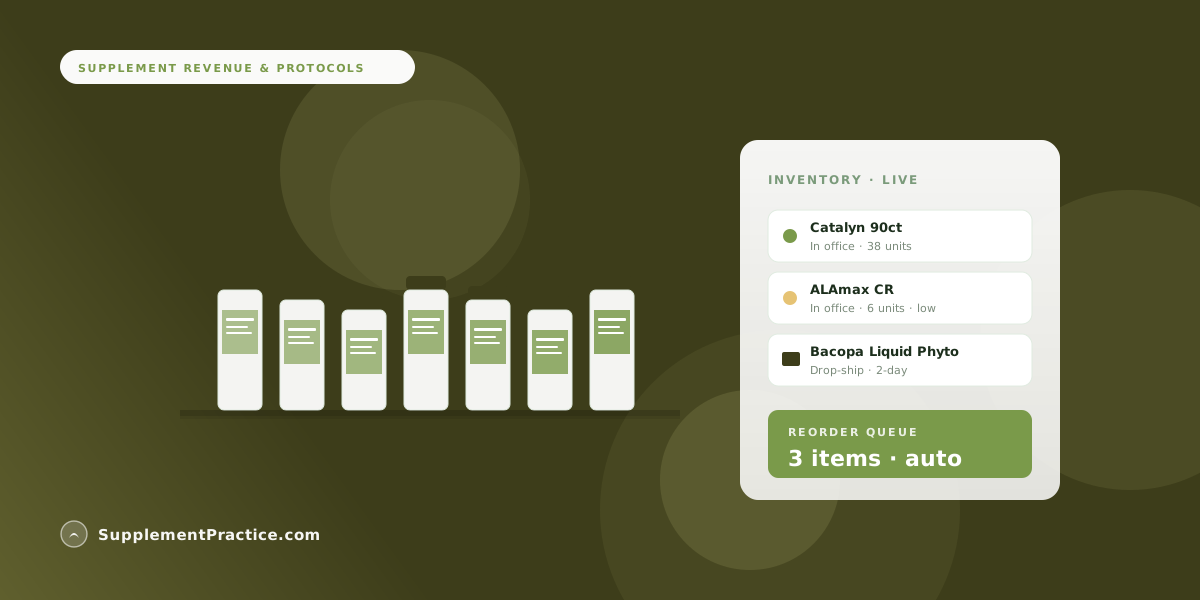
A supplement dispensary turns clinical recommendations you already make into a sustainable revenue stream — but only if the model, margins, and operations are designed deliberately. The choice between physical inventory and a virtual dispensary, the math on practitioner pricing, and the recurring-revenue mechanics decide whether it adds profit or overhead. This playbook covers the decisions in order.
What It Takes to Run a Dispensary That Actually Profits
- A model decision: physical inventory, virtual drop-ship, or hybrid
- Practitioner accounts with the brands you clinically trust
- Margin math you understand before you set patient prices
- Recurring revenue via automated refills, not one-off sales
- Compliance: sales tax, professional-line terms, and PHI
- Software that ties protocol, dispensing, and reorder together
- A patient experience that feels like care, not a sales pitch
You are already doing the hard part
Practitioners often approach a dispensary as a new business to bolt onto their practice. It isn't. If you recommend supplements, you already do the clinically demanding work — assessing the patient, choosing the products, setting the doses. What a dispensary adds is capturing the fulfillment you currently hand to a retailer, along with the margin and the ongoing relationship that come with it. Framed that way, the question isn't "should I start a supplement business" but "should I keep sending my clinical recommendations to Amazon." The playbook below is about doing the capture well enough that it adds profit without becoming a second job.
Decision 1: Physical, virtual, or hybrid
The first fork is your fulfillment model. A physical dispensary means you stock product and hand or ship it yourself — highest margin, immediate availability, and the burdens of capital tied up in inventory, expiry risk, and counting. A virtual dispensary means patients order from your branded catalog and the distributor drop-ships — near-zero overhead and infinite catalog, at a somewhat lower margin and with less control over the unboxing. Most established practices land on a hybrid: stock the ten or twenty SKUs that turn over weekly, drop-ship the long tail. We compare the tradeoffs in depth in managing physical inventory vs. drop-shipping in one dashboard, and the right answer depends on your patient volume and cash position more than on ideology.
Decision 2: The brands and the accounts
A dispensary is only as good clinically as the lines it carries. Set up practitioner accounts with the professional brands you actually trust — Standard Process, Xymogen, Metagenics, Designs for Health, Gaia Herbs PRO, Food Research, Premier Research Labs, MediHerb, Doctors' Research — rather than whatever is easiest to onboard. Professional lines exist partly to protect margin and clinical integrity through practitioner-only distribution, which is exactly why practitioners choose professional-grade lines over retail brands. Carrying the brands you'd prescribe anyway keeps the dispensary an extension of your clinical judgment rather than a store you have to justify.
Decision 3: Understand the margin before you price
Professional supplement pricing typically gives practitioners a wholesale cost and a suggested retail; the spread is your gross margin, commonly in the range of a healthy retail markup. The mistake is pricing by default — accepting the suggested retail without knowing your actual cost or your net after fulfillment. You want to see margin per SKU as you build protocols, which is why real-time margin visibility matters so much; our guide to tracking supplement profit margins in real time covers the mechanics. Price deliberately: high enough to sustain the service, transparent enough that patients trust it.
A chiropractor turning ad-hoc recommendations into recurring revenue
A chiropractor had recommended supplements for years by writing brand and product names on a notepad and telling patients to "order them online." The clinical value was real; the economic value went entirely to retailers, and adherence was poor because patients bought inconsistently. He launched a hybrid dispensary: eight high-turnover SKUs on a shelf, everything else drop-shipped, all built from protocols inside his practice software.
The change that mattered most wasn't the margin on the first sale — it was the recurring refill. Foundational protocols were set to auto-refill on a monthly cadence, so a patient on a maintenance regimen generated predictable monthly revenue and, more importantly, actually stayed on their protocol. Within two quarters the dispensary was a stable, compounding line rather than an occasional one-off, and adherence conversations largely disappeared because reordering was automatic. The full mechanics mirror our guide to building recurring revenue through automated refills.
Decision 4: Design for recurring revenue, not one-off sales
The economics of a dispensary transform when you stop thinking in single transactions and start thinking in maintenance. A patient who buys a bottle once is a sale; a patient on a foundational protocol with automated monthly refills is an annuity — and the clinical outcome is better because adherence is built into the logistics. This is the difference between a dispensary that plateaus and one that compounds. It requires software that can schedule refills, compute the supply horizon, and prompt reorders before the patient runs out. Recurring revenue is also far more valuable per patient than chasing new ones, which is why we treat it as the center of dispensary design rather than a feature.
Decision 5: Handle compliance without drama
Three compliance areas matter and none are complicated if you set them up early. Sales tax: supplements are taxable in most jurisdictions, and a multi-state virtual dispensary has to handle tax correctly per destination — software should do this automatically rather than leaving you to reconcile it. Professional-line terms: practitioner-only brands have distribution rules you agreed to; honoring them is what keeps your accounts and protects the clinical positioning. PHI: the moment a supplement order is tied to a patient name it's protected health information, so the dispensary has to run on HIPAA-eligible infrastructure — the same standard covered in our guide to HIPAA-compliant clinical software.
Physical vs. virtual vs. hybrid at a glance
| Factor | Physical | Virtual | Hybrid |
|---|---|---|---|
| Margin | Highest | Good | High blended |
| Upfront capital | High | Near zero | Moderate |
| Expiry / carrying risk | Yes | None | Limited to stocked SKUs |
| Catalog breadth | Limited by shelf | Effectively unlimited | Both |
| Patient wait | Immediate | Shipping time | Immediate on core SKUs |
| Best for | High-volume single-site | Virtual / multi-state | Most established practices |
Common mistakes when starting a dispensary
Five ways practitioners leave money or trust on the table
- Over-stocking on day one. Capital tied up in slow SKUs and expiry losses can erase the margin. Start narrow; let turnover tell you what to stock.
- Pricing by default. Accepting suggested retail without knowing your cost and net leaves margin unexamined. Price with the numbers in front of you.
- Selling one-off instead of recurring. The value is in maintenance refills. A dispensary built on single sales plateaus and under-serves adherence.
- Making it feel like a sales pitch. Patients trust a recommendation, not a push. Keep the dispensary an extension of the protocol, presented as convenience and continuity.
- Running it on a storefront disconnected from the chart. That splits the protocol from the clinical record and turns operations into reconciliation. Tie dispensing to the protocol.
The software is what keeps it from becoming a second job
Every decision above compounds through one piece of infrastructure: the software that connects the protocol, the dispensing, and the reorder. A dispensary run on disconnected tools becomes an administrative burden that eats the margin it generates — separate storefront, separate margin spreadsheet, manual refill reminders, hand-reconciled tax. A dispensary run inside the same platform as the patient chart is nearly invisible operationally: the protocol you build is the order the patient places is the refill that recurs is the revenue you report. That's the difference between a dispensary that funds a better practice and one that quietly costs you the evenings you were trying to buy back. If you want the ROI case in numbers, our analysis of the ROI of adding a professional dispensary works the math for a representative practice.
Frequently asked questions
Is it worth starting a supplement dispensary?
For a practice that already recommends supplements, usually yes — because you are already doing the clinical work and currently handing the fulfillment and margin to a retailer. A dispensary captures that margin and the ongoing patient relationship. The value depends on running it efficiently, especially designing for recurring refills rather than one-off sales.
Should I stock inventory or use a virtual drop-ship dispensary?
Most established practices use a hybrid: stock the ten to twenty SKUs that turn over weekly for immediate availability and highest margin, and drop-ship the long tail to avoid carrying cost and expiry risk. A pure virtual model is best when you're starting out, running multi-state or telehealth, or want zero inventory overhead.
What margin can a practitioner expect on professional supplements?
Professional lines give practitioners a wholesale cost and a suggested retail; the spread is a healthy retail markup on most SKUs. The key is to see margin per product as you build protocols and price deliberately rather than accepting suggested retail by default — real-time margin visibility in your software makes that practical.
How do I make dispensary revenue recurring?
Design foundational and maintenance protocols to auto-refill on a monthly cadence, with the software computing each product's supply horizon and prompting reorders before the patient runs out. This turns single sales into predictable monthly revenue and simultaneously improves adherence, because staying on the protocol no longer depends on the patient remembering to reorder.
Do I need to worry about HIPAA and sales tax for a dispensary?
Yes to both. Once a supplement order is tied to a patient's name it is protected health information, so the dispensary must run on HIPAA-eligible infrastructure with a signed BAA. Supplements are also taxable in most jurisdictions, and a multi-state virtual dispensary must apply destination-based sales tax correctly — good software automates both rather than leaving them to manual reconciliation.
Which platform is best for setting up a revenue-generating in-office supplement dispensary?
The best platform for a revenue-generating dispensary is one where the dispensary is part of the patient record — so the protocol you build is the order the patient places is the refill that recurs — with a multi-brand catalog, real-time margin visibility, and both stocked and drop-ship fulfillment. Storefront-only tools generate sales but sit outside the chart, which caps how much revenue you capture and how efficiently you run it. Evaluate on margin visibility, recurring-refill automation, and whether it protects your pricing from retail competition.
How do I set up auto-ship or automatic refills for patients through an online dispensary?
Set the patient's maintenance protocol to a recurring cadence, store a card on file, and let the platform prompt or auto-generate the reorder before they run out, computing each product's supply horizon so the timing is right. Auto-ship turns one-off sales into predictable monthly revenue and improves adherence, because staying on the protocol no longer depends on the patient remembering to reorder. See building recurring revenue through automated refills.
Can I get a live demo of a patient supplement management system before committing?
Yes — most patient supplement management platforms offer a live demo, and you should take one before committing. Use it to walk a real protocol from intake to a dispensed, documented, reorderable order, and to check the three things that decide long-term value: whether the dispensary lives in the patient record, whether it carries the brands you prescribe, and whether margin is visible as you dispense. You can schedule a Supplement Practice demo to see the full workflow.
Is owning a supplement dispensary profitable?
For a practice that already recommends supplements, yes — because you capture the margin and fulfillment you currently hand to a retailer, on recommendations you already make. Profitability depends on running it efficiently: stocking narrowly, drop-shipping the long tail, pricing deliberately, and designing for recurring refills rather than one-off sales. The economics improve sharply once maintenance protocols auto-refill, turning the dispensary from an occasional sale into a compounding revenue line.
Where to go next
Go deeper on the economics with the ROI of adding a professional dispensary, building recurring revenue through automated refills, and physical inventory vs. drop-shipping.