"Professional-grade" is one of the most over-marketed phrases in the supplement industry, and the practitioner needs to be able to defend it with mechanism, not marketing. For Standard Process specifically, the term resolves into three concrete things: practitioner-only distribution, single-source manufacturing with tighter testing protocols, and clinical-context formulation. Where the distinction matters clinically — and where it doesn't — is more nuanced than most patient conversations admit.
Standard Process vs. Retail — Where the Distinction Holds
- Practitioner-only distribution channel (no retail shelves)
- Single-source organic farm with batch traceability
- Identity, purity, and potency testing beyond GMP minimum
- Formulations designed around clinical dose, not retail unit
- Most relevant for: foundational multis, protomorphogens, herbal extracts
- Less critical for: basic D3, retail fish oil from a quality source
The three concrete meanings of "professional-grade"
The phrase "professional-grade" gets used by every supplement manufacturer that doesn't sell at CVS, and most of the uses are marketing rather than substance. For Standard Process specifically, the term decomposes into three concrete and verifiable things.
Distribution channel. Standard Process does not sell to consumers directly and does not sell through retail outlets. Products are available only through licensed practitioners — chiropractors, naturopaths, functional medicine doctors, nutritionists. This is structural to the brand, not a marketing posture. It means the manufacturer competes on practitioner outcomes (which patients felt better, which protocols worked) rather than on shelf-price or packaging. The economic incentives reshape the manufacturing decisions in ways that matter clinically.
Manufacturing and testing. Standard Process produces products at a single Wisconsin manufacturing facility from a single agricultural source (the SP farm and adjacent organic acreage). Batch testing covers identity (is this product what the label says?), purity (heavy metals, microbial contamination, residual solvents), and potency (active constituent at labeled dose). The testing protocols exceed the GMP minimum that retail brands typically hit. Whether the difference matters clinically depends on the SKU; for protomorphogen products where tissue source matters, it matters a lot.
Clinical-context formulation. Standard Process products are designed around the dose a clinician will prescribe in a multi-tablet protocol, not the dose a consumer would take from a single capsule. Catalyn is sub-therapeutic at one tablet daily; it requires the 6-tablet/day clinical dose to deliver foundational nutrition. A consumer picking up an unlabeled Catalyn bottle would under-dose by 80%. Retail products are formulated for single-capsule daily consumer use; that constrains the formulation chemistry in ways that practitioner-grade products don't accept.
Where retail brands actually compete (and where they don't)
The honest answer to "are retail brands lower quality" is: it depends entirely on the brand and the SKU. The practitioner who tells every patient to never buy any retail supplement is doing brand marketing, not clinical reasoning.
Premium retail brands — Pure Encapsulations, Thorne's consumer line, Garden of Life's high-end lines — hit comparable manufacturing quality to practitioner-grade brands for many SKUs. The difference between Pure Encapsulations Vitamin D3 and Standard Process Cataplex D for a vitamin D deficiency patient is small and primarily about dose-per-capsule rather than quality. Either works.
Mid-tier retail multivitamins — drugstore brands, supermarket multis — are reliably lower quality. Under-dosed nutrients in less-bioavailable forms with more excipients, designed around shelf-price competition. Substituting a drugstore multi for Catalyn is a meaningful clinical downgrade, not a cost-saving lateral move.
The category that's hardest to substitute reliably is the practitioner-grade botanical line — MediHerb, Gaia Herbs Professional, the herbal-extract category. Retail herbal products vary wildly in standardization and authentication; the practitioner-grade equivalents have meaningful identity-testing protocols that most retail herbals don't.
What the single-source farm actually contributes
The "single-source organic farm in Wisconsin" line is one of Standard Process's most repeated marketing claims. What does it actually contribute clinically?
Two things, primarily. Traceability: Standard Process can document the agricultural inputs that went into a specific product batch — what was planted, when, in what soil, what was harvested into what production run. This is operationally meaningful for the protomorphogen products (Drenamin, Symplex, Cyruta Plus, Renafood) where the tissue source and processing matter to the product's clinical function. Batch consistency: Products produced from the same agricultural source vary less batch-to-batch than products that source from multiple suppliers under price pressure. For long-term protocols where the patient takes the same product daily for 6-12 months, batch-to-batch consistency matters more than peak per-batch potency.
What the single-source farm does not meaningfully contribute is some intrinsic "this is more natural" quality that you can taste in a Catalyn tablet. The clinically defensible part of the farm story is operational, not mystical.
How to defend the price difference without sounding like a salesperson
The price conversation is where practitioner-grade vs. retail dies most often. A Catalyn bottle at $30 vs. a drugstore multivitamin at $12 is a 2.5x price difference that requires defense, and the defense that works is mechanism-and-outcome, not marketing.
What works: "A Catalyn bottle is $30 and a drugstore multi is $12. The per-pill nutrient density and the cofactor profile in Catalyn means you're getting roughly 3x the clinically active substrate per dose, plus the form your gut absorbs without the GI complaints you've described before with the drugstore version. Across the 90-day protocol, the actual difference in how you feel is meaningful — that's why we use it."
What doesn't work: "Catalyn is higher quality because it's professional-grade and you get what you pay for." Patients who hear that level of vagueness correctly discount the entire pitch.
62-year-old patient, switched from drugstore multi to Catalyn after 6 months of fatigue
A 62-year-old patient came in complaining of persistent fatigue, low energy in the afternoons, and "I take a multivitamin every day but it doesn't seem to help." Daily supplement: a CVS-brand "men's multivitamin" for 4 years. Recent labs: borderline ferritin (28), low-normal B12 (340), 25(OH)D at 24.
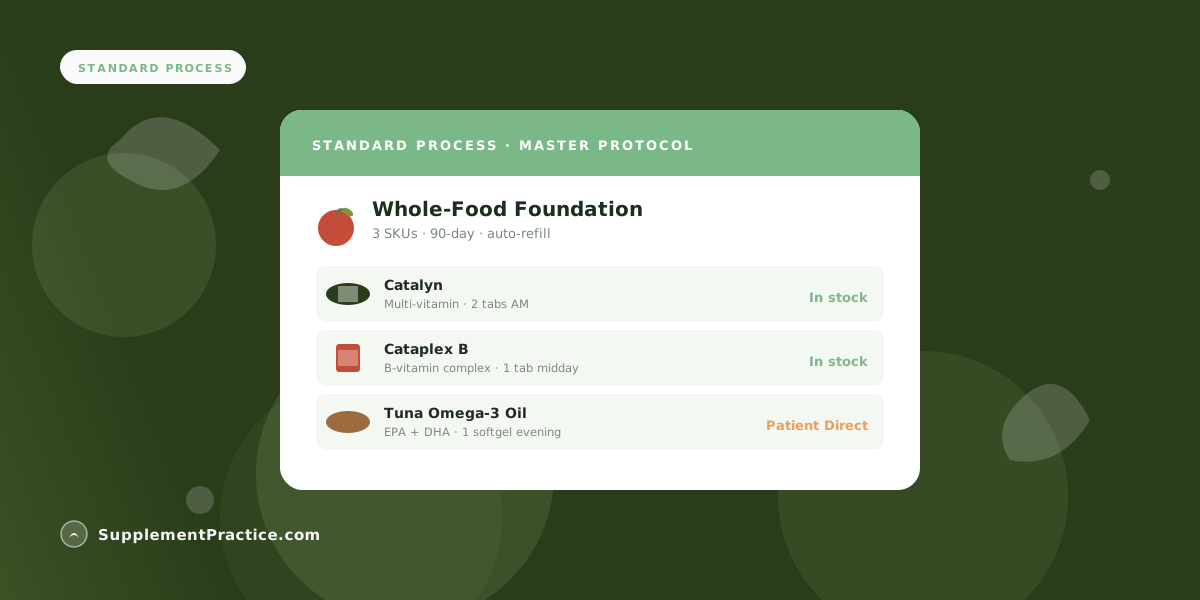
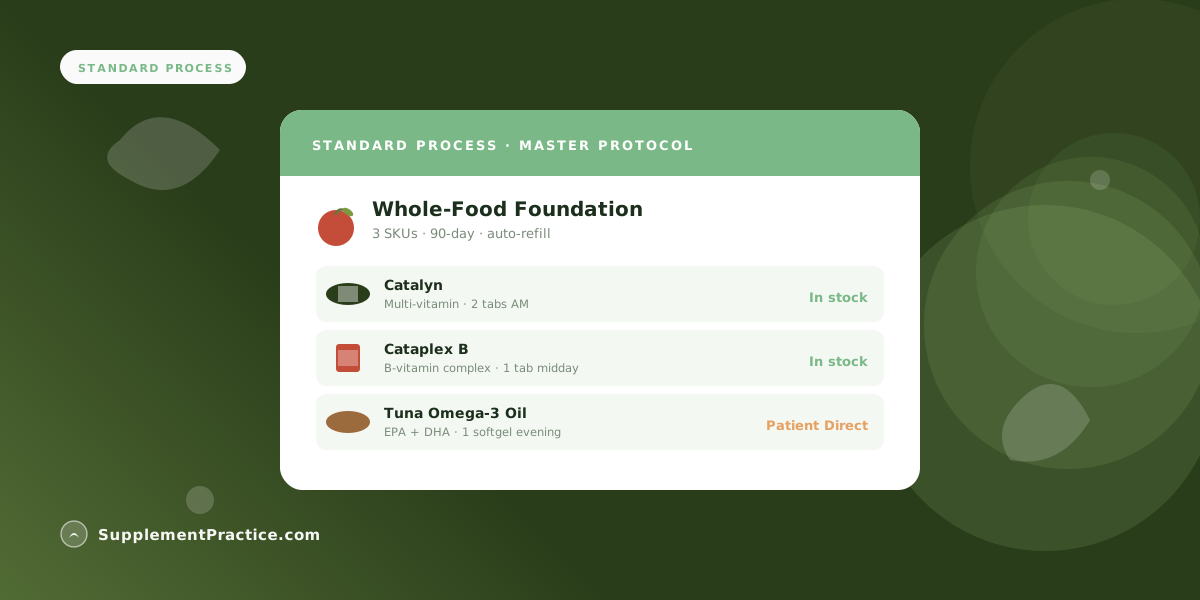
The protocol switch: discontinue the drugstore multi. Catalyn 2 with each meal (6 daily). Cataplex B 1 with each meal. Tuna Omega-3 2 daily. Cataplex D 2 daily until 25(OH)D reaches 40, then taper. Standard Process Ferrofood 1 with breakfast.
At 60 days: subjective energy improved from 4/10 to 7/10 by patient report. Afternoon fatigue largely resolved. At 90-day repeat labs: ferritin 52, B12 480, 25(OH)D 39. The patient's interpretation: "the new vitamins actually work; the old ones didn't." The clinical interpretation: the per-dose nutrient density and bioavailability of the SP foundational stack was 3-4x what the drugstore multi was delivering, plus the targeted ferrous and D loads addressed the specific deficiencies.
Common mistakes
Anti-patterns in the practitioner-grade vs. retail conversation
- Blanket "never buy retail" claims. Premium retail brands compete cleanly on many SKUs; the practitioner who claims otherwise loses credibility with informed patients.
- Selling philosophy instead of mechanism. "Higher quality" without specifics is marketing; "3x the per-pill nutrient density without GI side effects" is defense.
- Not acknowledging the price difference. Patients see the price difference; pretending it doesn't exist makes the practitioner look like a salesperson. Acknowledge it directly and explain what the difference buys.
- Confusing practitioner-grade with universally clinically superior. For basic vitamin D3 or quality retail fish oil, the practitioner-grade premium may not be clinically meaningful. Be honest about where it matters.
- Not having a substitution conversation. Patients will sometimes find SP products through unauthorized online resellers at lower prices. Have the conversation: those bottles often aren't authentic, weren't stored properly, may be expired. Defend the legitimate channel.
Frequently asked questions
What does "professional-grade" actually mean for Standard Process?
Three concrete things: practitioner-only distribution channel; tighter identity/purity/potency testing than the GMP minimum; formulations designed around clinical multi-tablet doses rather than retail single-capsule consumption.
Why doesn't Standard Process sell in retail stores?
The practitioner-only distribution model is structural. Selling through clinics preserves the clinical-dosing context (most SP products are sub-therapeutic at one capsule); avoids the retail price-pressure that forces commodity ingredient substitution.
Are retail brands actually lower quality, or is this marketing positioning?
Both, depending on the brand. Premium retail (Pure Encapsulations, Thorne consumer line, Garden of Life) hits comparable manufacturing quality for many SKUs. Mid-tier drugstore multivitamins are reliably lower quality — under-dosed, less-bioavailable forms, more excipients.
What does the single-source farm actually contribute clinically?
Traceability (Standard Process can document agricultural inputs into a specific product batch — meaningful for protomorphogen products) and batch consistency (products from one source vary less batch-to-batch, which matters for long-term protocols).
Should I tell patients not to buy retail brands?
Be specific, not blanket. "Don't substitute a drugstore multivitamin for Catalyn" — yes. "Don't take any retail supplement ever" — that's marketing, not clinical reasoning. Help the patient understand which categories actually cost clinical efficacy when substituted.
How do I defend the price difference to cost-sensitive patients?
On mechanism and outcome, not on marketing. "$30 vs $12 — but you're getting roughly 3x the per-pill clinical substrate, plus the form your gut absorbs without GI complaints. Across the 90-day protocol, the actual outcome difference is meaningful." Patients who hear mechanism + outcome accept the price.
Where to go next
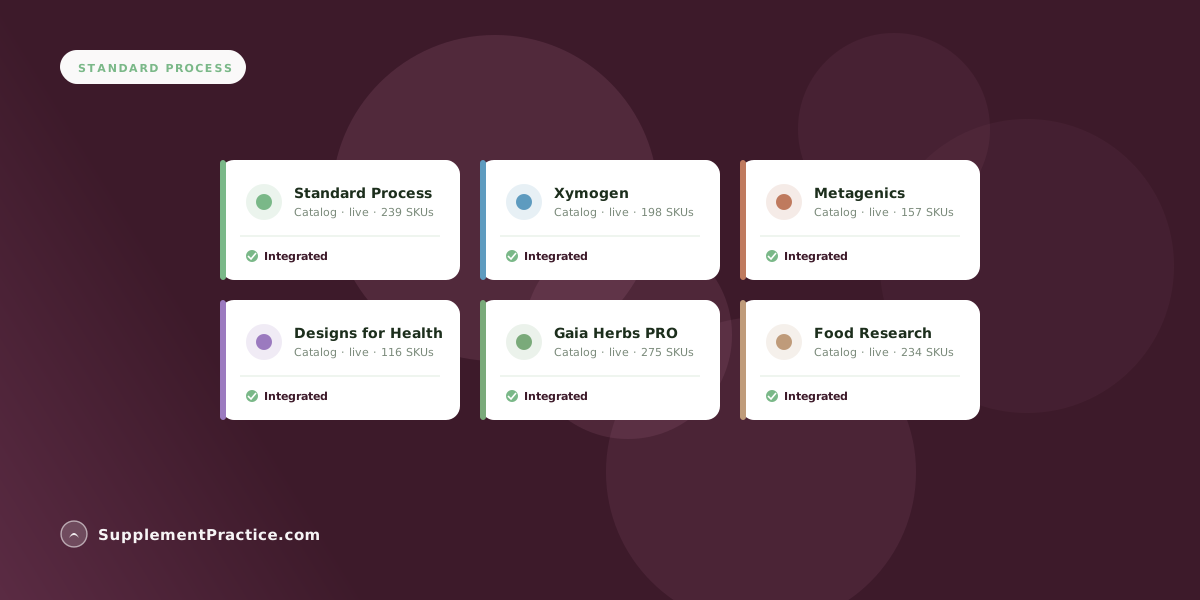
Three companion pieces: the retention-economics case for whole-food supplements, the historical-clinical case for SP as the whole-food anchor, and a closer look at the SP organic-farm claim vs. DFH's non-GMO standards. Supplement Practice integrates the full SP catalog inside the patient chart so the practitioner-grade conversation lives next to the protocol the patient is reviewing.