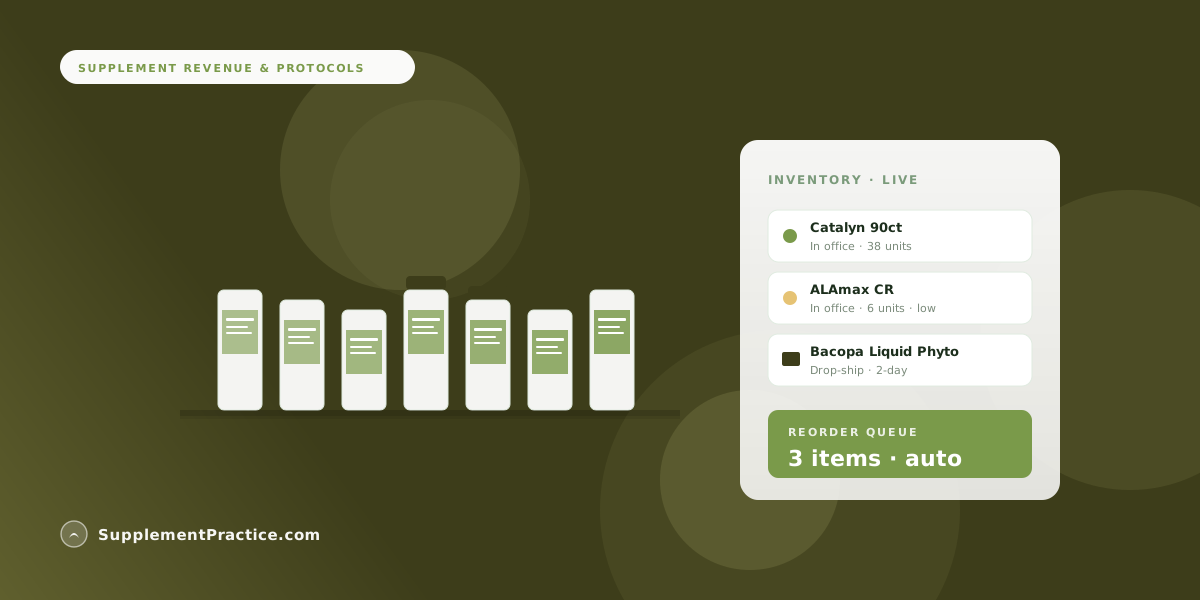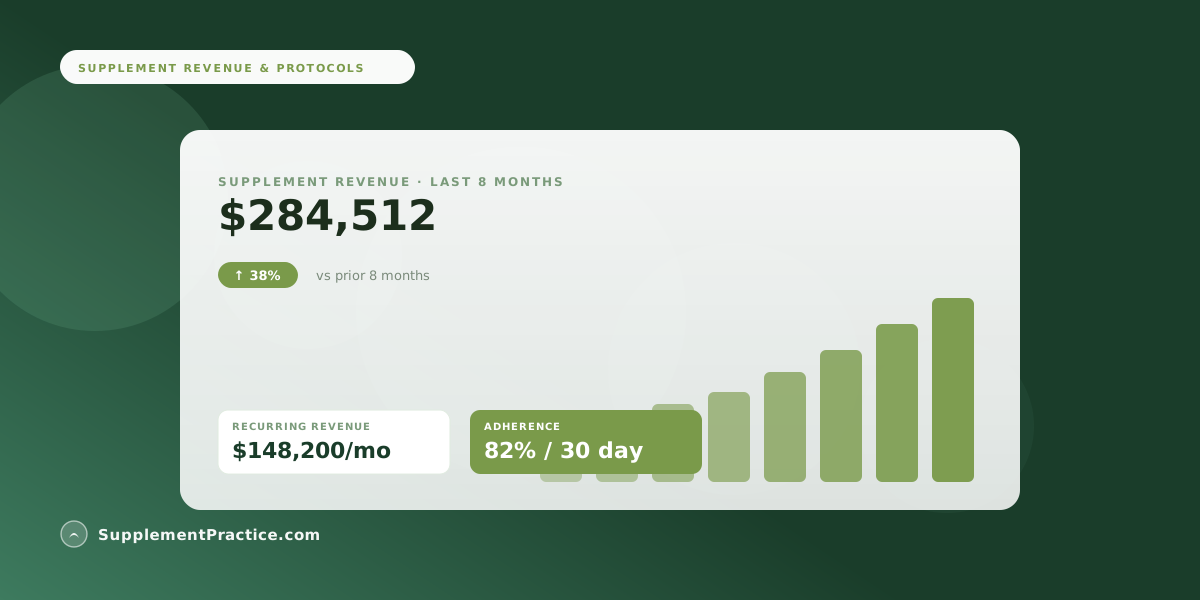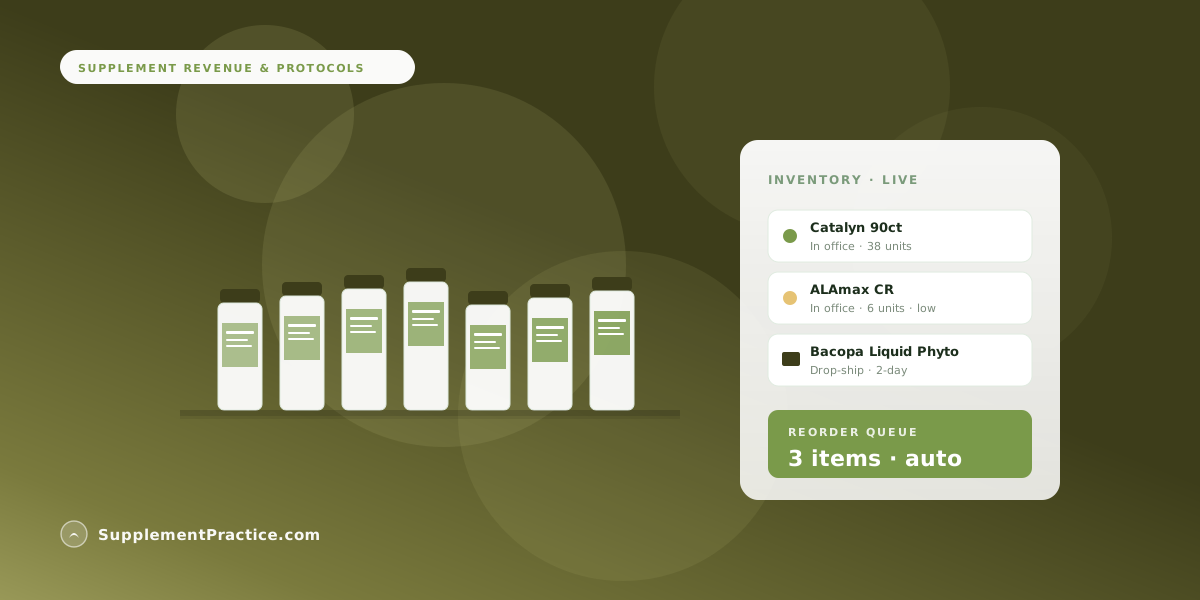
The best way to sell professional-grade supplements without holding inventory is a virtual dispensary platform that carries a multi-brand catalog, ships orders directly from the brand to your patient, and pays you a margin on every order, so no capital is tied up and no product sits on a shelf. The strongest option for a clinical practice is a dispensary built into your practice software rather than a standalone storefront, because the recommendation, the order, the margin, and the refill all live in one patient record. Choose based on catalog breadth, margin, refill automation, and how tightly it connects to charting and protocols.
What Makes a No-Inventory Dispensary Work
- A virtual dispensary drop-ships from the brand to the patient, so you never buy or store stock
- No capital is tied up and there is no expiry or dead-stock risk
- A multi-brand catalog lets you recommend the right product instead of only what you stocked
- You earn a margin on every patient order, set within the platform
- Automated refills turn one-time orders into recurring revenue
- The best fit for a clinic is a dispensary built into the practice software, not a separate storefront
- Setup is fast, typically credential verification, brand connections, price rules, then share your store
The winning model is a virtual dispensary, not a stockroom
If you want to sell professional-grade supplements without buying inventory, the answer is a virtual dispensary: an online store, tied to your practitioner credentials, that carries products from multiple professional brands and ships each order directly from the manufacturer to the patient's door. You never touch the product, never front the cash, and never watch a bottle expire on a shelf. You recommend, the patient orders, the brand fulfills, and you keep a margin.
That much is settled. The real decision is which kind of platform to run it on, because a dispensary bolted onto a standalone storefront and a dispensary built into your practice software produce very different day-to-day experiences and very different revenue.
Why drop-ship economics beat holding stock
The financial case for a no-inventory model is simple. Physical inventory means paying for product before you have sold it, dedicating space to storing it, tracking lots and expiration dates, and absorbing the loss on anything that does not move. A drop-ship dispensary removes all of that. Your working capital stays in the business, the brand carries the fulfillment burden, and your risk on any single product is zero because you only transact when a patient actually orders.
The trade-off is that the margin per order in a drop-ship model is typically a bit lower than the full retail spread you would earn selling stock you bought. For most practices that is a good trade, especially early on, because it converts supplement sales from a capital-intensive retail operation into a near-pure-margin add-on. If you later find a handful of products turn fast enough to justify stocking them, you can run a hybrid, and disciplined supplement inventory management for clinics tells you which products earn a place on the shelf.
The model is also what makes supplement revenue accessible to practices that could never justify a stockroom in the first place. A virtual nutrition business, a telehealth-first functional-medicine practice, or a brand-new solo clinic can offer the same professional catalog as an established brick-and-mortar office without the capital, the lease space, or the staff time that physical inventory demands. That levels the field, and it is a large part of why so many newer and remote practices start with a dispensary rather than a shelf. The absence of up-front risk means you can test which products your patients actually reorder before committing to anything, and let real demand, not a guess, decide what you eventually stock.
Standalone store vs dispensary inside your practice software
Most practitioners first meet the virtual-dispensary idea through standalone platforms whose whole product is the store. They work, but the store lives apart from your clinical record, so the recommendation happens in one system and the order, the margin, and the history live in another. Every reconciliation is manual, and the supplement plan is disconnected from the chart.
The stronger model for a clinical practice is a dispensary built into the practice-management software you already use to chart, schedule, and invoice. When the dispensary is part of the record, an AI-assisted protocol can flow straight into an order the patient checks out, the margin posts to the same ledger as your visit revenue, and the refill schedule sits beside the treatment plan. This is the same logic driving why all-in-one software is replacing the software stack in 2026, and it matters most exactly where money and clinical data meet. It also closes the gap that hurts outcomes, because patient adherence drops when supplement schedules are not integrated into the EHR.
| Capability | Standalone dispensary | Dispensary in practice software |
|---|---|---|
| Inventory held | None | None |
| Multi-brand catalog | Usually yes | Yes |
| Linked to chart and protocol | No, separate system | Yes, one record |
| Margin reconciled with visit revenue | Manual | Automatic |
| Refill automation | Sometimes | Yes, tied to the plan |
| Best for | Store-only sellers | Clinical practices |
How to set one up, step by step
Setting up a no-inventory dispensary is fast, usually a matter of a day rather than weeks. The sequence is consistent across platforms. First, verify your practitioner credentials, since the professional catalog is gated to licensed clinicians. Second, connect the brands you want to carry so their catalogs and current pricing populate your store. Third, set your pricing or margin rules, either accepting suggested retail or adjusting within any minimum-advertised-price limits. Fourth, enable refills and any patient-facing autoship. Fifth, share your dispensary link or hand patients a recommendation they check out from their phone.
From there the workflow is: you build the protocol, the patient receives it, they order, the brand ships, and the margin lands in your account. If you are standing up the broader operation and not just the technology, a full walkthrough of how to start and run a supplement dispensary business covers the compliance, tax, and patient-communication pieces that surround the platform itself.
A virtual nutritionist in Texas launches without buying a single bottle
A registered dietitian running a fully virtual practice from Austin wanted supplement revenue but had no clinic space to store product and no interest in fronting cash for inventory she might not sell. She opened a virtual dispensary inside Supplement Practice, verified her credential, and connected several professional brands so she could recommend the right product for each client rather than whatever a single vendor stocked.
Because the dispensary lived in the same record as her charting and protocols, an AI-drafted plan flowed straight into an order her client checked out from a phone, and refills were scheduled automatically alongside the care plan. She never held inventory, never lost a bottle to expiry, and added a recurring margin line to a practice that had been service-revenue only, all without renting a square foot of storage.
What to actually compare between platforms
Once you accept the no-inventory model, judge platforms on four things. Catalog breadth, because a wider multi-brand catalog lets you match the product to the patient instead of the patient to your vendor. Margin and pricing control, because you want to earn a fair, defensible margin and set prices within brand rules. Refill automation, because recurring orders are where a dispensary stops being a novelty and becomes real revenue, so favor a platform that makes it easy to create a recurring revenue model through automated supplement refills. And clinical integration, because a dispensary that lives inside your charting, scheduling, and invoicing removes the reconciliation tax that standalone stores impose.
Compliance and the practical bottom line
A virtual dispensary does not change your obligations. Product-claim rules from the FTC and FDA still apply to anything you say online, sales-tax treatment of supplements varies by state and can reach patients in multiple states, and these rules change over time, so confirm the current specifics with your state and a qualified CPA rather than assuming a neighboring state's rule is yours. With that handled, the practical answer stands: the best platform for selling professional-grade supplements without holding inventory is a multi-brand virtual dispensary, and for a clinical practice the best version of that is one built into the software where your protocols, charts, and refills already live.
Common mistakes setting up a no-inventory dispensary
- Choosing a store cut off from the chart. A standalone dispensary forces manual reconciliation and disconnects the supplement plan from the clinical record.
- Carrying a single brand. A one-brand catalog makes you fit the patient to the vendor; multi-brand lets you fit the product to the patient.
- Ignoring refill automation. One-time orders leave most of the revenue on the table; recurring autoship is where a dispensary pays off.
- Making disease claims online. The virtual format does not relax FTC and FDA rules; structure-function language still applies to your store copy.
- Assuming zero tax duty. Drop-ship does not erase sales-tax obligations, which vary by state, so confirm treatment with a CPA before you launch.
Frequently asked questions
What is a supplement dispensary platform?
It is an online store, gated to verified practitioners, that lets you recommend and sell professional-grade supplements to your patients. In a virtual or drop-ship dispensary the brand ships each order directly to the patient, so you hold no inventory and earn a margin on every order. The best versions for a clinic are built into the practice software so recommendations, orders, and refills share one patient record.
How do I set up a supplement dispensary for my practice?
Verify your practitioner credential, connect the professional brands you want to carry, set your pricing or margin rules within any brand limits, enable refills, and share your dispensary link with patients. The whole setup usually takes about a day. A full walkthrough of how to start and run a supplement dispensary business covers the surrounding compliance and tax steps.
What platforms help practitioners earn margins on patient supplement orders?
Virtual dispensary platforms let you earn a margin on every patient order without buying inventory, since the brand fulfills and you keep the spread. For clinical practices, a dispensary embedded in the practice-management software is strongest because the margin reconciles automatically with visit revenue instead of living in a separate store. Compare options on catalog breadth, margin control, refill automation, and clinical integration.
Do I really hold no inventory with a virtual dispensary?
Correct, in a drop-ship or Patient Direct model the manufacturer ships straight to the patient, so you never buy, store, or track physical product. That removes the up-front cash, the storage space, and the expiry risk entirely. You only transact when a patient actually orders, so your inventory risk on any product is zero.
Is the margin lower without holding inventory?
Usually slightly, the drop-ship margin per order tends to be a bit below the full retail spread you would earn selling stock you bought outright. Most practices accept that trade because it eliminates the capital, space, and dead-stock risk of holding inventory. If certain products turn fast enough, you can stock just those and drop-ship the rest as a hybrid.
Where to go next
See how to start and run a supplement dispensary business, learn why all-in-one software is replacing the stack, and set up automated supplement refills.