Healthy-aging supplement protocols differ from younger-patient protocols on three dimensions: polypharmacy interaction surface, dose-tolerance windows, and pill-burden ceilings. AI-assisted protocol composition handles all three more reliably than manual workflow — the interaction screen catches what's operationally impossible to check by hand, combination-product optimization keeps the daily pill count manageable, and lab integration adjusts doses for age-related physiological shifts. This piece walks through the four foundational pillars of a healthy-aging protocol and how AI assembles them.
Four Foundational Pillars of Healthy-Aging Protocols
- Mitochondrial: CoQ10, alpha-lipoic acid, B-vitamins
- Cardiovascular: SP Cardio-Plus, Tuna Omega-3, Cyruta Plus
- Cognitive: methylated B-complex, omega-3 DHA, magnesium L-threonate
- Musculoskeletal: Calcium Lactate, Cataplex F, Ligaplex II, Glucosamine Synergy
- Polypharmacy screening at higher severity tier than for younger patients
- Pill burden ceiling: ~4-5 daily supplements before compliance degrades
Why aging protocols need a different framework
The standard functional-medicine protocol framework (foundational nutrition + targeted interventions + lifestyle work) holds for aging patients but operates under tighter constraints. Three factors reshape the protocol design.
Polypharmacy interaction surface. A typical 70-year-old patient is on 4-5 chronic medications. Adding 6-8 supplements creates a 24-40 pairwise interaction matrix — operationally impossible to screen manually with rigor. AI handles this volume reliably.
Age-related dose-tolerance shifts. GI absorption declines, hepatic and renal clearance decline, and fat-soluble vitamins accumulate more readily. Standard adult doses can produce side effects in aging patients that they wouldn't produce in younger patients.
Pill burden ceiling. Patients already taking 4-5 medications often resist adding 6-8 daily supplements. Compliance degrades sharply above a daily-pill count of roughly 10-12 total. Combination products and ruthless prioritization matter more.
The four pillars in detail
Mitochondrial support. Aging is fundamentally a mitochondrial decline story — ATP production efficiency drops, oxidative damage accumulates. CoQ10 (100-200 mg/day, ubiquinol form for patients over 60), alpha-lipoic acid (300-600 mg/day, R-form preferred for the same age group), and methylated B-vitamins target this layer. SP's Catalyn + Cataplex G provides the whole-food substrate; Xymogen B-Activ or DFH Stellar B-Complex for methylated forms.
Cardiovascular substrate. Cardiovascular load is the dominant aging mortality driver. SP Cardio-Plus 3 daily, Tuna Omega-3 2 daily (4 if active inflammatory load), Cyruta Plus 2 daily for vascular integrity. For statin patients, CoQ10 100-200 mg (statin patients have well-documented CoQ10 depletion). The cardiovascular pillar interacts most heavily with patient medications; coordinate carefully with the cardiologist or PCP.
Cognitive support. Cognitive aging accelerates without adequate methylation substrate, omega-3 DHA, and neuroprotective minerals. Methylated B-complex (Xymogen Methyl Protect, DFH Methyl B Complex), omega-3 with at least 600mg DHA per serving, magnesium L-threonate 1.5g daily (Xymogen OptiMag Neuro or DFH equivalent for the threonate form). Lion's mane mushroom or cognitive-targeted botanicals can layer on for higher-risk patients.
Musculoskeletal preservation. Sarcopenia and connective tissue degradation accelerate after 65. SP Calcium Lactate (acid-independent absorption matters for the typical hypochlorhydric aging patient), Cataplex F for EFA backbone, Ligaplex II for maintenance connective tissue support, Glucosamine Synergy for joint-specific protection. Vitamin D for documented deficiency (very common in aging populations) plus K2 MK-7 to direct calcium handling.
Polypharmacy interaction screening at higher severity
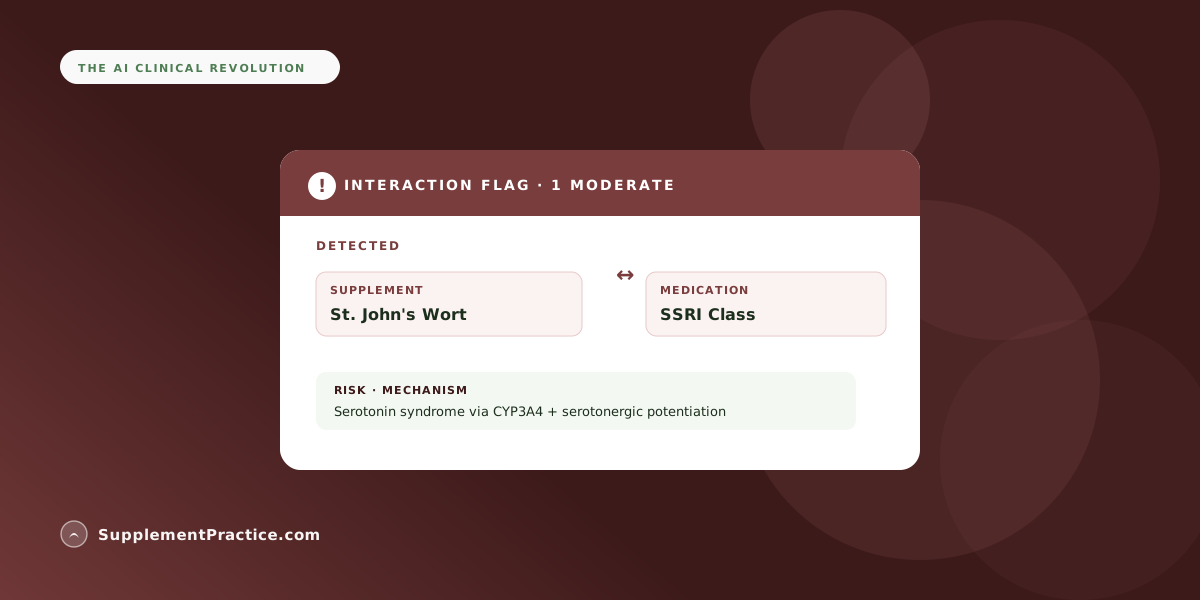
For aging patients on 4+ chronic medications, the AI should auto-elevate severity classification for several categories. Cardiovascular medications (statins, anticoagulants, antihypertensives) — every supplement interaction gets a documented review. Psychiatric medications (SSRIs, atypical antipsychotics) — serotonergic and sedative additive concerns get explicit flags. Levothyroxine — absorption-window interactions (calcium, iron, magnesium timing) become protocol-design constraints, not just notes. Nephrotoxic drugs — additional caution on supplement loads that affect renal clearance.
The documentation tightens proportionally. Every supplement addition to a polypharmacy aging patient should include an explicit interaction-review note in the chart: "screened against current medication list including [list]; no critical interactions identified" or "added with [specific mitigation]; coordinated with prescribing [physician name]".
74-year-old patient, 5 medications, focused 4-supplement protocol
A 74-year-old female patient on atorvastatin, lisinopril, levothyroxine 75 mcg, sertraline 25 mg, and aspirin 81 mg. Chief concerns: afternoon fatigue, mild memory complaints, joint stiffness. Recent labs: vitamin D 22, B12 340, ferritin 38, lipids controlled, kidney function normal for age.
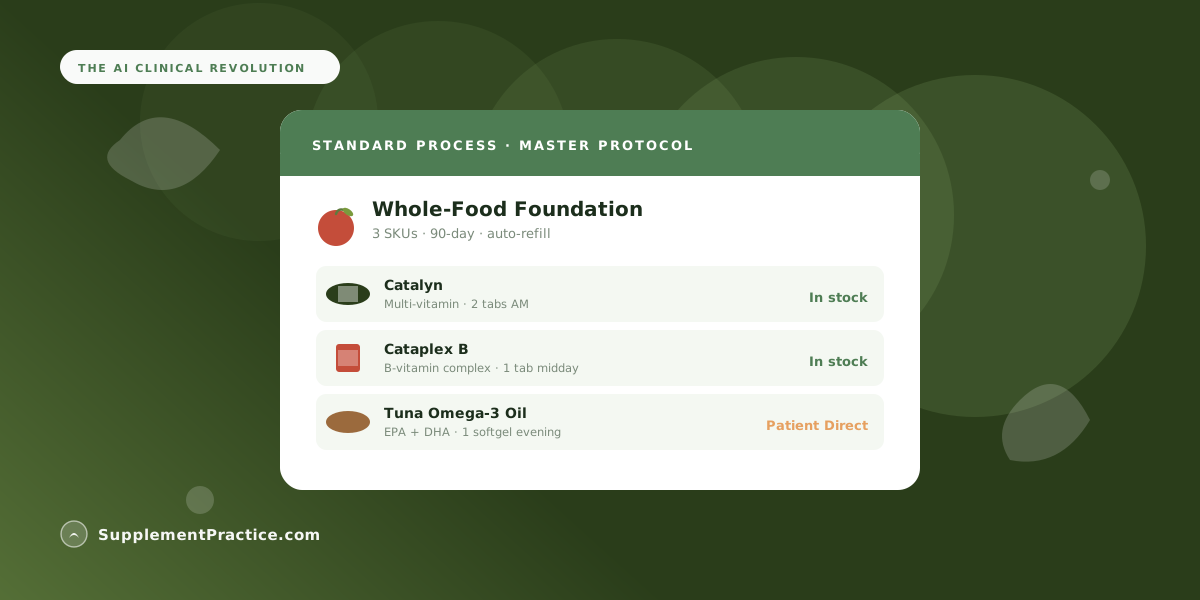
AI-composed protocol (intentionally minimal to respect pill-burden ceiling): SP Catalyn 2 with each meal (foundational), Tuna Omega-3 2 daily (cardiovascular + cognitive), CoQ10 ubiquinol 100 mg AM (statin-induced depletion + cognitive support), Magnesium L-threonate 1.5g PM (cognitive + sleep). Vitamin D 5,000 IU daily for 8 weeks then re-test (deficiency repletion). Total daily supplement count: 4 (Catalyn at 6 tablets but counted as one product). Cost: ~$140/month.
Interaction screen output: aspirin + omega-3 mild antiplatelet additive — documented in chart, no dose change. Calcium in Catalyn at low per-tablet dose — separated from levothyroxine by morning timing. No critical flags. Sertraline + supplements — no conflicts. Notes sent to PCP for awareness.
Outcome at 90 days: vitamin D normalized to 38 (transitioned to 2,000 IU maintenance). Subjective fatigue improved (6/10 to 3/10). Patient reported sleep improvement from magnesium. Memory complaints unchanged but stable. Compliance: 95% (the small pill count made compliance achievable).
The caregiver communication layer
Many aging patients have a caregiver (spouse, adult child, professional aide) involved in medication and supplement administration. The protocol communication should explicitly involve the caregiver — not as an afterthought but as a primary user of the patient-facing materials.
Practical implementation: printed schedules in larger font (14pt+), bottle-labeling with explicit AM/PM tags and any timing constraints, automatic refill cadence so the caregiver doesn't need to manage the reorder mental load, and clear written instructions for any titration or as-needed products. Many practice management platforms generate a "caregiver summary" output alongside the patient schedule — same protocol, different formatting optimized for the support person.
Common mistakes
Five anti-patterns in aging-patient protocol design
- Same protocol intensity as for younger patients. Aging patients tolerate less; titrate slower.
- Ignoring pill burden. Compliance ceiling is real; combination products and ruthless prioritization matter.
- Skipping the caregiver in protocol communication. The caregiver is often the actual administrator.
- Standard interaction screening for polypharmacy. Elevate severity classification for cardiovascular, psychiatric, and thyroid medications.
- Mega-dosing fat-soluble vitamins. Accumulation is more concerning in aging patients with reduced clearance.
Frequently asked questions
What are the four foundational pillars?
Mitochondrial (CoQ10, ALA, B-vitamins), Cardiovascular (Cardio-Plus, omega-3, Cyruta Plus), Cognitive (methylated B-complex, DHA, magnesium L-threonate), Musculoskeletal (Calcium Lactate, Cataplex F, Ligaplex II, Glucosamine Synergy).
How does polypharmacy screening change for aging patients?
Auto-elevate severity for cardiovascular, psychiatric, thyroid, and nephrotoxic medications. Documentation requirements tighten — every addition gets explicit interaction-review notes.
What dose adjustments matter?
Start at 50-70% of typical adult dose, titrate over 4-6 weeks. Avoid mega-dosing fat-soluble vitamins. Use methylated active B-forms over synthetic precursors.
What's the typical pill burden tolerance?
~4-5 daily supplements before compliance degrades. Use combination products where clinically appropriate.
How does AI help specifically?
Polypharmacy interaction screening at scale (impossible to do manually), combination-product optimization (reducing pill burden), lab integration (age-relevant marker interpretation).
What's the caregiver's role?
Often central. Printed schedules in larger fonts, bottle labeling, automatic refills, caregiver-summary documentation alongside patient schedule.
Where to go next
Three companion pieces: drug-supplement interaction screening, Cardio-Plus deep-dive for the cardiovascular pillar, and caregiver-friendly schedule generation. Supplement Practice's aging-patient template auto-applies the elevated polypharmacy severity classification and respects the ~4-5 supplement pill-burden ceiling.