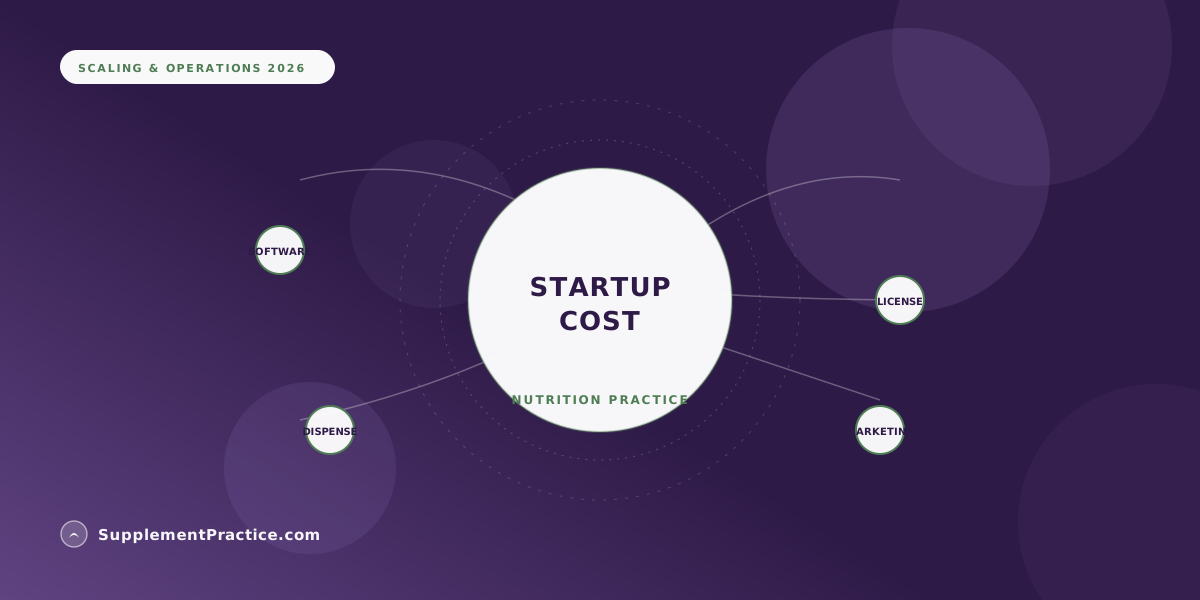
A lean, virtual-first nutrition practice can open for roughly 1,500 to 5,000 dollars in the first year, while a physical office with a supplement dispensary usually runs 10,000 to 50,000 dollars or more. The biggest swing factors are whether you lease space, how much inventory you stock, and which software you choose — costs vary widely by state and setup.
What Drives Your Startup Number
- A virtual solo launch commonly lands around 1,500 to 5,000 dollars for year one
- A leased physical office with a dispensary typically runs 10,000 to 50,000 dollars or more
- Software is often 50 to 300 dollars per month depending on whether it is one tool or a stack
- Practitioner supplement accounts are usually free to open — inventory is the real cost
- Licensing, LLC formation, and insurance are modest but vary by state
- Marketing and a website are where budgets quietly balloon if unmanaged
Your biggest decision is virtual versus physical — it moves the number by 10x
Before any spreadsheet, decide whether you are opening a virtual, telehealth-first practice or leasing a physical office. That single choice separates a business you can start for the price of a used laptop from one that needs five figures before the first client walks in. Most independent nutritionists in 2026 start virtual, prove demand, then add space only when a waitlist justifies the rent.
Ranges below are typical planning figures, not quotes. Actual costs vary widely by state, city, license type, and how much you buy new versus reuse. Treat this as a framework for building your own budget, and get real numbers from your own vendors before committing.
It also helps to separate two kinds of money: one-time startup costs you pay to open the doors, and recurring monthly costs you pay to keep them open. New practitioners fixate on the startup number and get surprised by the recurring one. A virtual practice keeps both low. A physical office raises the startup figure with buildout and inventory, and — more importantly — commits you to rent every single month whether or not the schedule is full. That recurring obligation, not the opening check, is what actually pressures a young practice's cash flow, so weigh it as heavily as the launch cost.
The costs that exist no matter what
A handful of line items apply whether you go virtual or physical. Business formation — an LLC or PLLC — commonly runs 50 to 500 dollars depending on your state's filing fee, plus an optional registered-agent service. Professional liability insurance for a solo nutritionist often lands somewhere in the 300 to 700 dollars per year range. If your state or credential requires a license or registration to practice nutrition, budget for that application and any exam fees; these vary enormously and are covered more below.
Then there is the software that runs the business. You can assemble a stack — separate scheduling, video, charting, invoicing, and email tools — which nickel-and-dimes you into 150 to 400 dollars a month, or use one platform. Our own all-in-one platform argument is that consolidating those tools is usually cheaper and far less work to maintain than a stack. For a buyer's-eye view of what to shop for, the small-clinic buyer's guide breaks down features against price.
The virtual launch: roughly 1,500 to 5,000 dollars
A telehealth-first nutritionist can genuinely open for the low four figures. Assuming you already own a computer, your year-one spend is mostly software subscriptions (600 to 3,000 dollars annually), a simple website or booking page, insurance, formation fees, and a modest marketing budget. You avoid rent, buildout, furniture, and physical inventory entirely. If you dispense supplements, you do it virtually — clients order through your practitioner storefront and the fulfillment house ships, so you carry no stock. That model is exactly what makes it possible to scale a virtual nutrition business without capital.
The quiet advantage of the virtual launch is not just the low number — it is the low risk. When your monthly overhead is a software subscription and an insurance premium, a slow month is uncomfortable rather than existential. That breathing room lets you be patient about pricing, selective about clients, and deliberate about growth instead of scrambling to cover a lease. Many successful practices that later occupy beautiful offices started in exactly this posture, using the first year to build a caseload and a reputation while keeping fixed costs near zero.
The physical office: 10,000 to 50,000 dollars and up
Adding a physical location changes the math completely. First and last month's rent plus a deposit alone can be several thousand dollars. Then furniture, exam or consultation setup, signage, a business internet line, and buildout if the space needs work. If you stock a physical supplement shelf, opening inventory is a real number — a conservative starting dispensary might be 2,000 to 10,000 dollars in product, and managing it well requires real inventory management for clinics so you are not sitting on expired bottles. Many practitioners split the difference: a small office, a lean physical shelf for bestsellers, and virtual fulfillment for everything else.
Where supplements fit — usually an asset, not a startup cost
Opening practitioner accounts with professional brands (Standard Process, Xymogen, Metagenics, Designs for Health, and others) is typically free. The cost is inventory, and virtual dispensing lets you offer the entire catalog with zero upfront stock. A dispensary is one of the few startup line items that can pay for itself quickly, because a practitioner dispensary commonly runs a meaningful markup over practitioner cost. If revenue matters to your plan, read how to start and run a supplement dispensary business before you decide how much to stock.
This is why the dispensary deserves its own line in the plan rather than being lumped into general startup cost. Handled as a virtual storefront, it adds essentially nothing to your opening spend and begins contributing revenue as soon as clients start ordering. Handled as a physical shelf, it is real cash tied up in bottles with expiration dates. The practitioners who get this right start virtual, watch which products their clients actually reorder, and only stock a physical shelf of proven bestsellers once the data justifies it — turning what could be dead inventory into a fast-moving, self-funding part of the practice.
A solo nutritionist in Ohio opens for under 3,000 dollars
Maria, a registered dietitian leaving a hospital job, wanted to start seeing clients within a month without borrowing money. She formed an LLC for her state's filing fee, bought a year of professional liability coverage, and set up her entire practice — scheduling, telehealth video, charting, invoicing, and a virtual supplement dispensary — inside Supplement Practice rather than buying five separate tools.
She opened free practitioner accounts with three supplement brands and dispensed virtually, so she carried no inventory. Her only other real spend was a simple website and a small local-ads budget. Total first-quarter outlay: under 3,000 dollars, with no rent and no stock sitting on a shelf. She added a part-time office nine months later, once a waitlist made the rent an easy decision.
| Line item | Lean virtual launch | Physical office |
|---|---|---|
| Rent, deposit, buildout | 0 dollars | 4,000 to 25,000 dollars |
| Furniture and setup | 0 to 500 dollars | 1,500 to 8,000 dollars |
| Practice software (year one) | 600 to 3,000 dollars | 600 to 4,000 dollars |
| Opening supplement inventory | 0 dollars (virtual dispensing) | 2,000 to 10,000 dollars |
| LLC, license, insurance | 400 to 1,500 dollars | 400 to 2,500 dollars |
| Website and initial marketing | 300 to 2,000 dollars | 1,000 to 6,000 dollars |
| Typical year-one total | 1,500 to 5,000 dollars | 10,000 to 50,000 dollars plus |
Common budgeting mistakes
- Buying a software stack before you have clients. Five subscriptions add up fast; consolidate into one platform until volume justifies more.
- Over-stocking a physical shelf on day one. Cash tied up in inventory you cannot move is the fastest way to feel broke while technically profitable.
- Treating marketing as a fixed cost. It is a dial, not a line item — start small, measure what converts, then scale spend.
- Skipping insurance to save a few hundred dollars. One complaint without coverage costs more than years of premiums.
- Guessing at licensing rules. Nutrition scope and licensure vary sharply by state; a wrong assumption can cost you the practice.
A note on rules that vary — and change
This article is general guidance, not legal, tax, or licensing advice. Whether you may call yourself a nutritionist, what scope of practice you have, whether you must register or license, and how sales tax applies to supplements all vary by state and change over time. Before you spend a dollar, verify your specific situation with your state licensing board, a qualified attorney, and a CPA. Budgeting is the easy part; getting the compliance foundation right is what keeps the practice standing.
Frequently asked questions
Can I start a nutrition practice with no money?
Almost no money, realistically — not zero. If you already own a computer, you can open a virtual practice for a few hundred dollars by using a free or trial software period, opening free practitioner supplement accounts, and dispensing virtually so you carry no inventory. Formation fees and insurance are the hardest costs to avoid. See scaling a virtual nutrition business for the lean model.
How much should I budget for software?
Plan on roughly 50 to 300 dollars a month. The wide range is mostly about whether you buy one all-in-one platform or a stack of separate tools that each charge their own subscription. Consolidating is usually cheaper — the buyer's guide compares what to look for.
Do I need to buy supplement inventory to start dispensing?
No. Opening practitioner accounts with professional brands is typically free, and virtual dispensing lets clients order the full catalog while a fulfillment house ships directly — you hold no stock. Physical inventory only makes sense once you know your bestsellers. Read how to start and run a dispensary.
What is the single biggest cost when opening a physical office?
Space. Rent, a deposit, and any buildout typically dominate a physical-office budget, often several thousand dollars before you buy a single piece of furniture. It is the main reason most new nutritionists start virtual and add space only once demand is proven.
How long until a nutrition practice becomes profitable?
It depends heavily on your model and marketing, so any single number would be misleading. A lean virtual practice with low overhead can reach profitability quickly because there is little to recoup, while a leased office carries fixed costs every month regardless of client volume. Keeping overhead low early is the most reliable path to profit.
Where to go next
See how to scale a virtual nutrition business, compare tools in the small-clinic buyer's guide, and learn how to run a supplement dispensary.