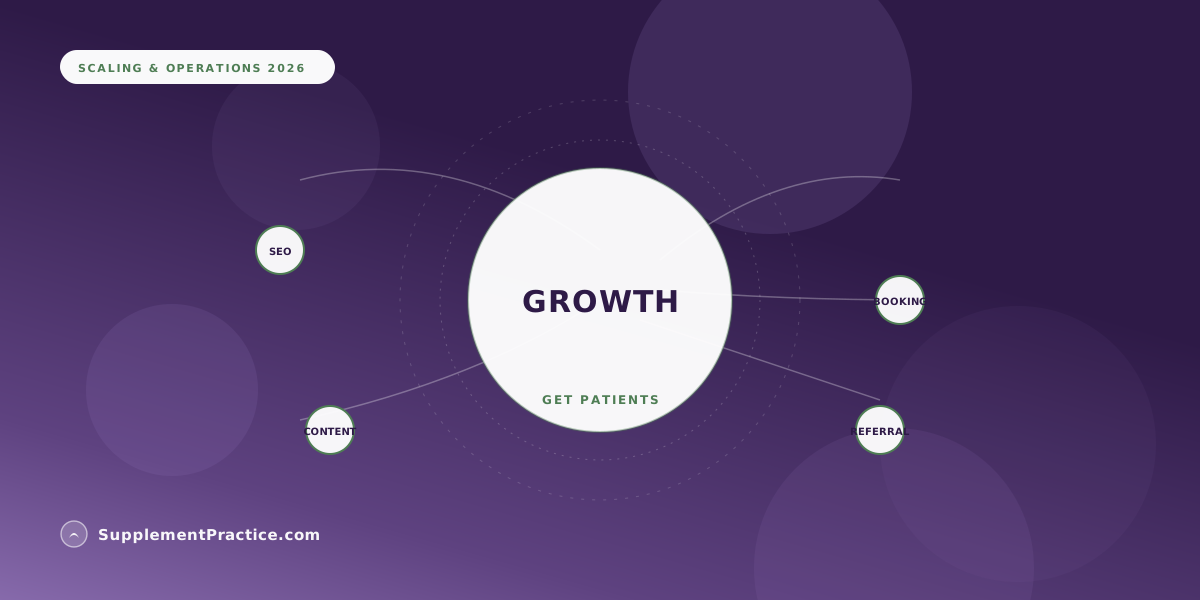
Naturopaths attract new patients online through four channels working together: local search visibility so nearby patients find you, a website that lets someone book in one click instead of emailing, genuinely helpful content that answers the questions patients ask before they choose a provider, and a system that turns satisfied patients into referrals and reviews. The practices that grow are not the loudest — they are the ones that remove friction at every step from search to booked appointment, and keep their marketing claims truthful and compliant.
The Four Channels That Actually Work
- Local SEO — claim and optimize listings so nearby patients find you first
- One-click online booking — every extra step between interest and appointment loses patients
- Helpful content that answers the questions patients ask before choosing a provider
- Referrals and reviews — satisfied patients are the highest-converting channel there is
- Truthful, compliant claims — avoid disease-cure language that invites trouble
- Protect any data a prospective patient submits with HIPAA-compliant tools
- Measure which channel books patients so you stop guessing where to spend
Growth is a funnel, not a megaphone
Naturopaths who struggle to grow online usually think the problem is visibility — that they need to shout louder. The real leak is almost always friction: a prospective patient finds them, hits a website that makes booking hard, and leaves. Attracting patients online is a funnel with four stages — get found, get booked, build trust, and earn referrals — and the practices that win optimize the handoffs between stages rather than pouring effort into the top and losing everyone below it.
Work the funnel in order. There is no point driving traffic to a site that cannot convert it, and no point converting patients you then fail to turn into advocates. Each stage feeds the next.
Get found: local search is the foundation
Most patients looking for a naturopath start with a search that has local intent — a condition or a service plus their town. Being the practice that shows up means claiming and completing your local business listings, keeping your name, address, and phone consistent everywhere, gathering reviews, and making sure your website clearly states what you do and where. This is unglamorous, durable work that compounds. The channel-by-channel playbook in the best marketing strategies for a nutrition-focused clinic maps directly onto a naturopathic practice.
There is a newer wrinkle worth naming: patients increasingly ask AI assistants, not just search engines, to recommend a provider or explain a treatment approach. The same fundamentals feed both — clear, specific, genuinely helpful pages that plainly answer real questions. A site that reads like a brochure gives neither a search engine nor an AI assistant anything to quote, while pages that directly answer what patients ask become the source those systems draw from. Writing to answer, rather than to advertise, is now the highest-leverage habit in getting found.
Get booked: remove every step you can
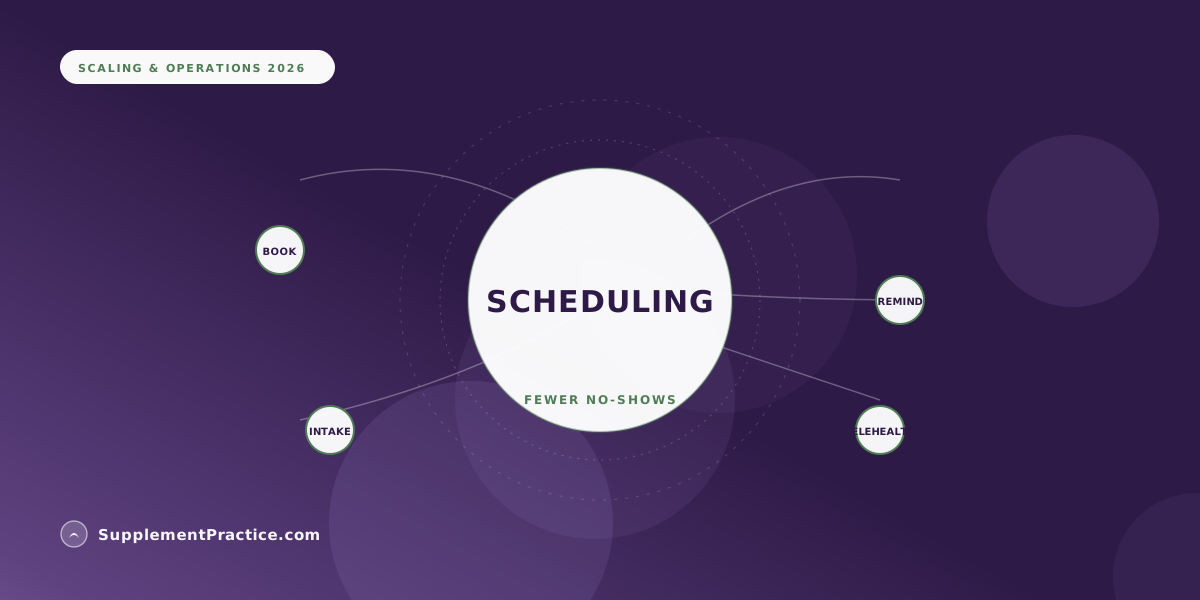
The single highest-return improvement most naturopaths can make is letting patients book online in one click. Every extra step — an email you have to answer, a phone tag loop, a form that demands too much before the first visit — sheds interested people. Put real-time availability on your site and let patients self-schedule, ideally with the reminders that cut no-shows. The specifics are in appointment scheduling software for wellness practices. If you serve patients virtually, pair booking with HIPAA-compliant telehealth so a new patient can go from finding you to a booked video visit without a single email.
Build trust: content that answers real questions
Patients research before they commit, and increasingly they research by typing questions into search engines and AI assistants. Content that plainly answers the questions your ideal patient actually asks — about your approach, what a first visit looks like, and the concerns that bring people to naturopathic care — does double duty: it earns search visibility and it builds trust before the patient ever contacts you. Write to answer, not to impress. This is also how a virtual-first practice scales its reach far beyond the neighborhood a physical office can serve, since a helpful page works for a patient three states away exactly as well as one across town.
Earn referrals: your highest-converting channel
A referred patient arrives already trusting you, which is why word of mouth converts better than any ad. Make it easy and routine: ask satisfied patients for reviews at the right moment, give them something simple to share, and follow up so a good outcome becomes a public review and a personal recommendation. Referrals cost almost nothing and compound as your panel grows — they are the channel most naturopaths under-invest in precisely because they feel passive. Make them a deliberate step in your workflow instead.
Do not overlook professional referrals alongside patient ones. Local physicians, therapists, personal trainers, and health-food retailers all encounter people who would benefit from naturopathic care but have nowhere obvious to send them. A short introduction, a clear explanation of who you help, and an easy way to refer can turn a handful of these relationships into a steady trickle of well-matched patients. The best part is that professional referrals tend to arrive pre-qualified — the referrer has already framed why the patient should come see you — so they convert and stay at a higher rate than cold web traffic.
Keep it truthful and compliant
Online marketing for any health practice carries a compliance layer that is easy to overlook. Keep your claims truthful and avoid language that promises to cure or treat specific diseases — the FTC and FDA both police health and supplement advertising, and the safe path is honest, non-sensational messaging. Equally important, any information a prospective patient submits through your site — an intake form, a booking, a question — is data you must protect with HIPAA-compliant tools, not a generic web form that emails you their health details in the clear. The fundamentals are in what actually counts as HIPAA-compliant software.
A naturopath in North Carolina fixes the leak instead of buying ads
Dr. Elena V. was getting steady website traffic but few new patients. Rather than spend on ads, she looked at her funnel and found the leak: interested visitors hit a contact form that promised a callback within two business days, and most never heard back in time. She was losing patients between found and booked.
She switched to real-time online booking on Supplement Practice, added automatic reminders, and wrote a handful of plain-language pages answering the questions new patients kept asking. Same traffic, but now a visitor could book a first visit in one click, and satisfied patients were prompted for reviews that lifted her local search ranking. Her new-patient bookings rose without a dollar of additional ad spend.
Where to focus first
| Channel | Effort | Best for |
|---|---|---|
| Local SEO & listings | Moderate, ongoing | Being found by nearby patients |
| One-click booking | Low, one-time setup | Converting the traffic you already have |
| Helpful content | High, compounding | Trust and long-term search visibility |
| Referrals & reviews | Low, systematized | Highest-converting new patients |
Measure so you stop guessing
Growing online without measurement is expensive guesswork. Track where new patients actually come from — which search, which page, which referral source turned into a booked appointment — so you can double down on what works and stop funding what does not. Marketing tactics vary in effectiveness by market, and advertising rules around health and supplement claims vary by jurisdiction and change over time, so treat everything here as general guidance rather than legal advice and confirm anything specific with a qualified advisor or attorney. The naturopaths who grow steadily are rarely the loudest — they are the ones who quietly fixed the funnel, told the truth in every claim, and watched the numbers closely enough to keep improving.
Common mistakes attracting patients online
- Driving traffic to a site that cannot convert. Ads and SEO are wasted if booking is buried behind a contact form and a callback promise.
- Making patients work to book. Every extra step between interest and a scheduled visit sheds people who were ready to say yes.
- Ignoring reviews and referrals. The highest-converting channel is treated as passive instead of built into the workflow.
- Over-claiming in marketing. Disease-cure language invites regulatory trouble and erodes trust — keep claims truthful and specific.
- Collecting health data insecurely. A generic web form that emails patient health details in the clear is a compliance exposure, not a lead magnet.
Frequently asked questions
What is the fastest way for a naturopath to get more patients online?
Fix the booking step first. Adding one-click online scheduling converts the traffic you already have and usually beats spending on ads, because most practices lose ready patients to a slow contact-form-and-callback loop. See appointment scheduling software for wellness practices for how to set it up.
Do naturopaths need to blog to rank online?
You do not need a blog for its own sake, but content that answers the real questions patients ask earns search visibility and builds trust before the first contact. Write to answer specific questions about your approach and first visit rather than publishing generic filler, and it doubles as reach for a virtual practice.
How important are online reviews for naturopaths?
Very. Reviews lift local search ranking and referred patients convert better than any ad, so make asking for reviews a routine step after a good outcome. It is the highest-return, lowest-cost channel most naturopaths under-invest in.
Is it safe to collect patient information through my website?
Only through HIPAA-compliant tools. A generic web form that emails a prospective patient's health details in the clear is a compliance exposure — booking and intake should run through secure software with a business associate agreement. See what actually counts as HIPAA-compliant software.
What marketing claims should naturopaths avoid online?
Avoid language that promises to cure or treat specific diseases, and keep supplement claims truthful and non-sensational — both the FTC and FDA police health and supplement advertising. Marketing and advertising rules vary by jurisdiction and change, so verify anything specific with a qualified advisor rather than copying a competitor.
Where to go next
Continue with appointment scheduling software for wellness practices, the best marketing strategies for a nutrition-focused clinic, and how to scale a virtual practice.