Yes — AI can write supplement protocols for naturopaths, but as a first draft the naturopath reviews and approves, not a hands-off autopilot. Good clinical AI drafts a starting protocol from the patient's chart in seconds, grounds it in your preferred professional brands, and screens for supplement-drug interactions, while the naturopath applies judgment, adjusts for the individual, and signs off. Used this way it removes the blank-page work and cuts protocol time from many minutes to a review, without removing clinical accountability.
What AI Does Well, and What Stays Human
- AI drafts a starting protocol from the chart in seconds — the blank page disappears
- It grounds suggestions in your preferred professional brands and your dispensary
- It screens for supplement-drug and supplement-supplement interactions as a safety net
- The naturopath reviews, individualizes, and signs — clinical accountability never transfers
- Treat AI output as a draft to verify, not a source of truth to trust blindly
- The biggest wins are time saved and fewer missed interaction checks
- Keep patient data in a HIPAA-compliant system, not a consumer chatbot
Yes — as a drafting partner, not an autopilot
The honest answer is that AI writes an excellent first draft of a supplement protocol and a poor final one. That distinction is the whole story. Clinical AI can read a patient's intake and chart, propose a structured protocol in seconds, and flag interactions faster than any human scanning references by hand. What it cannot do is take responsibility for the patient in front of you. The naturopath who reviews, adjusts, and signs remains the clinician of record — and that is exactly how it should work.
Framed that way, AI stops being a threat to clinical judgment and becomes a way to spend more of your time on judgment and less on the mechanical assembly of a protocol. The blank page is the expensive part; AI removes it.
What AI drafts well
Given a good chart, AI is strong at the repetitive scaffolding of a protocol: proposing a sensible set of supplements for the presenting picture, suggesting forms and general dosing ranges to start from, sequencing a schedule, and producing clear patient-facing instructions. This is the workflow described in how to use AI to build evidence-based supplement protocols in seconds — the AI assembles a coherent starting point, and you shape it rather than build it from nothing.
It is also good at translation work: turning a clinical protocol into a printable, plain-language schedule a patient will actually follow. Adherence rises when instructions are clear, and generating that clean handout is exactly the kind of task AI does quickly and consistently, as covered in how to generate printable supplement schedules that improve adherence.
Grounding: keep it inside your dispensary and your brands
A protocol is only useful if you can actually fill it. The value of AI drafting multiplies when it is grounded in the professional lines you carry — Standard Process, Xymogen, Metagenics, Designs for Health, and the rest — rather than inventing generic products you do not stock. Grounded drafting means the suggested protocol maps to your dispensary and your practitioner pricing, so a draft you approve flows straight to an order. This is the practical difference between a clever chatbot and clinical software built for the job.
Grounding also keeps the AI honest. A general-purpose model asked for a protocol will happily invent plausible-sounding products, doses, and combinations with no connection to what you carry or what you would ever recommend. When the AI is constrained to your formulary and your clinical preferences, it has a much smaller space to go wrong in, and the drafts it produces look like something you would have written rather than something you have to rebuild from scratch. The narrower and more clinician-specific the grounding, the less editing each draft needs.
Screening: the safety net that catches what a busy day misses
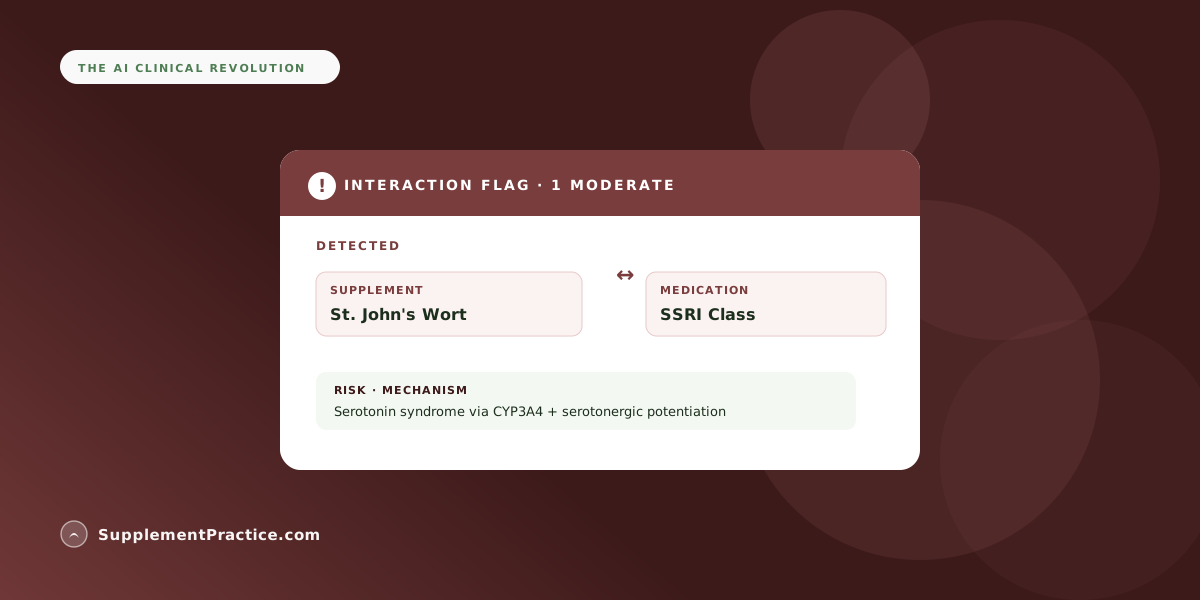
The strongest safety case for AI is interaction screening. When a patient takes prescription medications, a supplement protocol needs to be checked against them, and doing that by memory on a full schedule is where things slip. AI can screen every proposed protocol for supplement-drug and supplement-supplement interactions automatically — the capability explored in whether AI can help prevent supplement-drug interactions. It does not replace your clinical judgment about what to do with a flag, but it makes sure the flag gets raised in the first place.
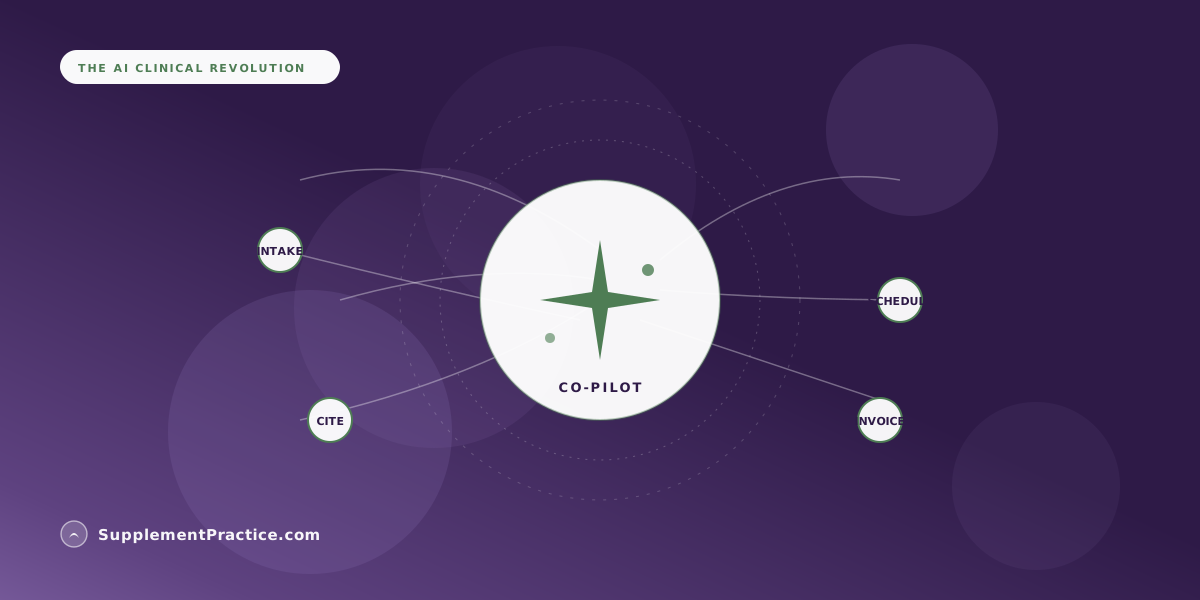
The value here is consistency, not brilliance. A skilled naturopath knows the major interactions cold, but human attention is uneven across a long day, and the miss usually comes not from ignorance but from a distracted moment on the tenth patient. An automatic screen runs identically on the first protocol and the last, which is exactly the kind of tireless, repetitive vigilance software is good at and humans are not. Treat it as a co-pilot that never gets tired of double-checking, while you remain the one who decides whether a flagged combination is a real problem for this particular patient.
Where the naturopath stays firmly in charge
AI does not know your patient the way you do. It cannot weigh the person's history, preferences, budget, prior reactions, and the dozens of contextual details that make naturopathic care individual. It can also be confidently wrong, so every AI-drafted protocol needs a clinician's read before it reaches a patient. The realistic boundaries of the technology — what it can and cannot do in a wellness practice — are laid out in what AI can and cannot do for a wellness practice. The rule is simple: AI drafts and screens; you individualize and sign.
Keep it compliant: no patient data in consumer chatbots
One firm line: do not paste protected health information into a general-purpose consumer AI tool. Protocol drafting that touches patient data belongs inside a HIPAA-compliant clinical system with a business associate agreement in place, not a public chatbot. The convenience of a free tool is not worth the exposure. Used inside compliant software, AI drafting is both faster and safer than the manual alternative.
A naturopath in Colorado cuts protocol time without cutting corners
Dr. Aisha R. saw complex patients whose protocols took twenty minutes each to assemble by hand — pulling products, checking dosing, and scanning for interactions with their medications. The clinical thinking was fast; the assembly was slow, and it followed her home.
In Supplement Practice, she let the AI draft each protocol from the chart, grounded in the professional brands she stocked, and screen it against every patient's medication list automatically. She reviewed each draft, adjusted dosing for the individual, and signed. Assembly dropped from twenty minutes to a two-minute review, the interaction check ran every time instead of when she remembered, and the approved protocol flowed straight to her dispensary as an order.
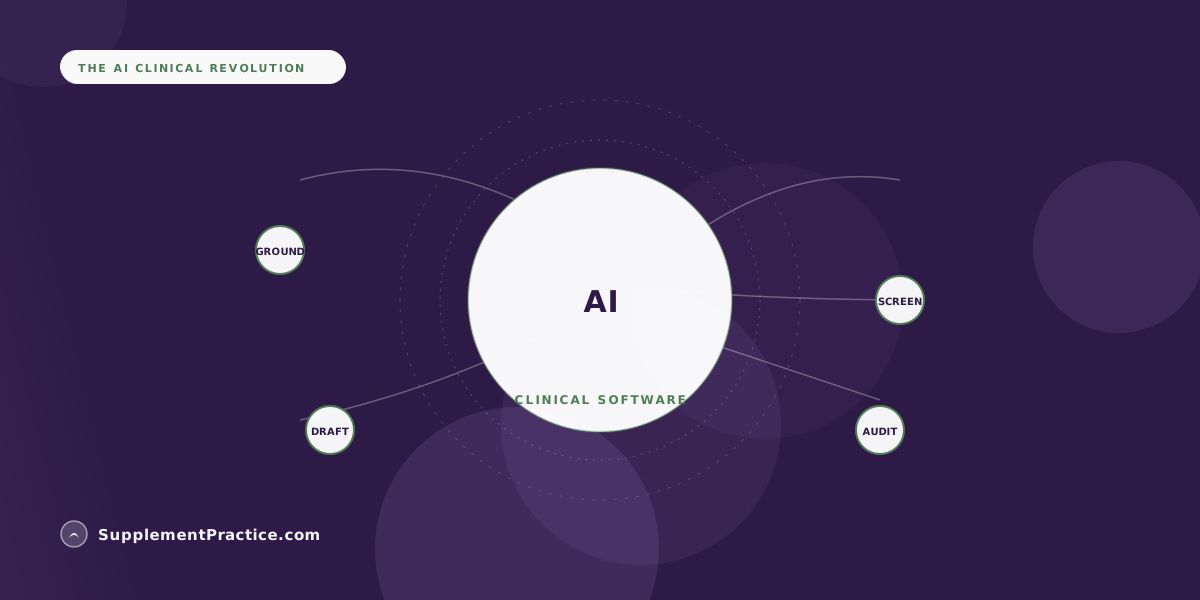
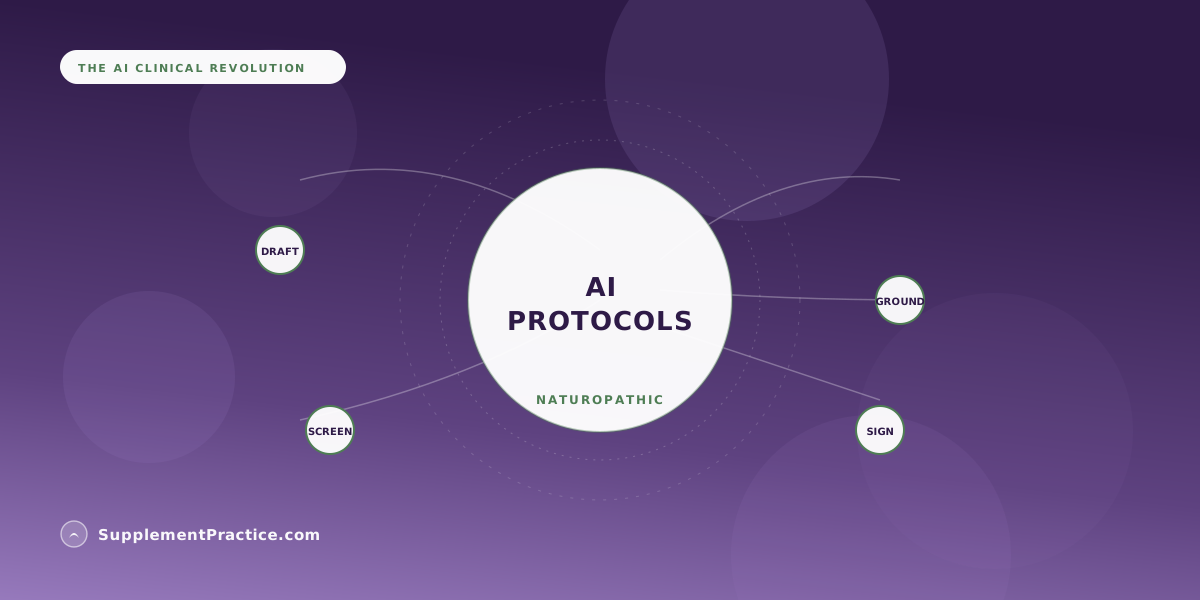
Draft, ground, screen, sign — the four steps
| Step | Who does it | What it produces |
|---|---|---|
| Draft | AI, from the chart | A structured starting protocol in seconds |
| Ground | AI, against your dispensary | Suggestions mapped to brands you stock |
| Screen | AI, against medications | Interaction flags surfaced automatically |
| Sign | The naturopath | An individualized, approved protocol |
The bottom line for naturopaths
AI is a force multiplier for protocol work, not a replacement for the clinician. It gives you back the minutes you spend assembling and cross-checking, and it makes the safety screen automatic rather than optional. What it does not do is assume responsibility — that stays with you, which is why you review and sign every draft. Naturopaths who adopt AI this way get faster and safer at once, without giving up the individualized care that defines the profession.
Common mistakes with AI-drafted protocols
- Treating the draft as final. Signing an AI protocol without a clinical read hands your judgment to a tool that cannot be accountable for the patient.
- Using a consumer chatbot. Pasting patient data into a public AI tool with no BAA is a compliance exposure no time savings justifies.
- Ungrounded suggestions. AI that recommends products you do not stock creates dead-end protocols you cannot actually fill.
- Skipping the interaction screen. The screen is the biggest safety win — turning it off to save a step defeats the point.
- Forgetting individualization. A draft that ignores the patient's budget, history, and preferences is a template, not naturopathic care.
Frequently asked questions
Is an AI-written supplement protocol safe to give a patient as-is?
No — treat it as a first draft, not a final protocol. AI can be confidently wrong and does not know your patient's full context, so a naturopath must review, individualize, and sign before anything reaches a patient. Used that way, AI drafting is both faster and safer than assembling by hand.
Can AI check supplement-drug interactions for me?
Yes, and it is one of the strongest reasons to use it. AI can automatically screen every proposed protocol against a patient's medications and flag interactions you might miss on a busy day — see whether AI can help prevent supplement-drug interactions. You still decide what to do with each flag.
Will AI recommend products I do not carry?
It can, unless the AI is grounded in your dispensary. Clinical AI built for practice maps suggestions to the professional brands you stock and your practitioner pricing, so an approved draft flows straight to an order rather than sending you hunting for products you do not have.
Can I just use ChatGPT to write protocols?
Not with patient data. Pasting protected health information into a general-purpose consumer chatbot creates a compliance exposure because there is no business associate agreement. Protocol drafting that touches patient data belongs inside a HIPAA-compliant clinical system — see what AI can and cannot do for a wellness practice.
How much time does AI protocol drafting actually save?
The savings come from eliminating assembly, not thinking. Naturopaths commonly cut protocol build time from many minutes to a short review because the AI handles the scaffolding and the interaction check. The protocol-in-seconds workflow shows how the draft-then-approve loop works.
Where to go next
Continue with building evidence-based protocols in seconds, preventing supplement-drug interactions with AI, and what AI can and cannot do for a wellness practice.
Clinical & Technical References
- U.S. FDA — AI/ML Software as a Medical Device
- NIH Office of Dietary Supplements — Health Professional Fact Sheets
- Linus Pauling Institute — Micronutrient Information Center
- American Association of Naturopathic Physicians
- U.S. FDA — Dietary Supplements
- U.S. FTC — Dietary Supplements Advertising Guide