Yes — AI can help nutritionists build personalized meal and supplement plans, but its real job is producing a fast, structured first draft from intake data that you review and finalize, not making clinical decisions on its own. Used this way it can turn an hour of plan-building into minutes, while you remain the clinician of record who checks interactions, dosing, and fit before anything reaches the client.
What AI Can and Cannot Do Here
- AI excels at fast first drafts — turning intake data into a structured plan in minutes
- It is strong at organizing meals, timing, and supplement schedules into a readable format
- It should flag potential supplement-drug interactions for you to verify, not clear them
- It cannot replace clinical judgment, licensing scope, or your review
- Grounded, in-platform AI beats a generic chatbot for accuracy and privacy
- The nutritionist stays the clinician of record for every plan
The honest answer: AI is a drafting engine, not a decision-maker
Yes, AI genuinely helps — but only when you frame it correctly. It is not an oracle that hands your client a plan. It is a fast, tireless drafting engine that takes the intake information you have gathered and turns it into a structured meal and supplement plan you then review, correct, and own. The nutritionists getting the most from AI are not the ones who trust it blindly; they are the ones who use it to skip the blank page and spend their saved time on judgment instead of formatting. Think of it the way a senior clinician thinks of a capable assistant: enormously helpful for producing a solid first draft quickly, but never the person who signs off on care. The value is real, and so is the boundary.
Understanding that division of labor — machine drafts, clinician decides — is what separates a useful tool from a liability.
The word doing the heavy lifting in the title is personalized. AI does not personalize anything on its own; it personalizes to whatever you feed it. Give it thin, generic inputs and you get a thin, generic plan dressed up in confident language. Give it rich intake — real goals, real restrictions, real preferences, an accurate medication list — and the draft it returns is genuinely tailored and worth your time to refine. In other words, the quality of an AI plan is capped by the quality of your intake, which is one more reason the drafting step belongs downstream of a thorough intake process, not in place of it.
Where AI is genuinely strong
AI is excellent at the parts of plan-building that are structured and repetitive. Given a client's goals, preferences, restrictions, and lab-adjacent intake, it can assemble a coherent weekly meal framework, suggest a supplement schedule with timing (with food, away from food, morning versus evening), and produce it in clean, client-readable language in seconds. That is real time back. The deeper mechanics of this are covered in how to use AI to build evidence-based supplement protocols in seconds, which walks through the draft-and-review loop for protocols specifically.
It is also good at consistency. AI does not forget to include the timing notes, does not skip the hydration reminder, and formats every plan the same way — which is exactly the kind of steady, unglamorous reliability that makes plans easier for clients to follow.
There is a third strength worth naming: translation. A nutritionist thinks in clinical shorthand, but clients need plain, encouraging language they can act on at seven in the morning. AI is genuinely good at rewriting a terse professional plan into a warm, readable one-pager without losing the substance — turning “magnesium glycinate 200mg PM” into a clear instruction a client will actually follow. That last-mile translation is tedious to do by hand for every client, and it is exactly the kind of high-volume, low-judgment work AI handles well, freeing you to spend your attention on the decisions only you can make.
Where AI must not be trusted alone
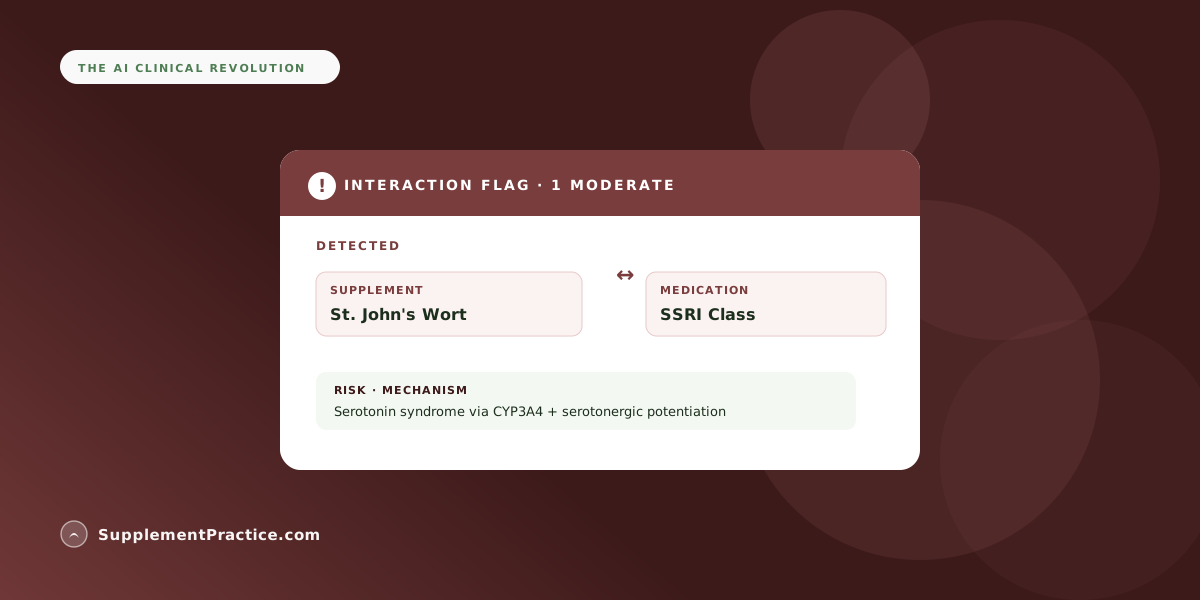
The failure modes are just as real. A general-purpose chatbot can state a supplement dose with total confidence and be wrong. It does not know your client's full medication list unless you give it, and even then it should surface possible interactions for you to verify — never quietly clear them. This is the single most important guardrail, and it is why AI that specifically helps prevent supplement-drug interactions is designed to flag and cite, not to reassure. Treat every interaction check as a prompt for your review, not a verdict.
The other quiet failure mode is plausibility. AI writes fluently, and fluent writing reads as authoritative even when it is subtly off — a dose in the wrong units, a timing recommendation that ignores a client's shift-work schedule, a food suggestion that contradicts a stated allergy buried in the intake. None of these announce themselves. They look like the rest of the clean, confident plan. This is precisely why a skim is not a review. You are not proofreading for typos; you are checking clinical substance line by line, because the one place AI is weakest is knowing when it is wrong.
Generic ChatGPT versus grounded, in-platform AI
There is a large practical difference between typing a client's details into a public chatbot and using AI built into your practice platform. The generic route raises real privacy problems — you may be putting health information into a system with no business associate agreement — and its answers are ungrounded, meaning it draws on whatever it absorbed in training rather than your actual catalog and your client's actual record. In-platform AI, by contrast, works from the structured intake already in the chart, dispenses from the real brands you carry, and keeps the data inside a compliant boundary. For the broader picture of what this kind of AI can and cannot do, see AI in healthcare software.
A workflow that actually works
The reliable pattern is simple. Gather intake as you always would. Let the AI draft the meal framework and supplement schedule from that data. Review every line — check dosing, confirm nothing conflicts with medications, adjust for preferences and budget, and make sure it fits your scope of practice. Then finalize, dispense, and hand the client a printable schedule they will actually follow. Because the plan and the supplement schedule live on one record, adherence improves — which matters, since adherence drops when schedules are not integrated into the record.
A functional-nutrition practice in Colorado cuts plan time by two-thirds
James, a certified nutrition specialist, used to spend close to an hour building each new client's meal and supplement plan from scratch — formatting, looking up timing, writing it all out. His evenings disappeared into documents.
Inside Supplement Practice, the AI now drafts each plan from the intake he has already collected: a weekly meal framework, a timed supplement schedule pulling from the professional brands he stocks, and flagged interaction notes for anything worth a second look. James reviews and edits every plan — that part never changed — but the drafting that took an hour now takes about fifteen minutes. He uses the time he got back to actually talk with clients about adherence rather than typing after they leave.
| Task | AI drafts | Nutritionist decides |
|---|---|---|
| Weekly meal framework | Yes — from intake and preferences | Reviews fit, budget, culture |
| Supplement schedule and timing | Yes — formatted and consistent | Confirms products and dosing |
| Interaction flags | Surfaces and cites | Verifies before clearing |
| Final clinical sign-off | Never | Always — clinician of record |
| Client-facing printable plan | Generates | Approves and dispenses |
Common mistakes using AI for plans
- Pasting client details into a public chatbot. That is likely unprotected health information with no compliance boundary — use in-platform, grounded AI instead.
- Trusting a stated dose without checking. AI can be confidently wrong; verify dosing and interactions every time.
- Shipping the first draft unedited. The draft is the starting point, not the deliverable — your review is the value.
- Ignoring scope of practice. AI does not know your license limits; make sure the plan stays within what you are permitted to provide.
- Disconnecting the plan from the schedule. A plan the client cannot follow day to day fails — keep the supplement schedule on the same record.
A note on responsibility and scope
This is general guidance, not clinical or legal advice. What you may recommend, how you must document it, and how supplement counseling fits your scope all vary by credential and state and change over time — verify with your licensing board and, where relevant, a qualified attorney. AI can carry the drafting load, but the responsibility for every plan remains entirely yours. Used with that clarity, it is one of the most practical tools a modern nutrition practice has.
Frequently asked questions
Will AI replace nutritionists?
No. AI drafts and organizes; it does not carry clinical judgment, licensing, or accountability. The clients who need a nutritionist need the human relationship, the individualized reasoning, and the professional who is legally and ethically responsible for the plan. AI changes how much time you spend formatting, not whether you are needed.
Is it safe to put client information into ChatGPT to build a plan?
Generally no. A public chatbot with no business associate agreement is not an appropriate place for protected health information. Use AI built into a compliant practice platform, where the data stays inside a protected boundary. See AI in healthcare software for the distinction.
Can AI check for supplement-drug interactions?
It can flag and surface potential interactions for you to verify, but it should never be trusted to clear them on its own. Treat every flag as a prompt for your review. Tools designed to help prevent supplement-drug interactions are built to cite and warn, not to reassure.
How much time does AI actually save on meal planning?
It varies by practice, but the biggest saving is on formatting and drafting — turning intake into a structured plan that would take a while to write by hand into something you produce in minutes. Your review time stays roughly the same, because that is where the clinical value is. The net effect for many practitioners is meaningfully faster plans.
Does the client know a plan was AI-drafted?
That is your call and may depend on your professional and state guidance, but the plan they receive is a clinician-reviewed document either way. The AI produced a draft; you made the decisions, checked the details, and put your name on it. What reaches the client is your plan, not the machine's.
Where to go next
Explore building protocols with AI in seconds, understand what AI in healthcare software can and cannot do, and see how to prevent supplement-drug interactions.