Standard Process, like most professional supplement brands, sells to credentialed practitioners at a wholesale practitioner cost and sets a suggested retail price you sell at, so your gross margin typically lands in a wide band rather than a fixed number. The exact discount, tiers, and terms vary by brand and change over time, so treat every published figure as directional and confirm current pricing with the manufacturer. The real advantage is not a single markup percentage but that professional-grade lines are sold through verified practitioners, which protects margin in a way open retail brands cannot.
How Practitioner Wholesale Pricing Actually Works
- Professional brands sell to verified practitioners at a wholesale cost and publish a suggested retail you sell at
- Gross margin on professional lines commonly runs in a wide range, not a fixed number, and depends on the brand and account
- Order-volume tiers and account status can move your practitioner cost, so ask the brand for current terms
- Patient Direct or drop-ship removes inventory cash but usually pays a lower margin than stocked office inventory
- Office inventory earns a fuller margin but ties up capital and carries expiry and dead-stock risk
- Verified-practitioner distribution is what keeps professional-brand margin from being crushed by Amazon
- All figures here are illustrative ranges, verify current pricing and MAP terms directly with each manufacturer
The margin story is a band, not a magic number
Practitioners keep asking what markup they will earn on a professional line like Standard Process, and they want one clean percentage. There isn't one. What actually exists is a spread between your practitioner (wholesale) cost and the suggested retail price the brand publishes, and that spread lands in a range that depends on the brand, your account, your order volume, and which fulfillment model you use. Anyone quoting you an exact locked figure is either simplifying or working from terms that may already have changed.
So the useful question is not what is the markup, but how does professional wholesale pricing work, what range should a small functional-medicine practice realistically plan around, and how do you keep that margin from leaking away. That is what this guide covers, in general terms you can then confirm against each manufacturer's current price list.
How a practitioner wholesale account works
Professional supplement brands do not sell to the public the way a retail vitamin company does. To buy Standard Process, Xymogen, Metagenics, or Designs for Health at wholesale, you open a practitioner account by submitting your license or credential. Once verified, you see a practitioner cost that sits below the suggested retail price, and you resell to your own patients at retail. That verification gate is the whole point of the professional channel, and it is also the foundation of your margin.
Two numbers govern the economics: your practitioner cost (what you pay) and the manufacturer suggested retail price, often abbreviated MSRP or SRP (what the brand recommends you charge). Your gross margin is the gap between them. Many brands layer order-volume tiers on top, meaning a larger or more frequent order can lower your unit cost, and some maintain minimum advertised price (MAP) policies that limit how far anyone can discount publicly. Because these terms differ by brand and get revised, the single most valuable habit is to request the current practitioner price list and MAP policy in writing before you plan a pricing strategy or set a margin target.
What margin range to actually expect
As a planning range rather than a promise, professional supplement lines commonly leave practitioners with a gross margin somewhere in the neighborhood of a mid-double-digit percentage on retail sales, and the effective markup over practitioner cost can run substantially higher when the brand sets an aggressive suggested retail. Treat any specific figure as illustrative. What matters more than the exact percentage is that this margin is defensible, because only credentialed practitioners can source the product.
Contrast that with a mass-retail brand you might find on any drugstore shelf. There, the product is available to everyone, price is transparent and competed down to the bone, and your margin as a reseller would be thin or nonexistent. The professional channel trades broad availability for protected margin, and for a clinic that is the better trade. To keep that margin visible instead of guessing at it, many practices track it inside their software, and it is worth learning to track supplement profit margins in real time within your practice software so cost, retail, and tier changes stay reconciled.
One reason practitioners underestimate their true margin is that they anchor on the percentage instead of the dollars per patient. A modest-looking margin percentage on a protocol that a patient reorders every month for a year adds up to a durable revenue line, and it compounds across a patient panel. The number that should drive your planning is not the headline markup on a single bottle but the annual margin per adherent patient, because that is what actually funds the practice. When you frame it that way, the case for carrying professional lines at their protected margin, rather than chasing a slightly higher one-time markup on a cheaper retail product, becomes obvious.
Patient Direct vs office inventory: two different margin math problems
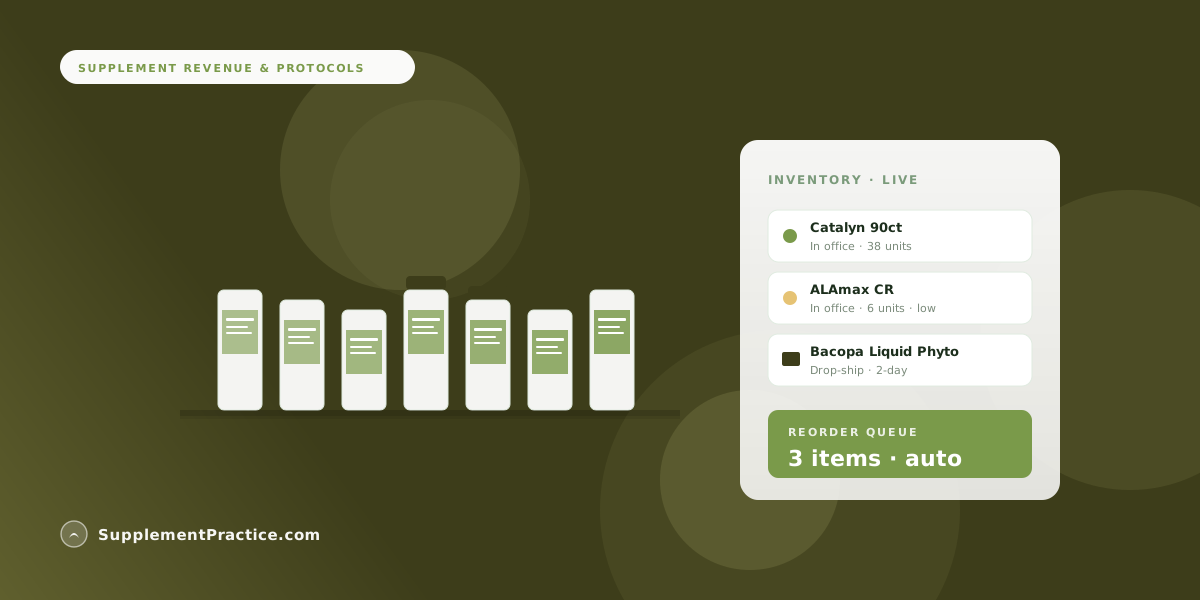
How you fulfill orders changes the margin equation as much as the brand does. There are two dominant models. In an office-inventory model you buy stock up front, shelve it, and hand it to the patient at checkout, capturing the fuller retail margin but tying up cash and taking on expiry and dead-stock risk. In a Patient Direct or drop-ship model the brand ships to the patient's door and pays you a margin on the order, so you hold no inventory and no capital, but the margin per order is generally lower than the stocked-shelf version.
Neither is universally better. A high-volume adjusting practice that moves the same core products every week can justify buying inventory and earning the richer margin, while a virtual or newer practice usually prefers drop-ship to avoid locking up cash. Most mature clinics run a hybrid: stock the handful of fast movers, drop-ship the long tail. Getting that split right depends on disciplined supplement inventory management for clinics, because the moment stocked product expires unsold, your realized margin on it drops to zero.
| Factor | Office inventory | Patient Direct / drop-ship |
|---|---|---|
| Margin per order | Higher, full retail spread | Lower, but still meaningful |
| Cash tied up | Significant, paid before you sell | None, brand fulfills |
| Expiry / dead-stock risk | You carry it | None |
| Best for | Fast-moving core products | Long tail, virtual, or new practices |
| Refill convenience | Patient must return | Ships to the door automatically |
A two-provider functional-medicine practice in Colorado models its margin
A small functional-medicine practice outside Denver carried several professional brands, including Standard Process, but had never actually calculated what they earned. The owner assumed a flat markup across the board. When they pulled each brand's current practitioner price list and suggested retail, they found their real gross margin varied noticeably line to line, and that two slow-moving products had been expiring on the shelf often enough to erase the margin on them entirely.
They moved their fast movers to stocked office inventory and shifted everything else to Patient Direct drop-ship, then connected cost and retail for every SKU inside Supplement Practice so the margin recalculated automatically whenever a brand revised pricing. Within a quarter they had eliminated the dead stock, kept the same protected margin on their core products, and finally knew their number instead of guessing it.
Protecting your margin from Amazon and gray-market retail
The biggest threat to professional-brand margin is not the wholesale cost, it is patients finding the same bottle cheaper online. Diverted or gray-market product on Amazon can undercut your retail and train patients to price-shop. The defenses are straightforward: emphasize the authenticity and storage integrity of product bought through a verified practitioner, build recommendations into the visit so the purchase is clinical rather than transactional, and make reordering from you effortless. A well-run refill program is the strongest anti-Amazon tool a practice has, which is why it pays to create a recurring revenue model through automated supplement refills rather than hoping patients return on their own.
Confirm the numbers, then build the strategy
Every margin figure in this article is a planning range, not a quote. Practitioner pricing tiers, suggested retail, MAP policies, and account terms genuinely vary by brand and change over time, and Standard Process sets its own current terms that only the manufacturer can confirm. Before you set patient prices or model your dispensary revenue, request the current practitioner price list and MAP policy directly from each brand, and if you have questions about resale tax treatment, confirm those with a qualified CPA in your state. Do that once, wire the real numbers into your software, and your margin stops being a mystery and becomes a lever you can manage.
Common mistakes practitioners make on wholesale margin
- Assuming one flat markup. Margin varies by brand, tier, and product; pull the actual price list rather than applying a single guessed percentage.
- Ignoring order-volume tiers. Many brands lower your unit cost at higher volumes, so you may be leaving margin on the table by under-ordering fast movers.
- Over-stocking slow products. Inventory that expires unsold has a realized margin of zero, which quietly erases the profit on your winners.
- Competing with Amazon on price. You will lose a raw price war; compete on authenticity, clinical fit, and effortless refills instead.
- Never reconciling cost changes. When a brand revises pricing and you don't update your record, your reported margin becomes fiction, and you may be selling at a loss without knowing.
Frequently asked questions
What wholesale pricing tiers should a small functional medicine practice expect?
Most professional brands offer a base practitioner cost plus order-volume tiers that lower your unit cost as you order more, and some add account-status or loyalty tiers on top. A small practice usually starts at the base tier and moves up as consistent ordering builds. Because the exact thresholds and discounts vary by brand and change, ask each manufacturer for their current tier schedule rather than relying on a figure a colleague quoted. Tracking it in your practice software keeps the math honest as tiers shift.
How do practitioner margins compare to retail supplement brands?
Professional lines generally leave a meaningfully better and more defensible margin than mass-retail brands, because only credentialed practitioners can source them, so price is not competed to the floor. Retail brands sold openly online offer thin reseller margin at best. The professional channel trades broad public availability for protected margin, which favors the clinic.
Is Patient Direct or office inventory better for margin?
Office inventory captures the fuller retail margin but ties up cash and carries expiry risk, while Patient Direct drop-ship pays a lower margin but needs no capital and no shelf. Most practices run a hybrid, stocking fast movers and drop-shipping the long tail. Match the model to how quickly each product actually turns.
How do I stop patients buying Standard Process cheaper on Amazon?
You cannot always beat gray-market price, so compete on authenticity, storage integrity, and clinical guidance instead, and make reordering from you effortless. Building recommendations into the visit and offering automated refills keeps the purchase clinical rather than a price comparison. Emphasize that verified-practitioner product is authentic and properly handled.
What gross margin percentage should I plan around?
Plan around a range rather than a fixed number, because it varies by brand, tier, and product line. Professional lines commonly leave a solid double-digit gross margin on retail sales, often with a considerably higher markup over practitioner cost. Treat any specific figure as directional and confirm current pricing with each manufacturer before setting patient prices.
Where to go next
Learn to track supplement profit margins in real time, tighten inventory management for clinics, and build a recurring revenue model through automated refills.