For chemical-sensitive patients, Pure Encapsulations is usually the right starting brand — the formulation philosophy is built around hypoallergenic, excipient-free, allergen-free production at a level Standard Process's whole-food formulations don't match. SP's variety of food-source ingredients (bovine extracts, carrot, alfalfa, oat flour) creates more potential reactivity surfaces than Pure's stripped-down formulations, even though the SP ingredients are clinically high quality. This piece walks through the clinical decision tree, the cross-brand stacking for patients with mixed tolerance, and the price-vs-clinical-fit math.
Sensitive Patient Brand Decision Tree
- MCS, MCAS, severe allergic history: default to Pure Encapsulations
- Mild specific allergies: SP fine if no specific allergen present in formulation
- Need protomorphogen layer: SP, with careful tolerance testing
- Cross-brand stacking: introduce one product at a time, 5-7 day washouts
- Pure premium: ~15-30% higher per bottle; worth it for genuine sensitivity
- Distinguish real sensitivity from anxiety-driven avoidance via detailed history
The hypoallergenic formulation philosophy
Pure Encapsulations was founded around a specific clinical observation: a non-trivial subset of patients react adversely to common supplement excipients — magnesium stearate, titanium dioxide, cellulose binders, artificial colors, common allergen carriers — even when the active ingredient is well-tolerated. For patients with MCS (multiple chemical sensitivity), MCAS (mast cell activation syndrome), severe allergic histories, or autoimmune conditions where excipient reactivity has been documented, these reactions are clinically meaningful and limit the supplement options the patient can use.
Pure's response was to produce a product line stripped of common reactivity-inducing excipients: no magnesium stearate, no titanium dioxide, no artificial colors, no common food allergens (wheat, dairy, soy, corn, peanut, tree nut, egg, fish), no GMOs. Active ingredients in hypoallergenic capsule shells with minimal additional content. This formulation philosophy is the brand's clinical identity, and it works — patients who react to mainstream supplement brands often tolerate Pure without issue.
Where Standard Process products create reactivity surfaces
Standard Process's whole-food formulation philosophy delivers nutrients in food-bound form, which is clinically valuable for most patients but creates more potential reactivity surfaces for genuinely sensitive patients. SP products contain bovine glandular extracts (some sensitive patients react to bovine tissue, particularly patients with autoimmune conditions involving organ-tissue cross-reactivity), occasional yeast culture, carrot/alfalfa/oat sources that overlap with documented food sensitivities, and standard excipients including magnesium stearate that Pure has eliminated.
For most patients, none of this is problematic — the SP whole-food approach produces excellent clinical outcomes with low reactivity. For genuinely chemical-sensitive patients, the variety of food-source ingredients in SP's formulations creates a larger reactivity surface than Pure's stripped-down formulations. The decision isn't that SP is "lower quality" — it's that SP's formulation philosophy doesn't optimize for the hypoallergenic case.
The clinical decision tree
Genuine MCS, MCAS, severe allergic history. Default to Pure Encapsulations. The hypoallergenic formulation is the right starting point. Add SP products only if specific tolerance is demonstrated.
Specific documented allergies (e.g., dairy, soy, gluten). SP is fine if the specific allergen isn't in the formulation. Most SP products are dairy-free, soy-free, gluten-free (verify each product), so the specific-allergen case is usually compatible.
Need for the protomorphogen/glandular layer. SP, with careful tolerance testing. Pure Encapsulations doesn't have a comparable glandular line, so patients needing Drenamin, Symplex, or similar SP products will require SP — introduce one at a time with documentation of any reaction.
Anxiety-driven sensitivity reports without documented reactions. Detailed history-taking to distinguish real sensitivity from generalized avoidance. Default to Pure as the safer starting position for uncertain cases. Some patients with anxiety-driven sensitivity histories find that gradual tolerance testing reveals broader tolerance than they expected.
Cross-brand stacking for mixed-tolerance patients
Many sensitive patients have a mixed-tolerance pattern — they tolerate some SP products and not others, and they tolerate Pure broadly. For these patients, intentional cross-brand stacking lets the practice use SP where it leads clinically while substituting Pure for the products the patient can't tolerate.
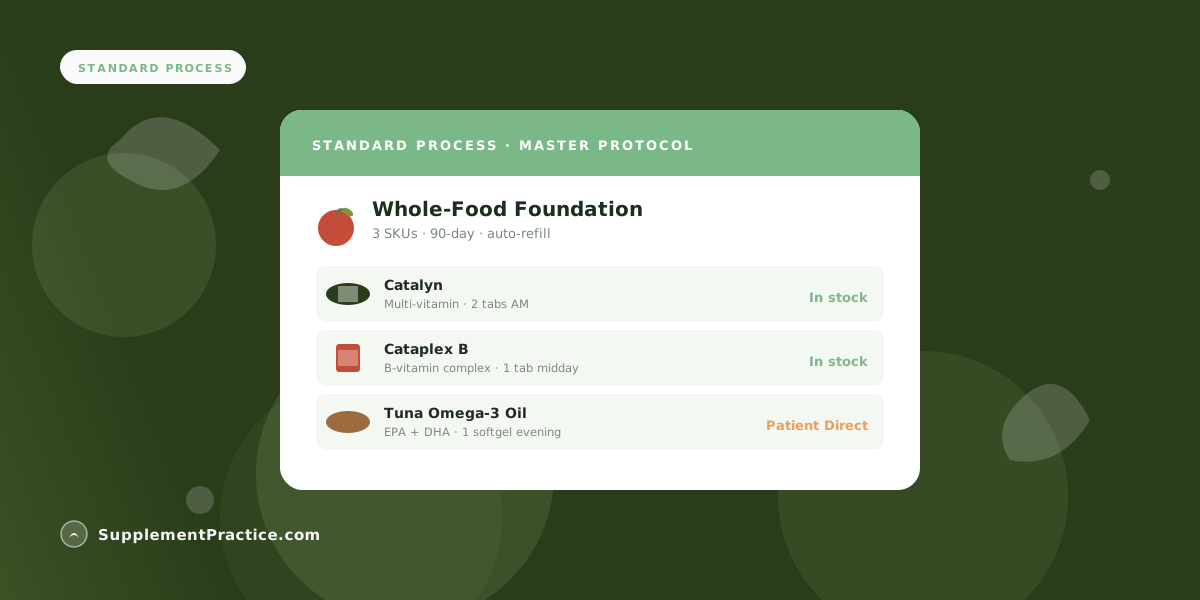
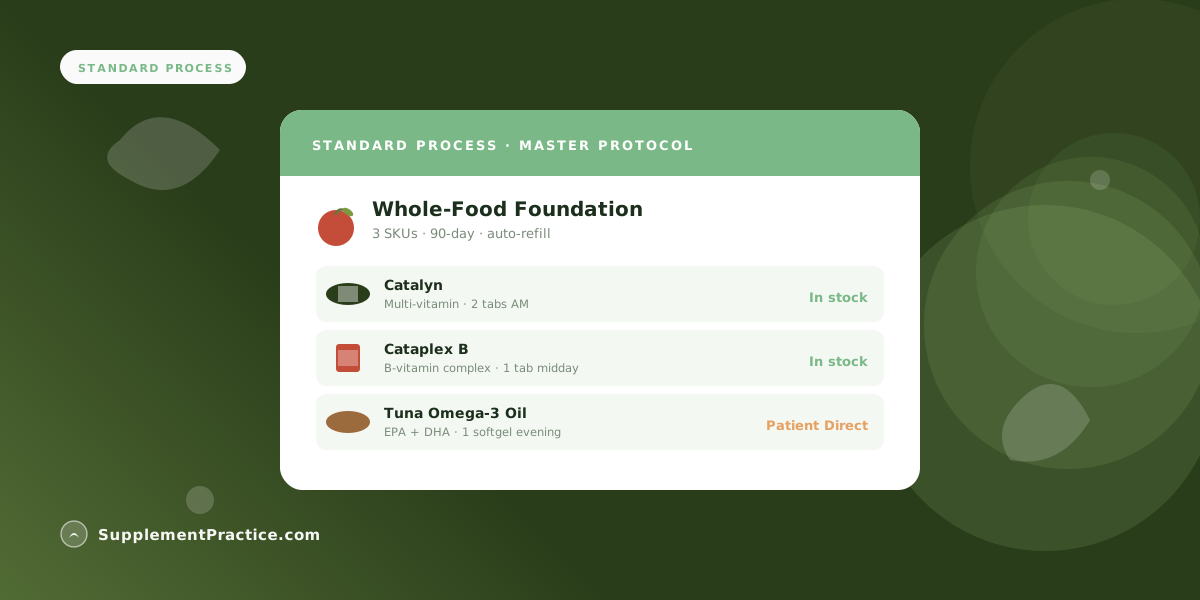
Common pattern: Pure foundational multi (Pure's Multi t/d or Nutrient 950), SP Cataplex F or Tuna Omega-3 (often tolerated even by sensitive patients), Pure for vitamin D, B-complex, and any other isolated-nutrient need, SP only where the protomorphogen layer is clinically needed. The cross-brand stack covers the patient's clinical needs while respecting their specific tolerance pattern.
Introduction protocol for sensitive patients: one new product at a time, 5-7 day observation window before adding the next. Document any reactions in the chart. This methodical approach prevents the compound-reactivity scenario where a sensitive patient adds 6 products simultaneously, has a reaction, and can't identify which product caused it.
41-year-old patient with documented MCAS, building a tolerable protocol
A 41-year-old female with documented MCAS (positive tryptase elevation history, symptom-based diagnosis), history of severe reactions to multiple medication classes and a long list of supplement intolerances. Patient reports tolerating "almost nothing" but is open to trying with careful protocols.
Strategy: default to Pure Encapsulations for the foundational layer. Start with Pure's Nutrient 950 (foundational multi) at 1 capsule daily — half the typical dose — for 7 days. Observed: no reaction. Increase to standard 2 daily.
Add Pure vitamin D3 1,000 IU daily after week 2. Observed: no reaction. Move to clinical dose 5,000 IU for documented deficiency.
Add Pure omega-3 EPA/DHA 1 softgel daily at week 4. Observed: no reaction. Increase to therapeutic 2 daily.
At week 8, attempt SP Drenamin 1 AM for HPA support (patient has documented adrenal involvement). Observed: minor flushing at 1 tablet on day 2; patient reported feeling "heavy" by day 3. Discontinued. Substitute Pure Encapsulations' adrenal-targeted formulation or Gaia Herbs Adrenal Health (introduced at week 10, tolerated). The patient ended up on a Pure-anchored protocol with Gaia herbal layer for the adaptogenic support that Pure doesn't directly provide.
The price-vs-clinical-fit math
Pure Encapsulations products typically run 15-30% higher than SP equivalents on a per-bottle basis. The premium reflects smaller production scale and the hypoallergenic formulation cost. For chemical-sensitive patients where the practical alternative is no supplementation, the premium is well-spent — Pure makes useful supplementation possible for patients who otherwise can't take anything.
For non-sensitive patients, the Pure premium doesn't pay for itself. Standard Process or other practitioner-grade brands deliver comparable clinical outcomes at lower per-bottle cost. Reserving Pure for the sensitivity case is the right resource allocation.
Common mistakes
Anti-patterns in sensitive-patient brand selection
- Defaulting all patients to Pure. Unnecessary premium for non-sensitive patients.
- Pushing SP on documented-sensitive patients. The whole-food variety creates more reactivity surface than Pure's stripped-down formulation.
- Introducing multiple products simultaneously for sensitive patients. Compound reactivity becomes impossible to attribute.
- Treating self-reported sensitivity as gospel without history-taking. Distinguish documented reactions from anxiety-driven avoidance.
- Not documenting tolerance trials in the chart. The methodical introduction record protects the practitioner and informs future protocols for the patient.
Frequently asked questions
Why is Pure Encapsulations the standard pick for chemical sensitivity?
Founded around hypoallergenic formulation — no magnesium stearate, no titanium dioxide, no artificial colors, no common allergen carriers, no GMOs. Designed specifically for MCS, MCAS, and severe allergic histories.
What's in SP products that sensitive patients might react to?
Bovine glandular extracts, occasional yeast culture, food-source overlap with sensitivities (carrot, alfalfa, oat), and standard excipients. For most patients none of this is problematic; for genuinely sensitive patients the variety creates more reactivity surface than Pure.
When does Standard Process still work for sensitive patients?
Mild specific sensitivities (where the specific allergen isn't in the formulation), and cases where the patient needs SP's protomorphogen layer — with careful one-at-a-time tolerance testing.
What's the price comparison?
Pure runs 15-30% higher per bottle than SP equivalents. Worth it for genuine sensitivity (otherwise no supplementation is possible); not worth it for non-sensitive patients.
Can I run a cross-brand SP + Pure protocol?
Yes — use SP where it leads clinically and the patient tolerates it; use Pure for products where reactivity is documented. Introduce one product at a time with 5-7 day washout.
How do I assess real vs. perceived sensitivity?
Documented reactions (rash, GI, headache within 24 hours of specific exposure) are reliable; "I'm sensitive to everything" is not. Detailed history-taking + selective challenge testing distinguishes the two.
Where to go next
Three companion pieces: the broader practitioner-grade vs retail conversation, SP vs Thorne on purity standards, and multi-brand stacking operationally. Supplement Practice's sensitive-patient template defaults to Pure Encapsulations with optional SP layers for the protomorphogen products as tolerance allows.