Thytrophin PMG is one of Standard Process's signature protomorphogen products and one of the most frequently misunderstood. It is NOT thyroid hormone replacement — it does not contain T3 or T4, and patients with diagnosed primary hypothyroidism still need levothyroxine. What Thytrophin offers is tissue-specific nutritional substrate the body uses to support thyroid function. This piece walks through what protomorphogens actually claim to do, the three patient phenotypes where Thytrophin adds clinical value, the dosing and pairing, and the communication patterns that prevent patients from misusing it as a medication substitute.
Thytrophin PMG — Clinical Quick Reference
- Adult dose: 3 tablets daily, AM, away from meals
- Initiation phase: up to 6 daily for first 30-60 days
- Does NOT contain thyroid hormone — not a levothyroxine substitute
- Best for: subclinical hypothyroid, stable-levothyroxine adjunct, Hashimoto's support
- Pair with: Cataplex F, Trace Minerals-B12, Cataplex E (Hashimoto's)
- Coordinate with prescribing physician for any actively-medicated thyroid patient
What protomorphogens actually claim to do
The protomorphogen (PMG) line is the most distinctive and least understood part of Standard Process's catalog. The clinical claim is straightforward when stated precisely and gets messy when stated loosely. Stated precisely: protomorphogen extracts are tissue-specific nutritional substrates — bovine glandular tissue processed to retain "cellular determinant proteins" (Standard Process's term for the nucleoprotein fraction) that, when taken orally, are claimed to provide tissue-specific nutritional support to the corresponding organ in the patient.
What protomorphogens do NOT claim to do: they don't contain organ hormones (Thytrophin doesn't contain thyroid hormone, Drenamin doesn't contain cortisol, Symplex doesn't contain sex hormones). They don't replace endocrine medication. They don't directly modulate hormone levels measurable on standard labs.
The clinical evidence base for protomorphogens is empirical-traditional rather than randomized-controlled-trial driven. Sixty-plus years of practitioner use, extensive case-series documentation, Standard Process's internal research library — these are real, but they don't meet the modern "blinded RCT" evidence bar. Practitioners using protomorphogens should communicate this honestly: tradition-supported product with extensive clinical use, where the rigorous trial data is thinner than for products with isolated nutrients.
Where Thytrophin PMG fits in actual thyroid management
The honest framing is that Thytrophin is an adjunct, not a primary therapy. Three patient phenotypes where it adds genuine clinical value, and one phenotype where it absolutely should not be used.
Subclinical hypothyroidism (TSH 4-10, normal free T4). Patients in the "you don't quite need medication yet but you're symptomatic" zone. Thytrophin can support thyroid function as part of a broader nutritional protocol while the patient is monitored for progression. If TSH continues to climb or symptoms worsen, the patient needs medication — Thytrophin does not prevent progression.
Stable levothyroxine patients seeking nutritional adjunct. Patients on stable thyroid medication with symptoms reasonably controlled who want nutritional support. Thytrophin doesn't interact with levothyroxine and may support overall thyroid health alongside. Standard caveat: always communicate with the prescribing physician about adjunctive supplements.
Hashimoto's thyroiditis (autoimmune). Patients with documented autoimmune thyroid involvement seeking tissue-specific nutritional support alongside conventional management. Note: for Hashimoto's, the broader protocol around inflammatory load (Cataplex F, Tuna Omega-3, Boswellia Complex) and selenium (Cataplex E for the selenium component) often does more clinical work than Thytrophin alone.
Where Thytrophin should NOT be used: as a substitute for diagnosed primary hypothyroidism medication. Patients who attempt to replace their levothyroxine with Thytrophin will develop clinical hypothyroid decline. The product does not contain thyroid hormone. Practitioners who position it as a "natural alternative" to medication are setting up adverse outcomes.
The dosing and timing logic
Standard adult dose: 3 tablets daily, taken in the morning, away from meals (at least 30-60 minutes before or 2+ hours after eating). The empty-stomach administration matters because the protomorphogen claim — tissue-specific nutritional substrate — depends on absorption of the nucleoprotein fraction without the buffering effect of food.
The morning timing matches the thyroid axis's natural circadian rhythm; the gland is most active in the morning hours, and aligning the supplement administration with the gland's peak supports the clinical theory of the product.
For acute initiation in the first 30-60 days of a thyroid protocol, some practitioners use 6 daily (2 with each meal-free window through the morning) as a front-load. After the initiation phase, taper to the maintenance 3 daily.
44-year-old patient, Hashimoto's, stable on levothyroxine but symptomatic
A 44-year-old patient with confirmed Hashimoto's thyroiditis (positive TPO antibodies, treated for 6 years with levothyroxine 75 mcg), TSH stable at 1.8, free T4 in mid-range, free T3 borderline-low. Persistent symptoms: afternoon fatigue, cold intolerance, sluggish weight regulation. Prescribing endocrinologist agrees the medication is dosed appropriately and supports adjunct nutritional protocol.
Protocol: Thytrophin PMG 3 daily AM (away from levothyroxine by at least 4 hours), Cataplex F 1 with each meal, Tuna Omega-3 2 daily, Cataplex E 1 daily (for selenium), Trace Minerals-B12 1 daily (iodine support — measured low on prior testing). Continued levothyroxine unchanged.
At 90 days: subjective fatigue improved from 6/10 to 3/10, cold intolerance largely resolved, weight stabilized after slow decline. Lab markers: TPO antibodies dropped from 240 to 165 (modest but real decline). Free T3 moved into mid-range. The nutritional protocol provided meaningful symptomatic improvement; the medication remained the primary therapy.
What about patients who want to come off levothyroxine?
The conversation comes up regularly: a patient diagnosed with hypothyroidism years ago, currently stable on levothyroxine, wants to know if they can transition to "natural" thyroid support. The honest answer: rarely. Patients with primary hypothyroidism whose thyroid gland is functionally damaged (Hashimoto's burnout, post-thyroidectomy, post-radioactive iodine treatment) cannot recover the gland's hormone-production capacity through nutritional support. They need replacement therapy indefinitely.
Patients in the small subset who developed hypothyroidism from reversible causes (severe iodine deficiency, severe selenium deficiency, transient autoimmune flare) may potentially recover, but the trial-of-coming-off-medication should happen under endocrinologist supervision with regular TSH monitoring, not as a unilateral patient decision driven by supplement marketing.
Common mistakes
Five anti-patterns in Thytrophin PMG prescribing
- Positioning as a levothyroxine substitute. The product does not contain thyroid hormone. Patients who try this approach decline clinically.
- Taking with meals. Empty-stomach administration is part of the formulation logic.
- Not coordinating with prescribing physician for medicated patients. Communicate adjunctive supplementation; document in chart.
- Skipping the broader thyroid stack. Thytrophin alone does less than Thytrophin + Cataplex F + selenium-containing product + foundational nutrition.
- Overstating the evidence base. Honest framing of tradition-supported clinical use, not RCT-validated therapy, builds patient trust.
Frequently asked questions
What is a protomorphogen and what does Thytrophin PMG actually contain?
Bovine thyroid tissue extract retaining cellular determinant proteins — purportedly tissue-specific nutritional substrate. It does NOT contain thyroid hormone (T3/T4); not synthetic thyroid replacement.
Is Thytrophin PMG a substitute for levothyroxine?
No. Patients with diagnosed primary hypothyroidism need levothyroxine. Thytrophin complements thyroid medication; it doesn't substitute for it.
Which patients benefit clinically from Thytrophin PMG?
Three phenotypes: subclinical hypothyroidism (TSH 4-10, normal T4), stable levothyroxine patients seeking nutritional adjunct, and Hashimoto's patients seeking tissue-specific support alongside conventional management.
How is Thytrophin PMG dosed?
3 tablets daily AM, away from meals. Initiation phase: up to 6 daily for first 30-60 days, then taper to 3 maintenance.
What does the research say about protomorphogen products?
Limited peer-reviewed RCT evidence; extensive clinical-use base. Honest framing: tradition-supported product with decades of practitioner use, where rigorous trial data is thinner than for isolated nutrients.
How does Thytrophin pair with other SP thyroid-support products?
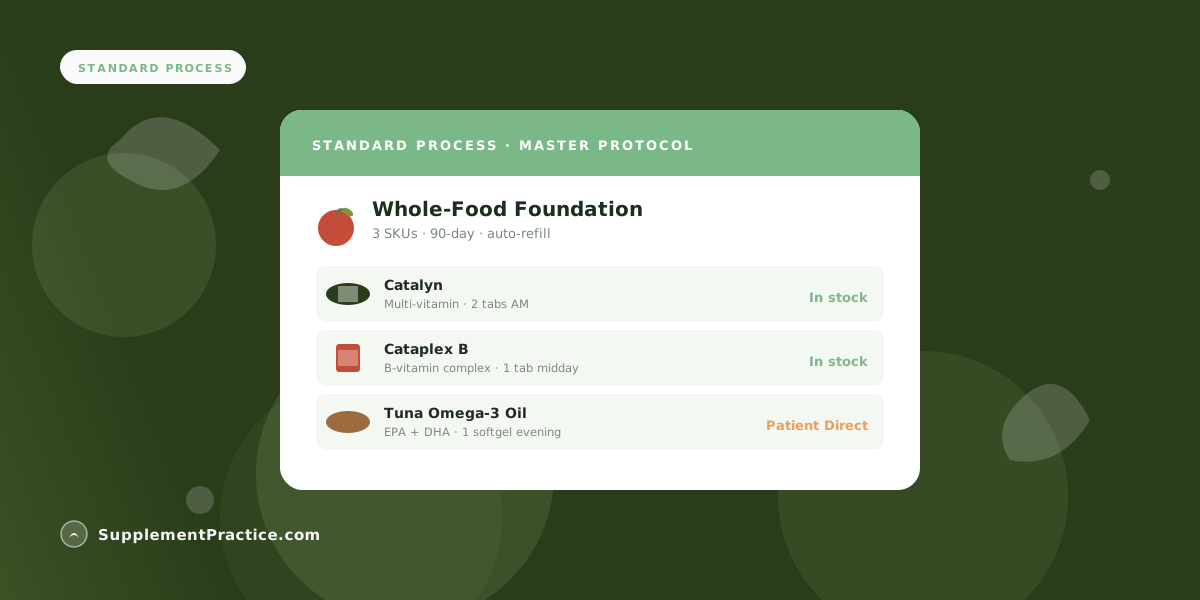
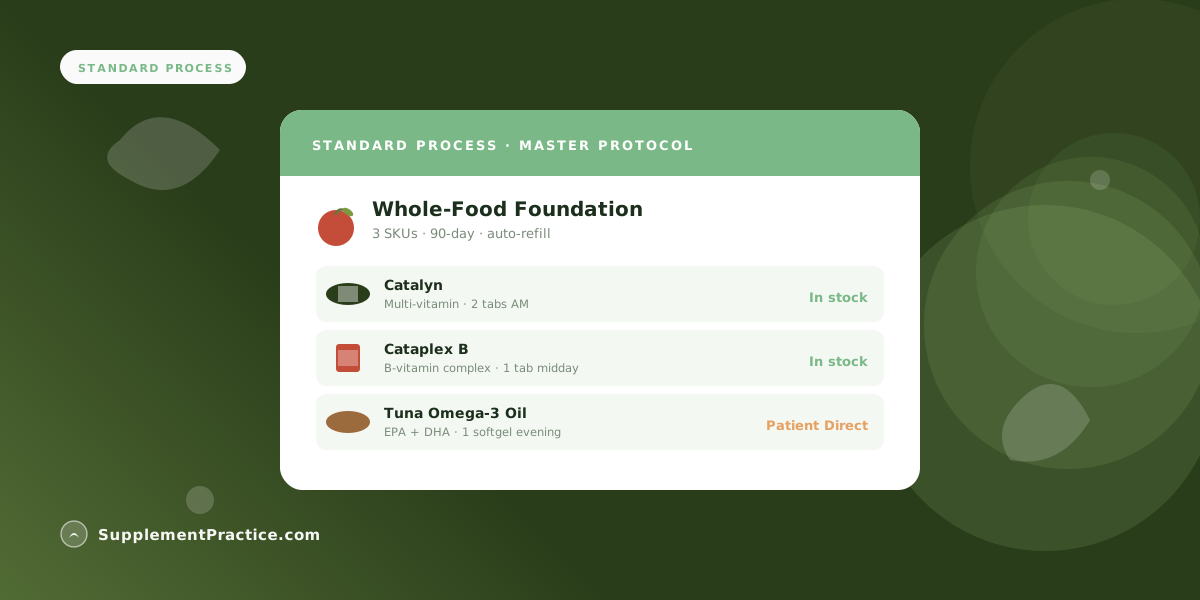
Standard stack: Thytrophin PMG + Cataplex F (EFA) + Trace Minerals-B12 (iodine, selenium, B12) + Catalyn (foundational). For Hashimoto's: add Cataplex E (selenium) and Boswellia Complex (inflammatory load).
Where to go next
Three companion pieces: the broader case for SP glandular products, the clinical reasoning behind SP's tissue-specific support across categories, and the parallel HPA-axis protocol using Drenamin and related protomorphogens. Supplement Practice's AI Co-Pilot composes the layered thyroid protocol with the levothyroxine timing-separation built into the patient schedule.