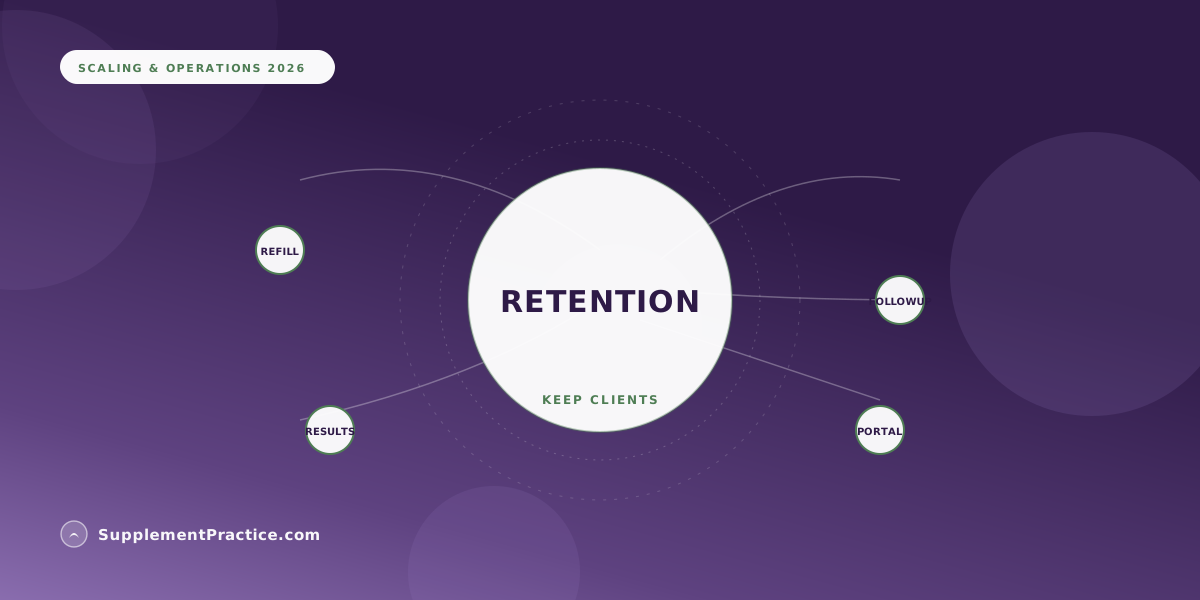
Wellness practitioners keep clients coming back by turning retention into a system instead of hoping for it. The four levers that matter are scheduled follow-up so no one falls through the cracks, automated supplement refills that create a natural recurring touchpoint, visible proof of results so clients see why they should continue, and frictionless rebooking. Practices that automate these four keep clients for years; practices that rely on the client remembering to come back lose them quietly.
The Four Levers of Client Retention
- Retention is a system, not charisma — the best clinicians still lose clients without one
- Scheduled follow-up catches clients before they drift, not after
- Automated supplement refills create a recurring touchpoint and recurring revenue
- Clients continue when they can see results — track and show progress
- Frictionless rebooking beats hoping the client remembers to return
- A client portal keeps the practice present between visits
- Winning back a lapsed client costs far more than keeping an active one
Clients do not leave because they are unhappy — they drift
Most lost clients never make a decision to leave. They finish a package, feel a little better, life gets busy, and the next appointment simply never gets booked. Six months later they would struggle to tell you why they stopped. This is the central truth of retention in a wellness practice: churn is rarely a rejection, it is a vacuum. Nothing pulled the client back, so they drifted. The practices that keep clients for years are not more charismatic — they have built systems that fill that vacuum automatically.
That reframing matters because it tells you where to spend effort. You do not need to be more likable. You need scheduled follow-up, recurring touchpoints, visible results, and effortless rebooking, running whether or not you remember to make them happen on a busy Tuesday.
Lever one: systematic follow-up
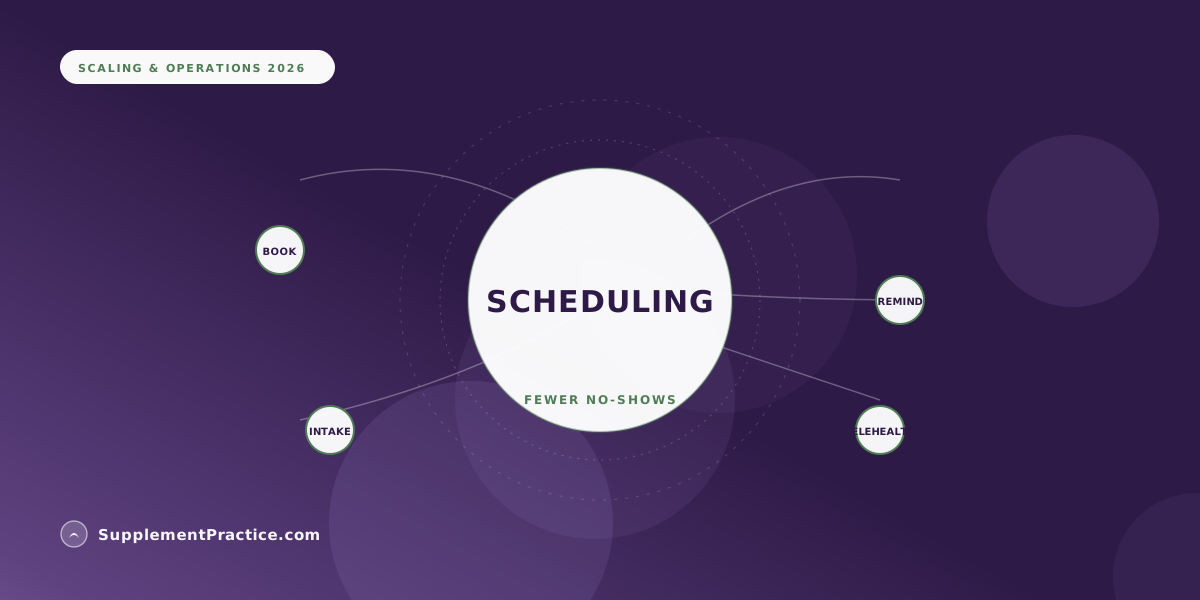
The highest-return retention habit is following up on a schedule the client did not have to request. A check-in two weeks after a new protocol, a progress review at the natural end of a package, a nudge when someone has not been seen in ninety days — each of these catches a client while the relationship is still warm. The problem is that manual follow-up is the first thing to fall off a full schedule. Automating it, ideally tied to your appointment scheduling system, means the follow-up happens even on the weeks you are underwater.
Lever two: automated refills as a recurring touchpoint
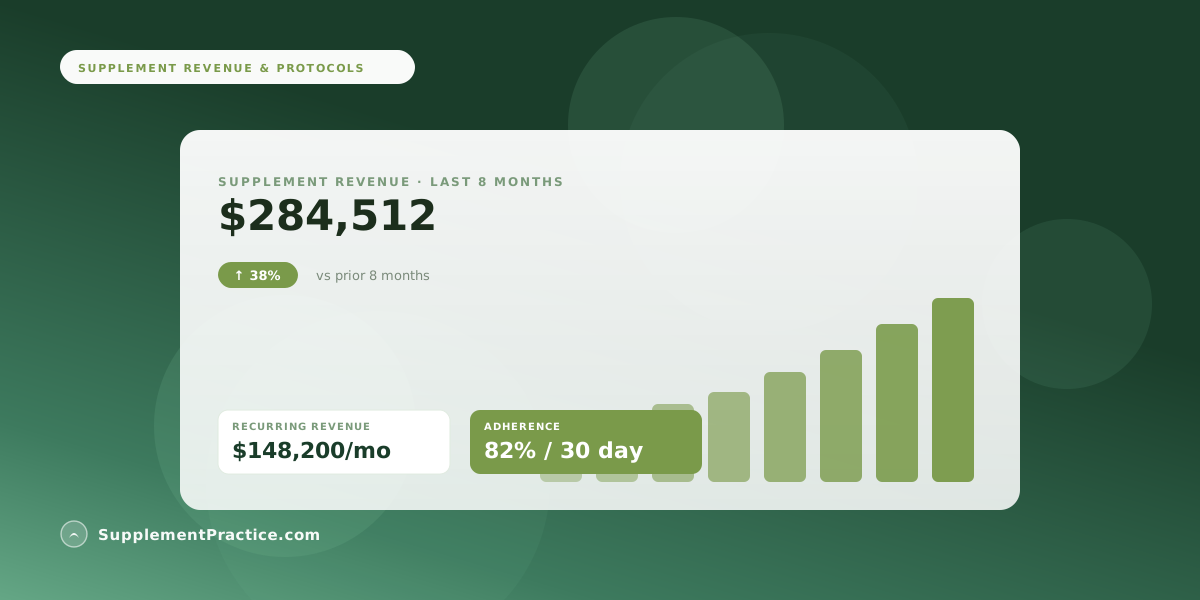
For any practice dispensing supplements, refills are the most natural retention engine you have. A client on an automated refill is in contact with your practice every month by default, and each refill is a reason to check in, adjust the protocol, or invite them back for a review. This is where retention and revenue become the same project — our guide to building recurring revenue through automated refills lays out the mechanics, and the retention benefit is inseparable from the income. Refills also protect outcomes, since adherence and retention rise together; the connection runs through keeping supplement schedules integrated into the record.
Lever three: make results visible
Clients continue when they can see they are getting somewhere. If a client cannot point to what has changed, the value feels abstract and the next payment feels optional. Track meaningful markers — sleep, energy, the symptom they came in for — and show them the trend. Progress you can point to converts a one-time visit into an ongoing relationship, because now continuing has an obvious reason attached to it.
Lever four: remove every ounce of rebooking friction
The moment a client thinks “I should book again” is fragile and brief. If rebooking means calling during business hours and waiting for a callback, most of that intent evaporates. Book the next visit before the client leaves the room, or give them a portal where they can rebook in three taps at 10pm. A client portal keeps your practice present between visits and turns intent into a booked appointment before it fades. For virtual and hybrid practices, the same principle drives scaling a virtual nutrition business — the easier it is to come back, the more people do.
The first ninety days decide the next two years
Retention is won or lost early. A client who has a clear plan, one visible early win, and a booked next step within their first three months tends to stay for years; a client who leaves the first visit with a vague sense of homework and no next appointment is already half gone. Front-load your retention effort onto onboarding. The first protocol should be simple enough to succeed at, the first follow-up should be scheduled before the client leaves, and the first progress marker should be something they will notice within weeks, not months.
This is why the four levers work best as a connected system rather than isolated tactics. Follow-up without a reason to return is a nag; refills without a check-in are just shipping; results without a next appointment are a missed opportunity. Wired together — a refill that prompts a check-in that reviews visible progress that ends in a booked visit — each touchpoint feeds the next, and the client moves through a loop that keeps pulling them back instead of a scatter of disconnected reminders.
An acupuncturist in Oregon who stopped the six-month fade
Priya Nair ran a busy acupuncture and herbal-medicine practice with a quiet problem: clients came for a package, felt better, and vanished. She was not doing anything wrong at the table — she just had no system pulling people back. She set up four automations in Supplement Practice: a two-week post-protocol check-in, automated herbal refills, a simple progress tracker she reviewed with clients, and online rebooking through a client portal.
Within a season the fade slowed noticeably. Refill contact gave her a monthly reason to reach out, the progress tracker gave clients a reason to continue, and the portal captured rebookings that used to slip away after hours. She was not seeing new clients faster — she was simply keeping the ones she already had, which turned out to be the cheaper and more durable way to grow.
| Lever | Why Clients Drift Without It | The System That Fixes It |
|---|---|---|
| Follow-up | No one reaches out; client forgets | Scheduled, automated check-ins |
| Refills | Protocol ends, contact ends | Automated monthly refill touchpoint |
| Visible results | Value feels abstract, continuing feels optional | Tracked progress the client can see |
| Rebooking | Intent fades before the call gets made | Book-before-they-leave or portal self-booking |
Common retention mistakes
- Waiting for the client to come back. Retention is a vacuum problem; if nothing pulls them in, they drift regardless of how happy they were.
- Relying on manual follow-up. The check-in you mean to send is the first thing that dies on a busy week — automate it or lose it.
- Leaving refills to memory. A protocol that ends when a bottle runs out ends the recurring touchpoint too.
- Never showing progress. Clients who cannot see results have no concrete reason to keep paying.
- Making rebooking hard. Every extra step between intent and a booked appointment loses clients you already earned.
Track the number that tells the truth, and stay in scope
Retention hides in plain sight until you measure it. Watch the share of clients still active at six months and your rebooking rate, because those two numbers reveal drift long before revenue does. Segment your attention, too — not every client needs the same touch. A thriving client on autopilot needs light contact, while a client who missed their last two refills is flashing a warning worth acting on today. Practice software that surfaces who is drifting lets you spend limited outreach time on the clients actually at risk, rather than treating a whole panel identically and reaching the ones who were leaving too late. And do the arithmetic once, honestly: keeping an existing client costs a fraction of earning a new one, yet most practices pour energy into marketing and almost none into the retention systems that quietly protect the revenue they already have. And keep the messaging honest: follow-up and progress tracking are about supporting a client's wellness goals, not promising cures, and any claims you make about supplements should stay within your scope and current FTC and FDA guidance. Retention built on real results and honest communication is the only kind that lasts — and it is far cheaper than winning back the clients you quietly lost.
Frequently asked questions
What is the single best way to improve client retention?
Systematize follow-up so no client depends on their own memory to come back. A scheduled check-in after a new protocol and a nudge at ninety days catch clients while the relationship is warm. Automating it through your scheduling system means it happens even on your busiest weeks.
How do supplement refills help retention?
A client on an automated refill is in contact with your practice every month by default, giving you a natural reason to check in and rebook. Retention and recurring revenue become the same project. See building recurring revenue through refills for the mechanics.
Why do clients stop coming even when they are happy?
Because they drift, not because they decide to leave. A package ends, life gets busy, and nothing pulls them back. Churn is a vacuum problem — the fix is systems that fill the vacuum automatically, not more charisma.
Does a client portal actually improve rebooking?
Yes. The intent to rebook is brief, and a portal lets clients act on it in three taps at any hour instead of waiting to call during business hours. It keeps your practice present between visits and captures bookings that would otherwise fade.
How do I measure whether retention is improving?
Track two numbers: the share of clients still active at six months and your rebooking rate. Both reveal drift long before it shows up in revenue. Watching them turns retention from a vague worry into something you can manage.
Where to go next
Read how to build recurring revenue through automated refills, appointment scheduling for wellness practices, and how to scale a virtual nutrition business.