Charting software shapes both how long documentation takes and how good it is. Integrative and naturopathic practices are especially poorly served by rigid, coded templates, because their reasoning is narrative and systems-based. The right charting software offers flexible templates, pulls structured intake into the note, writes protocols into documentation automatically, and can draft with AI — so notes get faster without getting thinner.
What Integrative Charting Software Needs
- Flexible templates that fit narrative, systems-based reasoning
- Structured intake that flows into the note, not re-typed
- Protocols that write themselves into the documentation
- AI drafting to fill the scaffolding, practitioner signs
- A longitudinal view so notes build on prior visits
- Fast enough that documentation quality doesn't erode
- HIPAA-eligible, with the chart as the single record
Charting software is a clinical instrument, not a formality
It's tempting to treat charting as administrative overhead — a compliance chore to get through so you can see the next patient. That framing is exactly why so many practices tolerate bad charting software, and it's wrong. The chart is where clinical reasoning is recorded and retrieved; its quality determines whether your future self can reconstruct why you made a decision, whether a colleague can pick up a patient, and whether a patient's trajectory is visible over time. Charting software that makes documentation slow and painful doesn't just waste your evenings — it quietly degrades the record, because a clinician fighting the tool documents less nuance. For integrative and naturopathic practices, whose value lives precisely in that nuance, the charting tool is a clinical instrument, and choosing it deserves clinical seriousness.
Why rigid templates fail integrative practices
Most charting software was built around coded, checkbox-driven templates optimized for conventional, billable encounters. That model actively fights integrative and naturopathic reasoning, which is narrative and systems-based: you're documenting a story across multiple body systems, correlating history and lifestyle and labs, and explaining a protocol rationale that doesn't reduce to a checkbox. Forced into a rigid template, that reasoning either gets flattened into codes that lose the clinical picture or crammed into a free-text field the software can't do anything useful with. The result is documentation that's both slower to write and less useful to read — the worst of both. This is the specific failure behind the broader problem of charting fatigue in a busy functional medicine office.
Requirement 1: Flexible templates that fit your reasoning
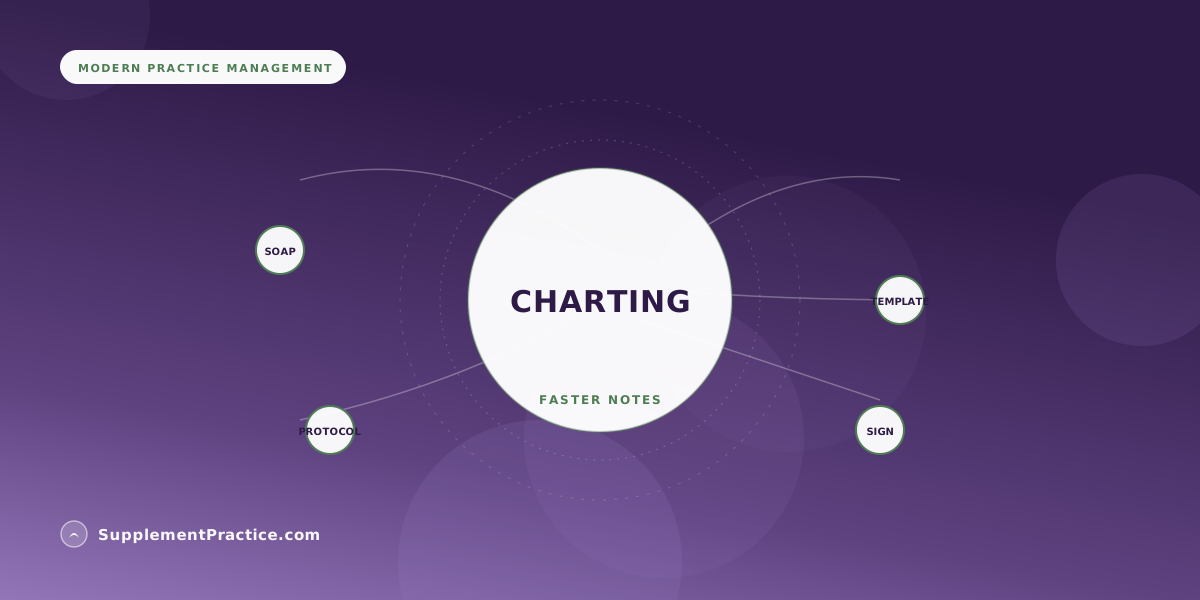
The first requirement is charting that bends to how you actually think — a mix of structure and narrative, with the ability to build templates around the systems and frameworks you use rather than the codes an insurer wants. Good charting software gives you reusable scaffolding for the notes you write repeatedly (a new-patient functional intake, a follow-up protocol review) while leaving room for the narrative reasoning that makes each patient specific. Structure speeds the routine parts; flexibility preserves the clinical substance. You want both, and rigid template-only systems give you only the first.
Requirement 2: Structured intake flows into the note
Integrative practices collect extensive intake — symptom-burden questionnaires, timeline histories, diet and lifestyle inventories. When that intake is structured data the chart can read, it flows directly into the note instead of being re-typed or read off an attached PDF, saving time and reducing transcription error. It also feeds the longitudinal view: today's note builds on the captured history rather than starting blank. This is the documentation payoff of the same structured-intake approach that powers pre-screening patients with automated health surveys — the intake you collect once should serve the chart, the protocol, and the note.
A naturopath whose notes were getting thinner
A naturopath running a rigid, conventional charting system noticed her notes degrading over time — not because her thinking had, but because the tool made capturing nuance so tedious that under time pressure she stopped. Systems-based reasoning got compressed into a few checkboxes; the protocol rationale she'd have written a year earlier became "see protocol" because retyping the supplement list into the note was too slow. The chart was becoming less useful exactly as her practice grew more complex.
Switching to charting built for integrative work reversed the slide. Flexible templates matched her systems-based structure, structured intake flowed into each note, and — critically — the protocol she built in the dispensary wrote itself into the documentation, so the full supplement rationale was in the chart without retyping. AI drafted the routine scaffolding, which she edited and signed. Notes got faster and richer at the same time, which she'd assumed was a tradeoff. The record started reflecting her actual reasoning again.
Requirement 3: Protocols write themselves into the note
For a supplement-centered practice, the most valuable charting integration is the one that connects the protocol to the note. When the dispensary and the chart share a record, the protocol you build — products, doses, timing, rationale — writes into the documentation automatically, so the clinical decision and its record are the same act rather than two. This eliminates the "see protocol" shorthand that hollows out charts, keeps the full reasoning in the record where it belongs, and means a protocol change updates the note. It's the charting expression of the single-record principle that runs through why spreadsheets are a liability for protocol management.
Requirement 4: AI drafting that keeps notes rich
AI is a natural fit for charting because so much of a note is scaffolding the practitioner would otherwise type by hand. AI drafting can turn a visit and a protocol into a structured first-draft note that the practitioner edits and signs — filling the blank page while leaving the clinical judgment and final language to the clinician. Used this way, AI is what lets notes get faster without getting thinner, resolving the tradeoff the naturopath above assumed was fixed. The safeguards are the same as any clinical AI: the note is grounded in the actual visit and protocol, and the practitioner owns it. We cover the boundaries in what AI can and can't do for a wellness practice.
Rigid vs. integrative-fit charting
| Dimension | Rigid coded charting | Integrative-fit charting |
|---|---|---|
| Template style | Checkbox, coded | Flexible + structured |
| Intake | Attached PDF, re-typed | Structured, flows in |
| Protocol in note | "See protocol" | Written in automatically |
| Longitudinal view | Isolated encounters | Builds on prior visits |
| AI drafting | None | Drafts, clinician signs |
| Effect on notes | Thinner over time | Faster and richer |
Common mistakes choosing charting software
Five charting decisions integrative practices regret
- Accepting checkbox-only templates. They flatten systems-based reasoning into codes that lose the clinical picture. Require narrative-plus-structure flexibility.
- Letting intake stay a PDF. If intake isn't structured data, it can't flow into the note or the longitudinal view, and you'll retype it forever.
- Tolerating "see protocol" shorthand. A chart that doesn't hold the protocol rationale is a chart that can't defend or reconstruct the decision. Connect the dispensary to the note.
- Treating charting speed as a nicety. Slow charting doesn't just cost time; it thins the record, because tired clinicians under-document. Speed protects quality.
- Adding AI to a disconnected chart. AI drafting is only as good as what it's grounded in. On a chart that doesn't see the protocol or intake, it has little to work from.
Faster and better are the same choice here
The usual assumption about documentation is that speed and quality trade off — that a faster note is a thinner note. For integrative and naturopathic charting, the right software collapses that tradeoff, because the things that make charting fast (flexible templates, structured intake flowing in, protocols writing themselves into the note, AI drafting the scaffolding) are the same things that make the record rich. The rigidity that makes conventional charting slow is also what makes it thin, and removing it improves both at once. Choose charting software that fits how integrative medicine actually reasons, keep it in the same record as the intake and the dispensary, and documentation stops being the chore you rush at the end of the day and becomes the clinical asset it was always supposed to be. That single-record principle — chart, intake, protocol, and note as one object — is the through-line of the modern all-in-one platform.
Frequently asked questions
Why don't standard charting templates work for naturopathic and integrative practices?
Most charting software uses coded, checkbox-driven templates built for conventional billable encounters. Integrative and naturopathic reasoning is narrative and systems-based — a story across multiple body systems with a protocol rationale that doesn't reduce to a checkbox. Forced into rigid templates, that reasoning gets flattened into codes that lose the clinical picture or dumped into free text the software can't use, making notes both slower and less useful.
What should I look for in charting software for an integrative practice?
Flexible templates that combine structure with narrative, structured intake that flows into the note rather than being re-typed, protocols that write themselves into the documentation when the dispensary shares the record, a longitudinal view so notes build on prior visits, and AI drafting for the routine scaffolding. Underlying all of it, the chart should be one HIPAA-eligible record shared with intake and the dispensary.
Can charting software make my notes faster without making them thinner?
Yes — that's the point of choosing it well. The features that make charting fast (flexible templates, structured intake flowing in, protocols writing into the note, AI drafting the scaffolding) are the same ones that keep the record rich. The rigidity that makes conventional charting slow is also what makes it thin, so removing it improves both speed and quality at once.
How does connecting the dispensary to charting help documentation?
When the dispensary and chart share a record, the protocol you build — products, doses, timing, rationale — writes into the note automatically instead of being summarized as 'see protocol.' That keeps the full clinical reasoning in the chart where it can defend and reconstruct the decision, and a protocol change updates the documentation rather than leaving it stale.
Is AI charting safe to use?
It is when the draft is grounded in the actual visit and protocol and the practitioner edits and signs the note. AI is well suited to filling the repetitive scaffolding of a note, which lets documentation get faster without getting thinner, while the clinical judgment and final language stay with the clinician. The safeguards are the same as any clinical AI: grounding, review, and practitioner ownership.
Where to go next
Pair this with reducing charting fatigue, what AI can and cannot do for a wellness practice, and choosing an EHR for a functional medicine practice.