Patients stop taking their supplements for three predictable reasons: the plan is too complex to follow, they never understood why each product mattered, and refilling is a chore they forget. Adherence climbs fast when you fix all three — hand them one clear schedule instead of a pile of bottles, tie each supplement to a reason they care about, and automate reminders and refills so staying on protocol is easier than falling off.
Why Adherence Drops and How to Fix It
- Complexity is the top killer — more than three timing slots and adherence falls
- Patients quit what they do not understand; tie each product to a felt goal
- Refill friction ends protocols silently — the bottle runs out and nobody notices
- A single printable schedule beats a bag of bottles with handwritten labels
- Timed reminders and auto-refills make staying on protocol the path of least resistance
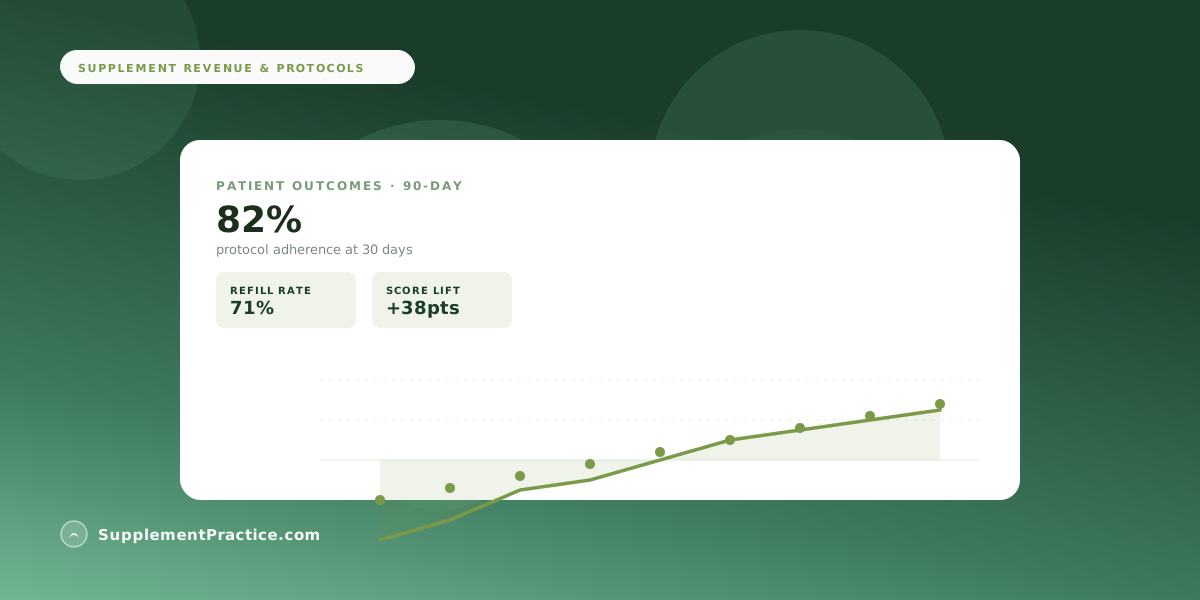
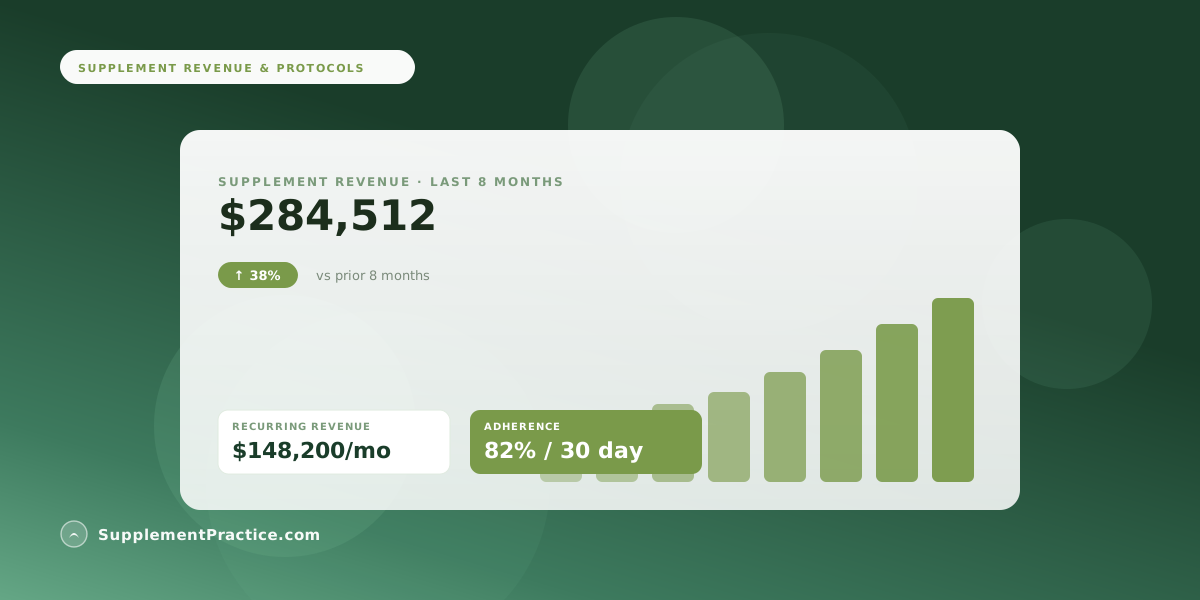
- Adherence is a revenue lever, not just a clinical one — refills are recurring income
- Integrating the schedule into the record means the whole team sees where a patient stands
Adherence fails for reasons you can design out
When a patient stops taking a protocol, it is tempting to file it under motivation — they just did not care enough. That is almost never the real cause. Patients abandon supplements because the plan asked too much, explained too little, and made reordering harder than quitting. Every one of those is a design problem in your workflow, not a character flaw in your patient. Fix the design and adherence climbs without a single motivational speech.
This matters clinically and commercially. A protocol nobody follows produces no outcome and no refill. Getting adherence right is the same move as getting a recurring revenue model through automated refills right — the patient who stays on protocol is also the patient who reorders.
Reason one: the plan is too complex
The single biggest driver of drop-off is cognitive load. A patient handed six products with different timings — two with breakfast, one at lunch, three at night, one only on empty stomach — will follow it for a week and then simplify it themselves, usually by dropping whatever they understood least. Consolidate. Reduce the number of distinct timing slots, combine what can be combined, and hand them a plan that fits on one page.
Complexity is worst when the schedule lives in the practitioner's head and not in the record. Our analysis of why adherence drops when schedules are not integrated into the EHR makes the case plainly: if the plan is not in the chart, nobody on the team can reinforce it, and the patient is left to reconstruct it from memory.
Reason two: they never understood why
People do not sustain effort for a product; they sustain it for a reason. A patient who knows the magnesium is for the sleep they came in complaining about will take it. A patient holding an unlabeled bottle they associate with nothing will not. Every line on the schedule should connect a supplement to a goal the patient actually feels. This is a two-minute conversation at the visit and a one-line note on the printout, and it changes everything about follow-through.
Reason three: refilling is a chore
Most protocols do not end with a decision to quit. They end when a bottle runs empty on a Tuesday, the patient means to reorder, and three weeks pass. The gap becomes the new normal. This is the easiest failure to engineer away: automate the refill so the next bottle arrives before the current one runs out. When you use AI to generate printable supplement schedules and pair them with scheduled refills, the patient never has to remember — the system remembers for them.
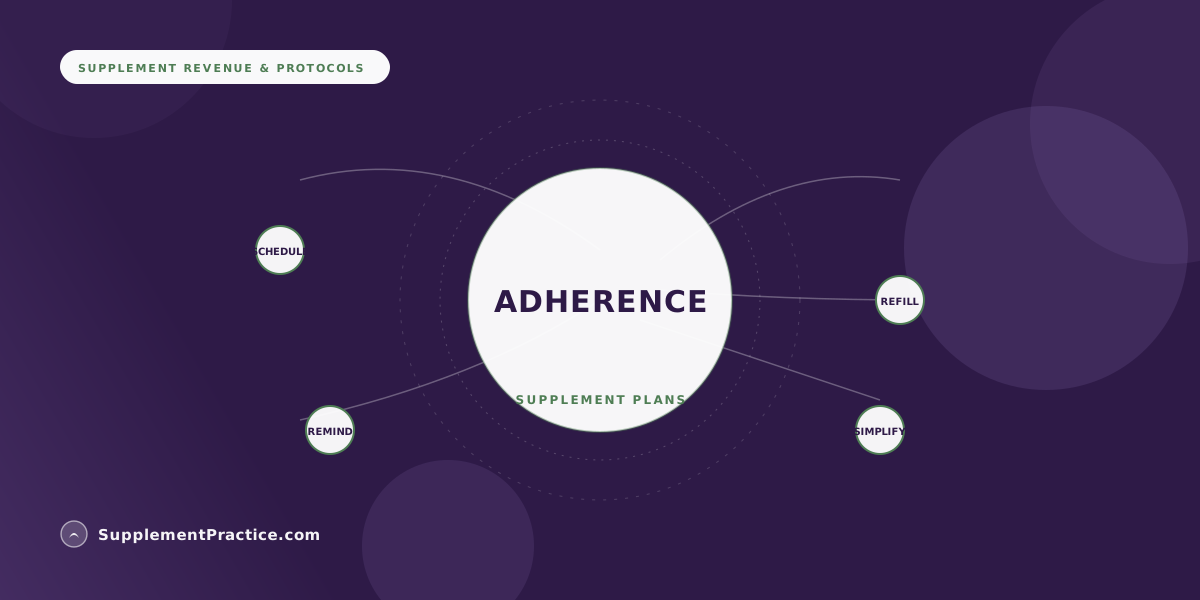
The four-part fix that actually works
Simplify the plan, explain the why, remind on time, and remove the refill decision. None of these is clever on its own; the power is in doing all four together so that staying on protocol becomes the path of least resistance. Software that keeps the schedule, the reminders, and the refills in one place — the way our guide to supplement protocol software lays out — turns adherence from a hope into a default.
Build the plan around the patient's day, not the pharmacology
Practitioners naturally design protocols around what the biochemistry wants — this nutrient on an empty stomach, that one away from minerals, a third split across the day for absorption. All valid, and all irrelevant if the patient cannot execute it. The highest-adherence plans start from the patient's actual routine and fit the pharmacology into it wherever the evidence allows. Someone who never eats breakfast should not have a breakfast-anchored supplement; someone who travels three days a week needs a plan that survives a suitcase. Ask how their day is shaped before you decide when things get taken.
This is also where anchoring beats reminding. A supplement tied to something the patient already does without fail — the morning coffee, brushing teeth at night — gets taken far more reliably than one that depends on remembering a new, free-floating task. The best reminder is an existing habit. When the schedule is built around anchors the patient already has, adherence stops depending on willpower and starts depending on routine, which is far more durable.
None of this means dumbing down the protocol; it means sequencing it. Start a new patient on the two or three supplements that matter most, get those anchored and automatic, then layer in the rest once the routine holds. A patient who succeeds with a simple plan will trust you with a bigger one; a patient buried under eight bottles on day one succeeds with none of them. Adherence compounds when early wins build the habit before you add complexity.
A nutritionist in Ohio who stopped losing patients at week three
Maria Delgado, a solo nutritionist, noticed a pattern: patients started strong and drifted by the third week. She was sending them home with a bag of bottles and a schedule scribbled on an intake sheet. She changed one thing — she moved the whole plan into Supplement Practice, printed a single one-page schedule that named the goal beside each supplement, and switched every patient onto automated refills.
The drift disappeared. Refill orders that used to trickle in erratically now arrived on a predictable cycle, and her follow-up visits started with patients who were actually still on protocol. Her reorder revenue roughly doubled over two quarters, but the number she cared about was simpler: patients were getting the results they came for, because they were finally taking what she prescribed.
| Drop-off Cause | What The Patient Experiences | The Fix |
|---|---|---|
| Too complex | Too many bottles and timings to track | One-page schedule, fewer timing slots |
| No understood reason | Bottle means nothing, so it gets skipped | Tie each product to a felt goal |
| Refill friction | Runs out, forgets, gap becomes permanent | Automated refills before the bottle empties |
| No reinforcement | Plan lives nowhere the team can see | Schedule integrated into the record |
Common adherence mistakes
- Blaming motivation. Drop-off is almost always a design problem — complexity or friction — not a patient who does not care.
- Handing over a bag of bottles. An unstructured pile with handwritten labels guarantees the patient will simplify the plan for you, badly.
- Skipping the why. A supplement with no goal attached is the first one dropped when life gets busy.
- Leaving refills to the patient. Manual reordering fails silently; the protocol ends when a bottle runs out and nobody notices.
- Keeping the schedule out of the chart. If the plan is not in the record, no one on the team can reinforce it at the next touchpoint.
Measure it, then keep it honest
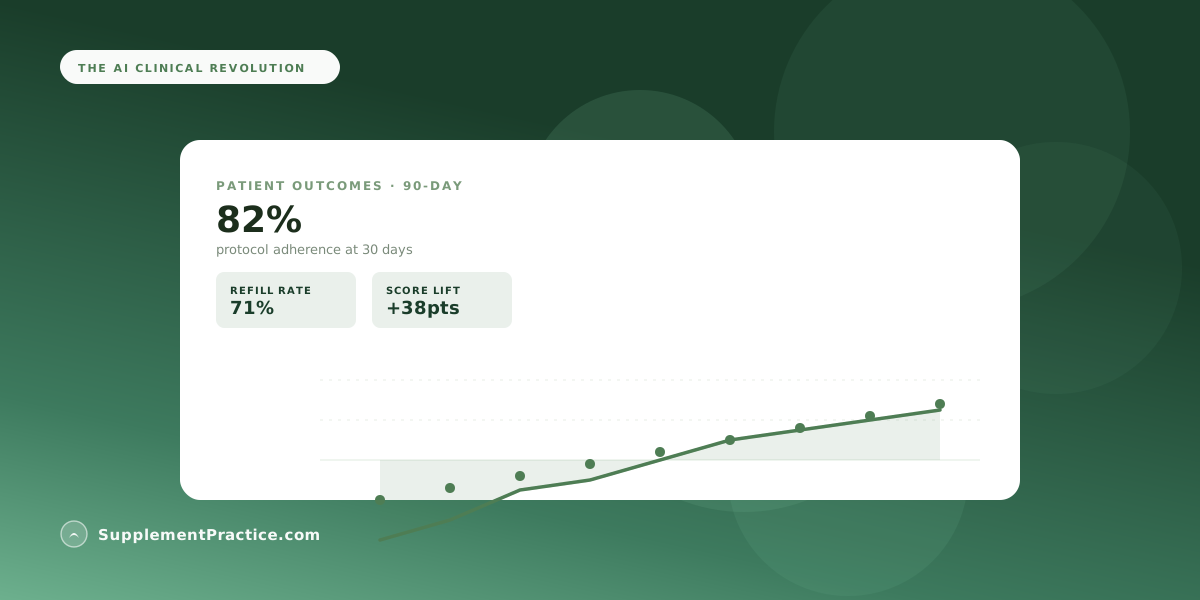
Track refill rates and how many patients are still on protocol at week eight — those two numbers tell you whether your fixes are working better than any survey. It also helps to close the loop face to face: a quick question at the next visit — which ones are you actually taking, and which fell off — surfaces the real adherence picture that a refill rate alone can hide. Patients are usually honest when you ask without judgment, and the ones they dropped point straight at where the plan was too complex or too unexplained. And keep the framing clean: supplements support wellness goals, they do not cure disease, and what you tell a patient about why a product matters should stay within your scope and the evidence. Claims about dietary supplements are governed by FTC and FDA guidance, which is worth reviewing so your one-line goal on the schedule is accurate as well as motivating.
Frequently asked questions
How many supplements is too many for good adherence?
There is no hard cap, but the practical limit is timing complexity, not count. Once a plan has more than three distinct timing slots per day, adherence tends to fall. Consolidate products into the same slot where the evidence allows and hand the patient one printable schedule.
Do refill reminders actually improve adherence?
Yes — refill friction is one of the top three reasons protocols end. Most patients do not decide to quit; they run out and forget to reorder. Automated refills that ship before the bottle empties remove the decision entirely and are the single highest-leverage fix.
How do I explain supplements without overpromising?
Tie each product to a goal the patient already feels — sleep, energy, digestion — using language within your scope and the evidence. Supplements support wellness goals; they do not cure disease. FTC and FDA guidance on supplement claims is a useful boundary to stay inside.
Should the supplement schedule live in the patient record?
Yes. When the schedule is integrated into the EHR, the whole team can see and reinforce it at every touchpoint. A plan that lives only on a printout or in your head cannot be supported between visits.
Is better adherence really a revenue driver?
Directly. A patient who stays on protocol is the same patient who reorders, so adherence and recurring refill revenue rise together. Fixing drop-off improves outcomes and predictable income at once.
Where to go next
Read why adherence drops without integrated schedules, how to generate printable schedules that improve adherence, and how to build recurring revenue through automated refills.