The SP vs. Xymogen comparison is the cleanest example in functional medicine of two philosophically different supplement brands that both produce excellent clinical outcomes — for different layers of the same protocol. Standard Process anchors on whole-food concentrates with cofactor-preserving matrices; Xymogen anchors on standardized bioactive isolates at evidence-based clinical doses. The right answer for most established practices isn't picking one — it's understanding where each leads and what the cross-brand stack looks like in practice.
SP vs. Xymogen — Layer-by-Layer Strengths
| Protocol layer | Stronger brand | Why |
|---|---|---|
| Foundational multi | Standard Process (Catalyn) | Whole-food cofactor matrix; long-term retention advantage |
| EFA / calcium chemistry | Standard Process (Cataplex F + Calcium Lactate) | Whole-food EFA backbone, acid-independent calcium |
| Protomorphogen / glandular | Standard Process (Drenamin, Symplex, Cyruta Plus) | Xymogen doesn't compete in this category |
| Methylation (active folate, B12) | Xymogen (Methyl Protect, Methyl-Guard) | Standardized active forms; SP's B-complex is whole-food, not isolated |
| High-dose magnesium | Xymogen (OptiMag Neuro) | Specific magnesium chelate forms at therapeutic dose |
| Probiotics | Xymogen (ProbioMax) | Strain-specific high-CFU formulations |
| Herbal / botanical | SP MediHerb or Gaia Herbs PRO | Xymogen doesn't compete strongly in pure herbals |
The whole-food vs. bioactive-isolate distinction, clinically
The philosophical difference between Standard Process and Xymogen isn't marketing positioning — it's a real choice about which layer of nutrition you're trying to address with a given product.
Standard Process's whole-food formulation philosophy assumes that the body absorbs and uses nutrients best when they arrive in the food matrix that evolved alongside human physiology. Vitamin C as a complex with bioflavonoids and rutin (Cyruta Plus, Cataplex C) absorbs differently than isolated ascorbic acid. Calcium as Krebs-cycle lactate (Calcium Lactate) bypasses the gastric-acid dependency that calcium carbonate has. B-vitamins from whole-food sources (Cataplex B, Cataplex G) deliver the spectrum of B-complex cofactors rather than isolated thiamine or riboflavin. This approach excels at foundational, daily, long-term nutritional support where the body's chronic baseline is what's being supported.
Xymogen's bioactive-isolate formulation philosophy assumes that for clinical intervention at therapeutic doses, the specific molecular form of the nutrient matters more than the surrounding food matrix. Methyl Protect delivers active 5-MTHF folate (not folic acid) and methylcobalamin B12 (not cyanocobalamin) at doses that meaningfully address documented methylation issues. OptiMag Neuro delivers magnesium-L-threonate and magnesium glycinate at specific chelate forms chosen for blood-brain-barrier crossing and neurological calmative effects. This approach excels at targeted clinical interventions where dose precision and form specificity matter.
Both approaches are clinically defensible. They're not competing — they're addressing different layers of the same patient.
Where each brand is the clear lead
Standard Process leads for: foundational daily multivitamin (Catalyn), the EFA backbone (Cataplex F), calcium handling (Calcium Lactate), connective tissue support (Ligaplex I/II, Glucosamine Synergy), the entire protomorphogen line (Drenamin, Symplex F/M, Cyruta Plus, Renafood, Hepatrophin PMG, Thytrophin PMG), and the SP MediHerb herbal-extract line. For chiropractic practices, SP's musculoskeletal-recovery toolkit is unmatched.
Xymogen leads for: methylation-specific protocols (Methyl Protect for general methylation, Methyl-Guard for MTHFR-known patients), high-dose magnesium chelates targeting neurological symptoms (OptiMag Neuro, OptiMag 125), ALAmax CR for nerve health and glucose regulation, evidence-based probiotic protocols (ProbioMax, ProbioMax Daily DF), B-Activ for high-dose methylated B-complex, and the targeted bioactive-isolate category broadly.
Neither brand leads strongly in the other's signature category. A practice that tries to do methylation work with only SP whole-food B-complex products will under-dose; a practice that tries to do protomorphogen-style tissue-specific support with only Xymogen formulations will find Xymogen doesn't compete in that category at all.
The cross-brand stack that pulls from both
Here's what a well-designed cross-brand protocol looks like for a 48-year-old perimenopausal patient with HPA dysregulation, MTHFR C677T heterozygous, and chronic muscular tension.
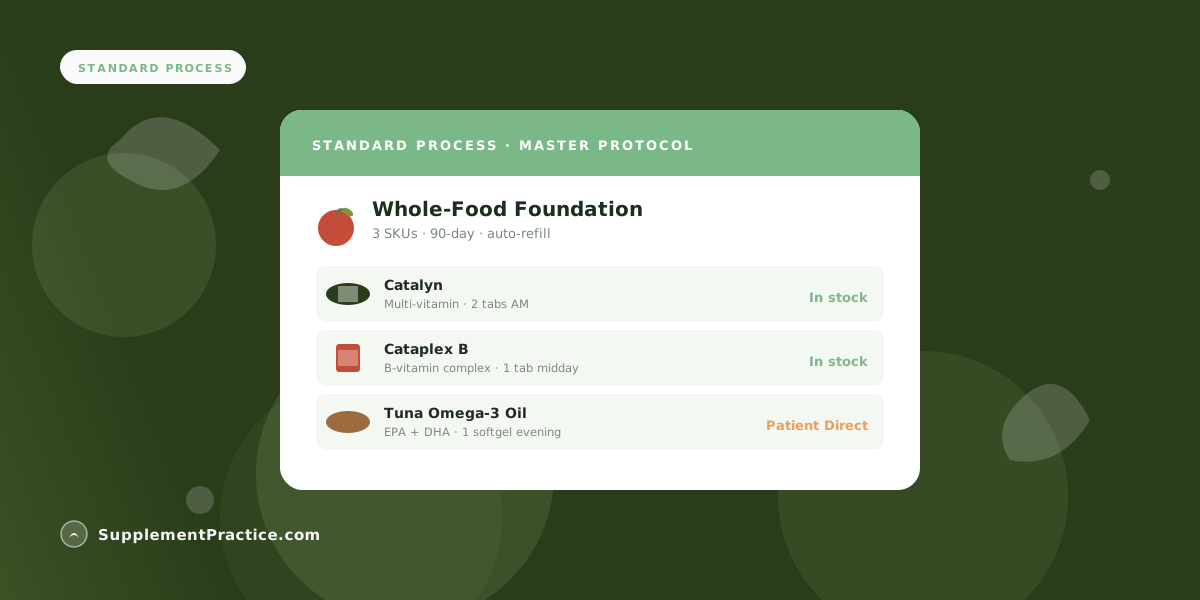
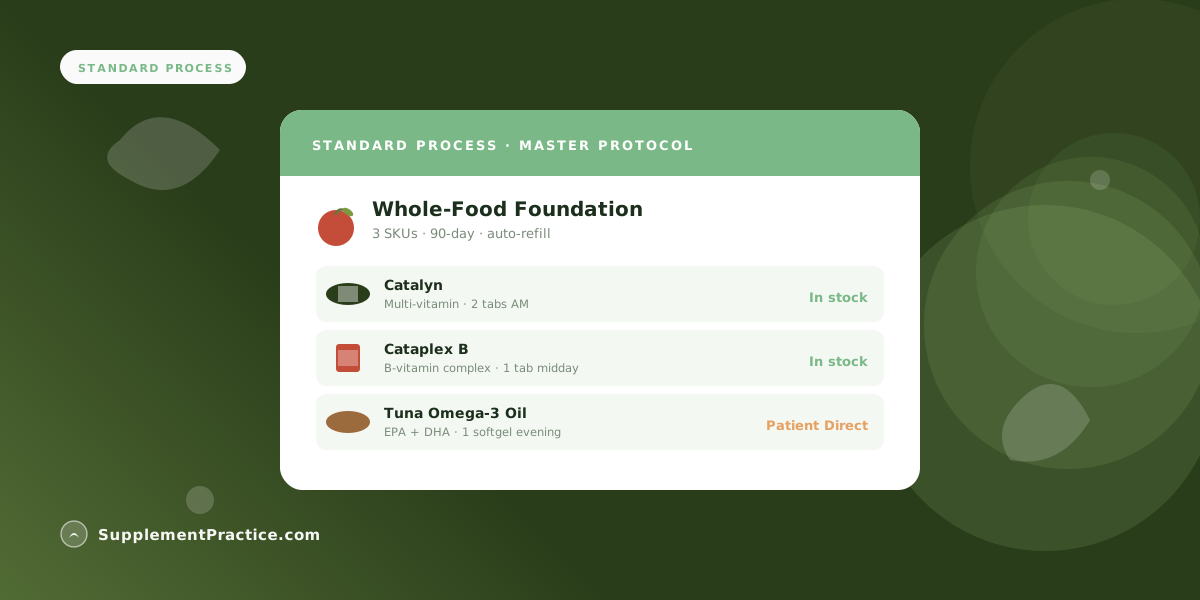
Foundational layer (Standard Process): Catalyn 2 with each meal, Cataplex F 1 with each meal, Calcium Lactate 2 with each meal, Tuna Omega-3 2 daily. This delivers the whole-food substrate the patient takes for the next 12+ months.
HPA layer (Standard Process): Drenamin 2 AM with breakfast (protomorphogen adrenal substrate), Min-Chex 1 mid-afternoon + 2 at bedtime (botanical calmative with mineral backbone).
Methylation layer (Xymogen): Methyl Protect 1 AM with breakfast (active 5-MTHF + methylcobalamin at the dose the C677T heterozygous patient needs).
Magnesium layer (Xymogen): OptiMag Neuro 1 PM with dinner (glycinate + threonate forms for neurological calmative effect and sleep support).
This 7-SKU stack pulls from both brands at the layer where each leads. SP handles foundation, adrenal substrate, calmative + mineral matrix. Xymogen handles the targeted methylation and magnesium chemistry that whole-food formulations can't deliver at clinical dose.
Pricing, EPV authentication, and operational considerations
Xymogen products typically retail 20-40% higher than SP equivalents on a per-bottle basis. The reason is upstream cost: standardized active folate forms, methylated B-vitamins, specific magnesium chelates, and standardized botanical extracts all cost more to produce than whole-food concentrates. The patient should hear this explained mechanistically.
Xymogen's EPV (Exclusive Professional Verification) system requires the practitioner to authenticate orders against a verified practitioner account, with products shipping in tamper-evident packaging the patient can verify is authentic. EPV exists because Xymogen products have been counterfeited on online marketplaces; the system protects both the patient and the practitioner from being implicated in counterfeit dispensing. Make sure your dispense workflow respects EPV — patients who buy Xymogen from Amazon are often buying counterfeit product.
52-year-old patient, MTHFR C677T compound heterozygous, on SP-only protocol that wasn't moving methylation markers
A 52-year-old female patient with documented MTHFR C677T compound heterozygous genetics, elevated homocysteine (14 µmol/L), persistent fatigue, and a 6-month SP-only protocol (Catalyn + Cataplex B + Cataplex G + Cataplex F + Tuna Omega-3). Despite consistent compliance, homocysteine at the 6-month recheck was still 13 — minimal movement.
The diagnosis: SP's whole-food B-complex doesn't deliver active 5-MTHF at the dose her methylation status requires. The Cataplex G provides the broader B-complex cofactor backdrop, but the active folate she specifically needs isn't in that formulation at therapeutic load.
The cross-brand revision: maintained the SP foundational stack, added Xymogen Methyl Protect 1 AM with breakfast and Xymogen B-Activ 1 AM. At the 90-day recheck: homocysteine dropped to 8.2 µmol/L. Subjective fatigue improved from 6/10 to 2/10. The SP foundation was doing real work but couldn't address the methylation specifically; the Xymogen targeted layer closed that gap.
Common mistakes
Anti-patterns in SP-vs-Xymogen brand selection
- Forcing every patient onto one brand. The "we're an SP practice" or "we're a Xymogen practice" identity costs patients the brand that leads in the layer they need.
- Using SP's whole-food B-complex for documented methylation defects. Whole-food B-vitamins don't deliver active 5-MTHF at the dose MTHFR-positive patients need. Use Xymogen Methyl Protect or equivalent.
- Using Xymogen Multi-T as a long-term foundational multi. It works, but SP Catalyn at clinical multi-tablet dose tends to produce better long-term retention. Use Xymogen for targeted, SP for foundational.
- Ignoring EPV authentication. Xymogen from unauthorized resellers is often counterfeit. Defend the legitimate channel.
- Not having a Xymogen layer when SP's protomorphogen line is the main spend. The protocol that needs both brands is more common than the protocol that needs only one.
Frequently asked questions
What's the core philosophical difference between Standard Process and Xymogen?
SP formulates from concentrated whole foods on the premise that the food matrix carries cofactors the body uses better. Xymogen formulates from standardized bioactive isolates on the premise that clinical-dose precision matters more than food-matrix delivery. Both are defensible; they target different layers of the same patient.
When should I lead with Standard Process vs. Xymogen?
SP for foundational nutrition, protomorphogen/glandular, calcium handling, EFA backbone, GI-sensitive patients. Xymogen for methylation-specific protocols, high-dose magnesium chelates, evidence-base bioactives like ALAmax CR, probiotic protocols, or anywhere clinical-dose precision matters.
Can I run both brands in the same protocol?
Yes — and most experienced functional medicine practitioners do. SP foundational + Xymogen targeted is a common, clinically strong pattern. The brands are complementary at the protocol level.
What's the price difference between SP and Xymogen?
Xymogen retails 20-40% higher per bottle than SP equivalents because isolated bioactives cost more to produce than whole-food concentrates. Wholesale margins are comparable for the practice. Explain the patient-facing premium mechanistically.
How does Xymogen's EPV authentication system work?
EPV requires the practitioner to authenticate each order against a verified practitioner account, with products shipping in tamper-evident packaging. It exists because Xymogen products have been counterfeited on online marketplaces; EPV protects both the patient and the practitioner.
Does the Co-Pilot recommend cross-brand SP + Xymogen stacks?
Yes, when the practice carries both brands and the patient's clinical pattern indicates cross-brand assembly is appropriate. The Co-Pilot evaluates each protocol layer and selects the strongest available product from the carried brands.
Where to go next
Three companion pieces: multi-brand stacking operationally inside one protocol, the AI Clinical Co-Pilot that grounds in both SP and Xymogen catalogs, and why high-ticket FM practices anchor on Xymogen for the targeted bioactive layer. Supplement Practice integrates both brands natively so the cross-brand assembly happens in one chart, with the EPV authentication wired into the dispense flow.