The Standard Process vs. Metagenics pediatric question is less philosophical than the adult equivalent — for kids, compliance and palatability frequently matter more than formulation philosophy. Catalyn Junior is the whole-food pediatric anchor for households running SP protocols and children with GI sensitivity to synthetic multis; Metagenics PhytoMulti Kids and the broader Metagenics pediatric line win on chewable-form palatability and single-tablet dosing convenience. This piece walks through the formulation differences, age-by-age dosing, where each brand is the stronger clinical pick, and how to communicate the choice to parents.
Pediatric Multi — Brand Strengths Map
- Catalyn Junior: whole-food formulation, multi-tablet daily dose, gentler GI profile
- Metagenics PhytoMulti Kids: standardized isolates + phytonutrients, single chewable daily
- Picky eaters: Metagenics often wins on palatability + single-pill compliance
- GI-sensitive kids: Catalyn Junior wins on whole-food matrix
- SP-anchored family protocols: Catalyn Junior preserves coherent brand strategy
- Verify dosing with pediatrician for any patient under 4
Why pediatric brand selection is different from adult selection
For adult patients, the SP vs. Metagenics choice is mostly a clinical-philosophy question — whole-food substrate vs. standardized isolated nutrients at therapeutic doses. For pediatric patients, the question shifts. Children don't typically have the chronic disease patterns that drive therapeutic-dose isolated-nutrient prescribing; they need foundational nutritional support, and the practical determinants of compliance — palatability, dosing simplicity, parent administration burden — usually dominate the brand selection.
A whole-food formulation philosophy is clinically defensible for kids; so is a high-quality synthetic. The decision should turn on which product the child will actually take consistently over months and years.
Catalyn Junior — the whole-food pediatric anchor
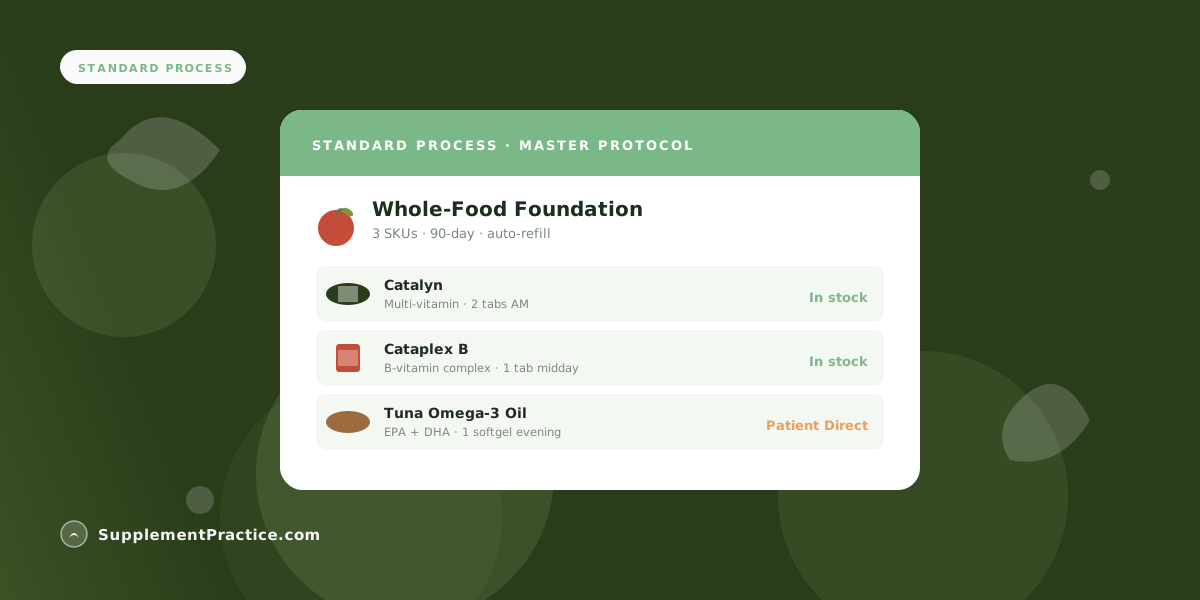
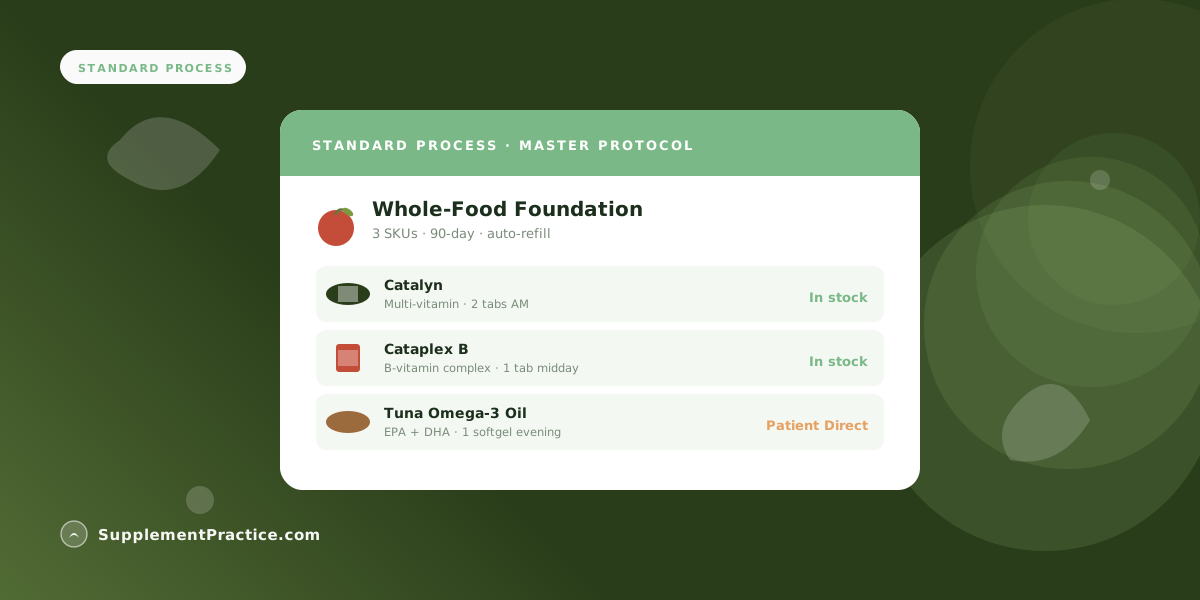
Catalyn Junior is the pediatric version of Standard Process's flagship adult multi. Same whole-food philosophy (bovine adrenal/liver/kidney extracts, plus carrot, alfalfa, oat flour, mushroom), scaled to pediatric tablet size with age-appropriate per-tablet nutrient density.
Dosing convention: ages 4-6 at 1-2 tablets daily; ages 7-12 at 2-3 daily; ages 13+ transitioning to adult Catalyn at 4-6 daily. The tablets are smaller than adult Catalyn and reasonably tolerable for most children, but they're not flavored — children who insist on chewable vitamins may refuse. Some parents crush Catalyn Junior tablets and mix into food for younger children; this works but is messier than the chewable alternative.
Catalyn Junior's strongest clinical fit: children with GI sensitivity to synthetic multivitamins (a more common pattern than parents recognize — the standard drugstore kids' chewables produce stomach upset in 10-15% of children), children of practitioners already running SP-anchored household protocols, and post-illness recovery scenarios where whole-food nutritional substrate supports rebuilding without overwhelming the system.
Metagenics pediatric line — palatability and single-dose convenience
Metagenics PhytoMulti Kids is the pediatric flagship — a chewable multivitamin with standardized isolated nutrients plus a phytonutrient extract layer (mixed fruit/berry concentrates) that gives it both vitamin coverage and color/flavor appeal. Most children find the chewables palatable, and the formulation hits broad pediatric nutritional coverage at one chewable daily.
Dosing convention: ages 4-12 at 1 chewable daily. The single-tablet daily dose is significantly easier to enforce as a parent — one tablet at breakfast, done — than Catalyn Junior's 2-3 tablets distributed across the day.
Wellness Essentials Kids is Metagenics' pediatric packet system — pre-portioned daily packets containing a multivitamin, omega-3, and probiotic together. For families that want a more comprehensive daily pediatric stack with single-step administration, the packets are operationally clean.
Metagenics pediatric products' strongest clinical fit: picky eaters where compliance is the practical issue, children where parent administration time is constrained, and children who have rejected whole-food multis on palatability grounds.
Family with two kids — different products for different children
A practitioner-led family with two children (boy age 7 with reported stomach upset from drugstore kids' vitamins, girl age 10 who has refused vitamins of any kind for 18 months). Parent wants pediatric foundational nutrition for both.
Protocol: son on Catalyn Junior 2 daily (crushed into morning yogurt for the first month, then transition to swallowed tablets). Daughter on Metagenics PhytoMulti Kids 1 chewable daily — she accepted the chewable after a sample-taste test in clinic. Different products, same household, each matched to the child's compliance pattern.
At 90 days: son's GI complaints resolved on the whole-food formulation; daughter has hit 87% compliance with the chewable (vs. <30% with prior attempts). Parent reports both children's energy and seasonal-illness resilience improved.
Age-by-age dosing considerations
Ages 2-3. Verify all pediatric supplement dosing with the child's pediatrician. For this age group, food-first nutrition is usually appropriate; supplementation should target documented deficiencies rather than general "wellness" multivitamin support.
Ages 4-6. Catalyn Junior 1-2 daily, or Metagenics PhytoMulti Kids 1 chewable. At this age, formulation choice is largely driven by what the child will actually take.
Ages 7-12. Catalyn Junior 2-3 daily, or Metagenics 1 chewable. Children at this age can often understand brief mechanism explanations ("these are concentrated vegetables in tablet form") which can support compliance.
Ages 13+. Transition to adult formulations — Catalyn at 4-6 daily, or Metagenics adult PhytoMulti. Adolescent nutritional demands (growth, activity, neurological development) warrant the adult-dose nutrient density.
Targeted pediatric supplementation beyond the multi
A pediatric multivitamin is foundational, not deficiency-targeted. Common pediatric deficiencies that warrant targeted supplementation alongside (or instead of, in some cases) a multi:
Vitamin D. Pediatric vitamin D deficiency is widespread; 1,000-2,000 IU/day for most children, more for documented deficiency, under pediatrician supervision.
Iron. Iron-deficiency anemia in toddlers and adolescents requires targeted iron supplementation, not a general multi. SP Ferrofood at age-appropriate dose, or Designs for Health Iron-C.
Omega-3. Pediatric EPA/DHA via Tuna Omega-3 (SP) or a quality liquid fish oil. Particularly important for children with diet patterns low in fatty fish.
Probiotics. Course-of-antibiotics recovery, persistent GI complaints. Pediatric-specific probiotic formulations (Metagenics' UltraFlora Children's, or comparable).
Common mistakes
Anti-patterns in pediatric supplement prescribing
- Pushing whole-food philosophy with a picky eater. If the child won't take it, the philosophy doesn't matter. Compliance wins.
- Treating a pediatric multi as deficiency therapy. Targeted supplementation needs separate targeted products.
- Not screening for vitamin D, iron, B12 status. Common pediatric deficiencies need labs and targeted intervention.
- Forgetting to verify with the pediatrician. Any patient under 4, or any patient with known medical conditions, gets pediatric-MD coordination before supplement protocols.
- Single-brand purity for pediatric protocols. Mix intentionally — Catalyn Junior + Metagenics omega-3 + Designs for Health iron is fine if it fits the child.
Frequently asked questions
How do Catalyn Junior and Metagenics' pediatric line differ in formulation?
Catalyn Junior is whole-food multivitamin with bovine glandular extracts and food-source vitamins. Metagenics PhytoMulti Kids is standardized isolated nutrients with phytonutrient extracts — closer to a high-quality synthetic pediatric multi with botanical enrichment.
Which is better for picky eaters?
Often Metagenics because chewable forms are more palatable and single-tablet dosing simplifies administration. Compliance matters more than philosophy for kids who refuse vitamins.
For what pediatric clinical scenarios does Catalyn Junior win?
GI-sensitive children, post-illness recovery, and households already running SP-anchored family protocols where coherent brand strategy matters.
What are the age-by-age dosing conventions?
Catalyn Junior: 4-6 at 1-2 daily, 7-12 at 2-3 daily, 13+ adult Catalyn at 4-6. Metagenics PhytoMulti Kids: 4-12 at 1 chewable daily. Verify with pediatrician for under-4.
Do either brand's pediatric multis address specific deficiencies?
No — pediatric multis are foundational, not deficiency therapy. Specific deficiencies (iron, vitamin D, B12) need targeted supplementation alongside.
How do I communicate the brand choice to parents?
On mechanism and the specific child's fit, not on philosophy. Frame around compliance pattern, GI tolerance, and parent administration burden.
Where to go next
Three companion pieces: the deep-dive on adult Catalyn that the Junior version scales from, how to communicate the whole-food story to parents, and the broader retention case for whole-food formulations. Supplement Practice's pediatric template factors in age, palatability preference, and any documented deficiencies when composing the protocol.