Nutritionists commonly charge roughly 75-250 dollars for an initial session and 60-150 dollars for follow-ups, but these are broad ranges, not universal numbers — actual rates vary substantially by region, credential, specialty, and setting. The more durable move is to price in packages tied to outcomes rather than selling isolated hours, because that raises client value and stabilizes income.
Setting Your Nutrition Session Rate
- Initial sessions commonly run roughly 75-250 dollars; follow-ups roughly 60-150
- Ranges vary widely by region, credential, specialty, and virtual-versus-in-person
- Package pricing usually beats per-session billing for both income and results
- Specialization and credentials justify the top of any range
- A supplement dispensary adds margin without raising the session fee
- Discovery calls and tiered options serve different budgets without discounting
- Verify billing, tax, and title rules locally before setting rates
The honest answer is a range, and anyone quoting one universal number is guessing
Nutritionists commonly charge somewhere around 75-250 dollars for an initial consultation and 60-150 dollars for follow-up sessions. But treat those as orientation, not gospel: what you can charge depends heavily on where you practice, what credential you hold, how specialized you are, and whether you meet clients in person or virtually. A board-certified specialist in a major metro serving a specific clinical niche sits at a very different point than a generalist wellness coach in a rural market, and both can be priced correctly.
So rather than chase a single figure, the useful questions are: what range fits my market and credential, and how do I structure pricing so each client is worth more and my income is steadier? That structure matters more than the per-hour number.
What actually moves your rate up or down
Four factors explain most of the spread. Region: cost of living and local willingness to pay set a baseline, and metros run higher than rural markets. Credential: a registered dietitian nutritionist or a board-certified specialist commands more than an uncredentialed generalist, both because of expertise and because some settings require the credential. Specialty: narrow, higher-stakes focus areas — clinical GI, oncology nutrition support, sports performance, fertility — support premium pricing because fewer providers serve them. Setting and format: virtual visits can widen your market and sometimes your rate, while insurance-based practices are bounded by reimbursement rather than by what you set.
Because these interact, benchmark against providers who share your credential, region, and specialty rather than against nutritionists in general. The national “average” is nearly meaningless for your specific decision.
Price in packages, not isolated hours
The most consistent upgrade a nutritionist can make is to stop selling single sessions and start selling outcome-oriented packages — for example, a 12-week metabolic program with a defined number of visits, messaging access, and materials, sold as one price. Packages align with how nutrition actually works (results come from sustained change, not one meeting), reduce early drop-off, and stabilize your income because clients commit up front. They also let you charge for the value of the transformation rather than for the minutes on the clock.
Collecting on packages cleanly matters as much as designing them. Integrated invoicing and card-on-file billing keep the money side from becoming a part-time job; see invoicing and billing for supplement-selling practices and syncing invoices with Stripe and Square for the workflow.
To price a package, do not simply multiply your session rate by the number of visits. Add the value of the between-visit access, the materials, the accountability, and the outcome, then set a number that reflects the whole transformation. Offering a modest discount versus buying the same sessions individually rewards the up-front commitment without cheapening your work, and letting clients pay in a few installments removes the sticker-shock objection while keeping your total intact. The point is that a package is a product with its own price logic, not a bundle of discounted hours.
The dispensary lets you earn more without raising the session fee
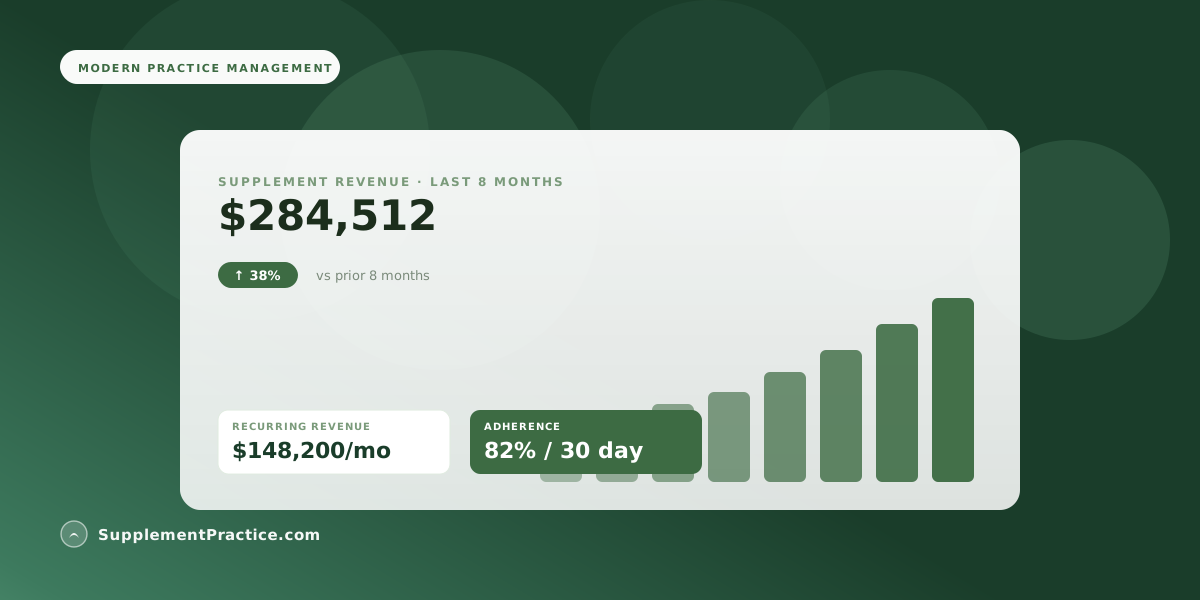
If your session rate is bumping against what your market will bear, a professional supplement dispensary adds margin on top of the visit without touching the fee. When you recommend a protocol and fulfill it through your own dispensary rather than sending the client to a retailer, you capture the product margin on purchases you were already driving. That effectively raises revenue per client while the headline session price stays where the market expects it — the mechanics of the spread are covered in tracking supplement profit margins in real time.
Serve different budgets without discounting your core rate
Discounting trains clients to expect discounts. A better approach is tiering: a premium package for clients who want maximum access, a standard package for most, and a lighter entry option (a group program or a shorter check-in cadence) for the budget-conscious. A brief free discovery call converts hesitant prospects by letting them experience your approach before committing. This protects your core rate while still meeting people where they are.
How and when to raise your rates
Most nutritionists undercharge for too long because a rate increase feels risky. In practice, the safest time to raise prices is when you are consistently booked and turning people away — demand is the signal. Raise new-client rates first while honoring existing clients' rates for a defined period, which protects relationships and tests the new number without alienating your base. Increases of a reasonable step at a time, communicated plainly and tied to what clients receive, rarely trigger the exodus people fear; the clients who leave over a modest, fair increase are usually the ones who were never a good fit.
Equally important is knowing your numbers. If you do not track what each client actually costs you to serve and what each is worth over the full relationship, you are pricing blind. Clean invoicing and reporting make that visible, and they also make the money side effortless enough that raising rates does not create billing friction — the operational piece is covered in invoicing and billing for supplement-selling practices.
A nutritionist in Colorado moves from hourly to value pricing
Marcus Bell had charged 90 dollars a session for years and felt stuck — raising the number felt risky, and single sessions meant clients often vanished after one or two visits before seeing results. He restructured into a 12-week gut-health package with eight visits, weekly messaging, and a supplement protocol fulfilled through his dispensary inside Supplement Practice, priced as a single program fee.
His effective per-session economics rose without a scary sticker jump, clients stayed through the arc where results actually appear, and dispensary margin added a layer of revenue on top. The lesson was not that he was underpriced by one number — it was that selling hours had capped both his income and his clients' outcomes.
Realistic ranges at a glance
| Session type | Common range (varies widely) | What pushes it higher |
|---|---|---|
| Initial consult (60-90 min) | ~75-250 dollars | Metro market, RDN/board certification, niche |
| Follow-up (30-45 min) | ~60-150 dollars | Specialty, virtual reach, demand |
| Package program (8-12 wk) | ~600-2,500 dollars | Scope, access level, materials |
| Group program (per head) | ~150-600 dollars | Cohort size, curriculum depth |
Common pricing mistakes
Where nutritionists misprice their work
- Copying a random online number. A national average ignores your region, credential, and specialty — the factors that actually set your rate.
- Selling only single sessions. Hourly pricing caps income and lets clients leave before results, hurting both parties.
- Competing on price. Undercutting attracts price-shoppers and signals low value; specialize and justify the rate instead.
- Discounting instead of tiering. Cutting your core rate trains clients to expect it; offer a lighter tier rather than a lower price.
- Ignoring product margin. Leaving supplement fulfillment to retailers forfeits revenue you could capture without raising the session fee.
A note on billing, taxes, and titles
What you may call yourself, whether you can bill insurance, how sessions and supplement sales are taxed, and what credential a setting requires all vary by state and change over time. The ranges here are general market orientation, not legal, tax, or billing advice. Confirm title and scope rules with your state licensing body and check insurance-billing and sales-tax questions with a qualified CPA or biller before you finalize your pricing and how you present it.
Frequently asked questions
How much does a nutritionist charge for an initial consultation?
Initial consultations commonly run roughly 75-250 dollars, but this varies widely by region, credential, and specialty — a board-certified specialist in a major metro charges very differently from a generalist in a rural market. Benchmark against providers who share your credential and location, not a national average.
Is it better to charge per session or sell packages?
Packages usually win for both income and client results, because nutrition outcomes come from sustained change rather than one meeting. A defined multi-week program reduces early drop-off and stabilizes cash flow, and it lets you price the transformation instead of the hour.
How can a nutritionist raise revenue without raising session prices?
Add a professional supplement dispensary. Fulfilling recommended protocols through your own dispensary captures product margin on purchases you already drive, raising revenue per client while the session fee stays where the market expects — see tracking supplement profit margins.
Do virtual nutrition sessions cost less than in-person?
Not necessarily. Virtual visits can widen your market and are often priced similarly to in-person, though some practices set them slightly lower. The credential, specialty, and value delivered matter more to price than the format itself.
Should nutritionists offer a free first session?
A short free discovery call — not a full free session — is usually the better move. It lets hesitant prospects experience your approach and convert into paid programs, without giving away the substantive work or training clients to expect free care.
Where to go next
Read invoicing and billing for supplement-selling practices, tracking supplement profit margins in real time, and syncing invoices with Stripe and Square.