Billing a supplement-selling practice is harder than billing a service-only one, because a single patient visit produces both a service charge and a product sale — often taxed differently and fulfilled differently. A clean workflow puts them on one invoice, applies sales tax correctly, generates superbills for reimbursement, and reconciles payments automatically. This guide covers how to get there without double entry.
What Clean Supplement-Practice Billing Requires
- One invoice combining services and product sales
- Correct, destination-based sales tax on supplements
- Superbills patients can submit for reimbursement
- Integrated card processing (Stripe / Square) that reconciles
- Billing that draws from the chart and dispensary — no re-keying
- Clear receipts patients actually understand
- HIPAA-eligible handling of everything tied to a patient
Supplement practices have a harder billing problem than they admit
A service-only practice has a simple billing job: one visit, one charge, maybe a superbill. A practice that also sells supplements has a genuinely harder problem, because a single encounter produces two economically different things — a professional service and a retail product — that are often taxed differently, fulfilled differently, and reimbursed differently. Handled casually, this splits into two systems: the visit gets invoiced in one tool and the supplements get sold in a storefront, and someone reconciles them later. That reconciliation is where errors, missed tax, and lost hours live. A clean workflow refuses the split and keeps the whole transaction in one place.
The good news is that most wellness practices don't need complex insurance-claim machinery. They need excellent cash-pay invoicing: services and products on one invoice, tax done right, superbills for patients who self-submit, and payment processing that reconciles on its own. Get those four right and billing stops being a monthly cleanup project.
Requirement 1: Services and products on one invoice
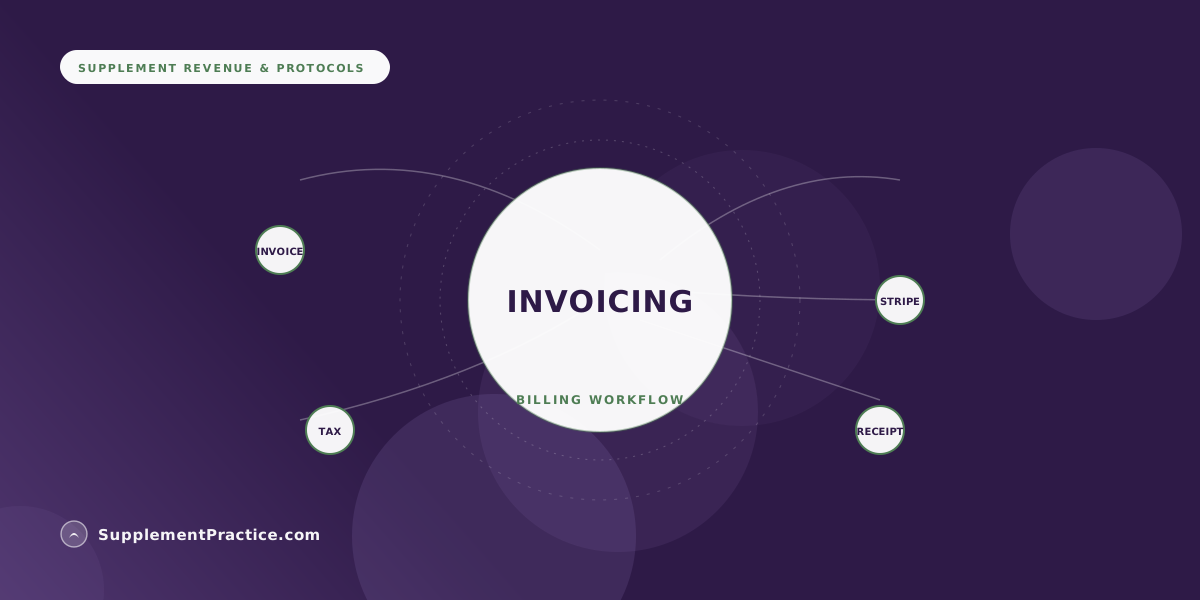
The foundation is a single invoice that can carry both a service line and product lines. When a patient leaves with a treatment charge and a three-supplement protocol, they should receive one document that shows both — not a service receipt from the EHR and a separate order confirmation from a storefront. One invoice is cleaner for the patient, and it's what makes the rest of the workflow possible: correct tax per line, a single payment, and a reconciliation that already balances because there was only ever one transaction. This requires billing that draws from both the chart and the dispensary, which is only possible when they share a record.
Requirement 2: Sales tax done correctly and automatically
Supplements are taxable in most U.S. jurisdictions, and services frequently aren't — so a combined invoice has to apply tax at the line level, not the invoice level. It gets harder for virtual dispensaries: a practice shipping supplements to patients in multiple states faces destination-based sales tax that varies by location, a genuine compliance burden if handled by hand. The workflow answer is software that determines taxability per line and per destination automatically. We cover the multi-state case specifically in managing tax status for professional supplement sales in a multi-state virtual practice. Getting tax wrong is the kind of error that compounds silently until it's expensive.
Requirement 3: Superbills that patients can actually use
Many wellness patients pay cash and submit a superbill to their insurer or HSA/FSA for reimbursement. A superbill is a structured receipt with the diagnosis and procedure codes an insurer needs, and generating it should be a click, not a manual re-typing of the visit. When billing draws from the chart, the codes are already there and the superbill assembles itself. A practice that produces clean superbills easily gives patients a real financial benefit and a reason to stay — and it costs nothing once the workflow is connected.
A nutrition practice reconciling two systems every month
A nutritionist invoiced consultations in one tool and sold supplements through a separate storefront. Each visit that included a protocol therefore generated two records — a service invoice and a storefront order — and at month-end she reconciled them by hand to understand what the practice had actually earned and what tax she owed. Supplement sales tax was estimated rather than calculated, superbills were retyped from the chart, and card payments landed in two different payout accounts she had to match up.
Consolidating billing into her practice platform collapsed the two records into one. A visit now produces a single invoice with the service line and the protocol's product lines, tax applied correctly per line, and one card payment that reconciles automatically. Superbills generate from the chart's existing codes with a click. The month-end reconciliation that used to take a half-day became a review, and the tax estimate became an exact figure. The relevant mechanics are the same ones in our guide to syncing invoices with Stripe and Square inside the clinical workflow.
Requirement 4: Payment processing that reconciles itself
The final piece is card processing that's part of the workflow rather than a separate terminal. When payment runs through the invoice — via Stripe or Square integrated into the platform — the payment status updates on the invoice automatically, the payout reconciles against the day's charges, and there's no manual matching of a processor report to an invoice list. The alternative, a standalone terminal whose deposits you reconcile by hand, re-creates exactly the two-systems problem this workflow exists to eliminate. Integrated processing also lets you store a card on file for the automated refills that make a dispensary recurring, closing the loop between billing and revenue design.
Two-systems vs. one-invoice billing
| Task | Split systems | One invoice |
|---|---|---|
| Service + supplement charge | Two documents | One invoice |
| Sales tax | Estimated, manual | Per line, automatic |
| Superbill | Retyped from chart | One click from codes |
| Card payment | Separate terminal | Integrated, reconciles |
| Month-end | Half-day reconciliation | A review |
| Error surface | Every reconciliation | Minimal |
Common mistakes in supplement-practice billing
Five billing habits that create month-end pain
- Splitting services and products across two tools. Every visit then produces two records to reconcile. Keep the whole transaction on one invoice.
- Applying tax at the invoice level. Services and supplements are often taxed differently; tax has to be per line, and per destination for shipped orders.
- Estimating sales tax. An estimate is a liability that compounds. Let software calculate taxability by line and location.
- Retyping superbills. If the codes are already in the chart, the superbill should generate itself. Manual re-entry invites coding errors.
- Reconciling a standalone terminal by hand. Integrated processing updates the invoice and reconciles the payout automatically; a separate terminal re-creates the split.
Clean billing is a property of a connected record
Notice that every requirement above resolves to the same structural fact: billing is clean when it draws from the same record as the chart and the dispensary, and messy when it doesn't. The one invoice, the correct per-line tax, the one-click superbill, the self-reconciling payment — none of them are really billing features. They're consequences of the service charge, the protocol, and the payment being one connected transaction instead of three systems stitched together at month-end. A supplement-selling practice has a harder billing problem than a service-only one, but it's harder only when the pieces are split. Keep the visit, the protocol, and the payment in one record and the harder problem becomes the easier one — which is the whole argument for handling supplement invoicing and billing inside the clinical workflow rather than around it.
Frequently asked questions
Why is billing harder for a practice that sells supplements?
Because a single visit produces two economically different things — a professional service and a retail product — that are often taxed differently, fulfilled differently, and reimbursed differently. Handled casually, the visit gets invoiced in one tool and the supplements sold in a storefront, forcing a monthly reconciliation where errors, missed tax, and lost hours accumulate.
Do I charge sales tax on supplements?
In most U.S. jurisdictions supplements are taxable while professional services frequently aren't, so a combined invoice must apply tax at the line level rather than the invoice level. Virtual dispensaries shipping to multiple states also face destination-based tax that varies by location. Software that determines taxability per line and per destination automatically is the practical answer.
What is a superbill and how should I generate one?
A superbill is a structured receipt containing the diagnosis and procedure codes a patient's insurer or HSA/FSA needs to reimburse a cash-pay visit. When billing draws from the chart, the codes are already present and the superbill generates with a click, rather than being retyped — which is faster and avoids coding errors.
Should card processing be integrated or a separate terminal?
Integrated. When payment runs through the invoice via a processor like Stripe or Square built into the platform, the invoice's payment status updates automatically and the payout reconciles against the day's charges. A standalone terminal whose deposits you match to invoices by hand re-creates the two-systems problem a clean workflow exists to eliminate.
Can I put a consultation and supplements on one invoice?
Yes, and you should. A single invoice carrying both the service line and the product lines is cleaner for the patient and is what makes correct per-line tax, a single payment, and automatic reconciliation possible. It requires billing that draws from both the chart and the dispensary, which is only possible when they share one patient record.
Where to go next
Go deeper with syncing invoices with Stripe and Square, multi-state supplement sales tax, and efficient supplement invoicing for nutritionists.